Catching up.

Well what a weekend that was. Missed the United-‘Pool game, live but watched *a lot of* rugby, before coaching most of Sunday. Into Monday and I’m wondering if I’ve actually got sleeping sickness, or just succumbed again to one of the other the eight zillion medium-hardcore viruses stalking Pembs. Post the oval ball binge, I sleep from about 9pm Sunday to 9 am Tuesday, with brief interludes for Match of the Day 2 and New Zealand White Ferns v England Women. So night is day and day is… whatever.

I’m feeling somewhat recovered – otherwise I wouldn’t be joining you (obvs) from Haverfordwest Library, with its almost-views of the elsewhere beautiful Cleddau and the crass, heavy-bricked ‘precinct’ surrounding. Incidentally; aren’t libraries great?!? Yes. They are.

I enjoyed all that rugby but hard to say why, exactly. Maybe it’s just that the Six Nations is so full of tribal accessories and yaknow – feeling – that even mediocre games mean something. Wales’s almost catastrophically poor first half against the resurgent Italy (volume trentasette) meant most of my neighbours were seriously pissed-off but more stark evidence of the black hole where Wyn Jones and Faletau recently battled gravity surprised few of them.

Given that the one thing we know about Gatland is that he tends to be good at organising teams – making them robust and hard to beat – the relative frailty and low quality of the current side may indeed reflect the seriousness of the downturn across the principality *at large*. In the Italy game we saw a worrying amount of Warrenball minus the crunch and (dare I say it) the heart. If the team shape was understood there was still an alarming absence of intensity and physicality: nothing to build from.

No wonder then, that the rumbling about the Regional Game in Wales has gone up a notch, resulting in the normally impressively measured Sam Warburton coming up with some contentious stuff about diverting the overwhelming bulk of monies available into the pro’ game – even if this detracts from grassroots. Rugby in Wales is in a trough. And at the distant crest it feels a bit like nobody knows how to either re-structure it or re-capture the precious elements; freedom to play; irresistible energy; hwyl.

Ireland were of course playing at a higher level – though they failed to maintain it. Against France they put down the most emphatic of markers, effectively ending the tournament as a contest, before half the teams had kicked or handled the ball. Nobody was going to live with their completeness as a side. (Sure, England beat them, but don’t go telling me that Borthwick’s coaching compares with Farrell’s, despite relatively comparable resources). England may finally have shown the many hostile neutrals out there that they can attack (against France) but they were bang ordinary (again) for much of the tournament. Improvements are coming almost by accident – often a sign of uninspired coaching. Ireland, meanwhile, should be manifestly disappointed not to have won the slam… and I bet, deep down, they are.

But I enjoyed the tournament. Enjoyed the expected dose of Scottish flair tempered by inevitable(?) defeat against better-resourced squads – Ireland, France. Was kinda moved and *almost shocked* – and yet not – by the wildness of that Welsh comeback against Scotland. And I liked that Italy felt closer again to being a meaningfully competitive outfit. The Six Nations tends to really work.

If the energy holds, I may yet write about Garnacho or Heather Knight. But first, perhaps, a tactical kip.
Films, eh?

It’s not the same – they’re really not the same. But I’m going there.

Apocalypse Now, in a cinema in downtown Grimsby, and The Quiet Girl, ‘at Haverfordwest Film Society, last night. The former immediately obvious as a giant; the latter a quiet insinuator. The scale, thunder and ego of the one and the timeless farmyard-backwater of the other. Brando and delirium and slaughter; grass and potatoes and family.

Both will haunt me, or have registered in a way that feels weirdly comparable. They were both palpably affecting.

In Grimbo all those decades ago we walked out shell-shocked in a deeply disturbed silence that defied the cut of conversation or analysis. The heft of the fucking thing left us gobsmacked – 100 people, maybe. That noise; that scope; that insane, thrilling annihilation with or by poetry! Not understood or received in the same way, of course: not to be snobbish but guessing only a handful of us had read Heart the Darkness but… nobody said or *could say* a word, as we traipsed out. Not us punkettes; not the Ordinary Locals. A) Out of multi-level deference to Coppola’s staggering achievement and b) because it felt necessary to slump against the nearest wall first… and – sheesh – recover.

1979, or possibly 80. But the two lads walking out together were as they say(?) changed by the event: how could we not be when it felt obvious we’d just seen the most powerful film ever made? It was like some public/communal de-flowering – and if that’s a dangerous image, who cares? This was a dangerous, wonderful, ruinous, life-changing moment which went beyond ‘the flicks’. However we might express it – with a shrug, with a nauseated heave – we all knew this was a truly rare affirmation of the power of art.

The Quiet Girl doesn’t look to compete with that – or not in the same key. But it does affect. As the bastard-of-a-father angrily stomped to either collect his wayward daughter or (we can only hope) give her up – yup, probably angrily – to the Other Couple, people around me were already raising hands to their faces. As the credits rolled and the lights prematurely rose, nearly everyone was tearful – and some were exposed ‘in bits’. Sobbing. So The Effect was not the same… but the validation, the triumph, the rubber-stamping of the capacity of words and pictures to move folks, to stir them up or down, was there.

Quiet Girl is traumatic despite being something of an ode to the pastoral. It’s all ‘unspoilt Ireland’, except for the unseen but undoubted abuse. It’s cows and hay and loveliness and that thing of handing over – ‘just for a bit, y’understand’ – a child who may be traumatised already and feels like one too many to cope with. Whilst the baby’s being born. ‘Sure y’understand?’

In case you’re wondering, if there is ever a fear that the universe doesn’t need another exposition of any sort on the mistreatment of children then that concern is emphatically and skilfully dumped, here – in fact it’s never raised! – by the compelling nature of the tale and the acting.

This Irish Story (in the Gaelic) looks and feels grippingly authentic, except perhaps for the brief scene where the girl’s potential saviours (Eibhlin and Sean) mistakenly allow her to be watched over briefly by a neighbour. (Have foolishly just read a review of the film, from the Guardian, to grab names/check spellings – forgive me if I don’t spend ages digging out the accents over some of the names – and it completely contradicts what I am about to say about the minor role of Una. Lols. But out with it). Sean, when the child (Cait) is rescued, swiftly and profusely apologises for the error, describing it as an example of his wife’s naive generosity. She even believed in Una. (This we can believe: Eibhlin is a genuinely gorgeous human).

Two things on this: Una is so witchlike the handing-over, even for a short time, didn’t seem plausible, even allowing for the plot-line development in the relationships. And also, for me, Una is poorly-executed. Neither convincing nor darkly funny. Something may be lost in the translation, but she seemed irritatingly out of kilter with the fabulous acting from Cait’s adopted ‘parents’ and from Cait herself. But this is a minor quibble, given my intention here is to thoroughly applaud the first-time direction of Colm Bairead and re-state that this is an outstanding, affecting film. So much so, I might even quote the Guardian, for my deferential, peacemaking final flourish:

It is a jewel’.

Where were you?

Where did that reference to The Mekons come from? Oh yeh. Twitter. Those profound, weedy, ridicu-lyrics: somebody posted. As did I, ’bout lunchtime, Sat’dee.

Meanwhile it was sleepless sleep, in the howling, battering gale and watchful half-skewed relentless triptych-vision. Daft, undulating, golden, white resort-sports for the White Stuff Generation on the one screen, footie and/or cricket on the other. Maybe radio too.

The rugby, you have to watch. Even if you absolutely do, now, fall into the category of Six Nations Dilettante. (Yup. Sadly. Having previously followed club action/the wider game, I now find myself unable, somehow, to grab a hold. Too busy; too much else). But this, despite mixed or even lowish standards, is a good tournament. Never more so than when the green/red/navy danders are up, the tribalism off the scale and the gales a-blowing.

England slaughtered Scotland for an hour, without turning dominance into points. Then Smith – the Hoddle, the Poster-boy, the Soft Centre – was withdrawn, as the stats (probably) or the GPS (possibly) said he was 0.023 down on something. Despite having just raced thrillingly across the try-line, thereby raising the flag for poetry and instinct in a way only probably he and his opposite number could even contemplate, Marcus was pulled: Jones and his 1400 sub-coaches looked to Ford to ‘manage the thing from here’.

That moment of soul-crushing pragmatism prompted the ancient-but-righteous gods of joy, IRN-BRU and twinkling perversity to gather immediately around and hoist their kilts. The hitherto impregnable Cowan-Dickie wilted in the maelstrom, pansy-patting the ball forward and out of play, to deny a possible score for the foaming, lurking Graham. It was both a robbery and a moment of grace: the penalty try being awarded, apparently, as punishment for the deliberate, if barely-controlled slap at the ball, without consideration for whether the attacking player would have gathered in cleanly and touched down. In that sense, controversial. Morally, a win for the resurgent jocks and all of us.

Meanwhile, before, Ireland stunned Wales. *All the ingredients were there*, as they were in Edinburgh. Febrile ether; gale; beery breath. Plus a marginally more complex ‘national relationship’ between the protagonists. (They tend to be Celts together after proceedings. During, there is *feeling*). Ireland launched and never came back down – or hardly – the intensity of the thing being simply too much for a mediocre Welsh side, who could not, despite keeping the score respectable for 40 minutes and more, compete meaningfully across the park.

It was a series of impressively purposeful, urgent flurries by the hosts that wore Biggar’s side down. The new Welsh skipper has a mighty, doughty spirit to go with his management skills. Even he was found shaking his head in disbelief and disappointment, late in the game.

Zoom out; remember. (Christ it was only yesterday!)

Pacing the energy-use was key, eh? And re-fuelling with care. Early alcohol was deeply unwise – it generally is – but throw a healthy pile of nosh and a tactical kip in there and you find yourself upright for The Cricket, later. (Upright in bed, anyways). Aus have won the toss and are asking Heather Knight to carry her team through another onslaught. She can’t. Nor can Sciver, the other Significant Hope.

England bat, understandably but also illogically – the series has gone! – with caution. Winfield-Hill is both dreamy-good, with her expansive drives but also unable, with her early partners, to garner more than three an over. When her coach Keightley and her 178 sub-coaches know that Healy will coast nearer to six, from the off. So it’s reasonable madness, from England. They splutter to a chillingly disappointing 120-odd all out: Winfield-Hill gets her customary 30. It’s never-in-a-million-years a competitive total.

But I slid towards fitful slumber at about the twenty over mark. When England were still below 80, from memory. Rafters clanging. Sea rumbling. Had to lie side-on and perch a pillow over my head to blot out – just a little – the sound. Felt both bit like smothering yourself and retreating into childhood and adventure. Oh, and final phone check – just to turn off, really. But yeh, twitter…

When I was waiting in the bar, where were you?
When I was buying you a drink, where were you?
When I was crying home in bed, where were you?

When I watched you from a distance, did you see me?
You were standing in a queue, did you see me?
You had yellow hair, did you see me?

Mekons.

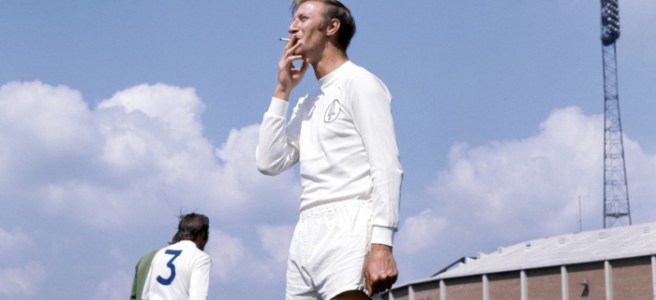
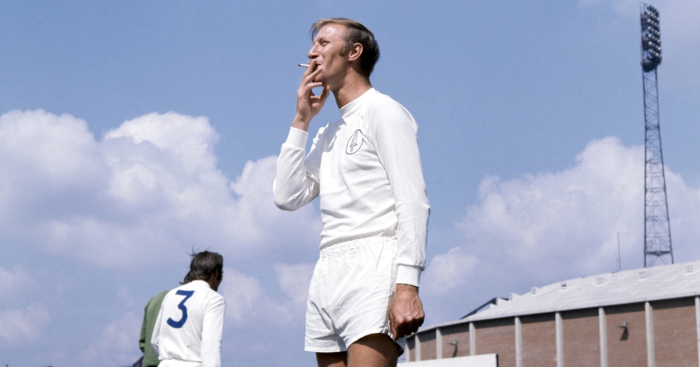
Wor Jackie.

I’m not sure I liked him, much, early doors. Certainly *that team* with the brilliant but spiteful terriers Bremner and Giles, plus the pre- (quite reasonably) sanctified ‘clogger’, Hunter, was right up there on the Most Despised list, for most of us. Leeds. Led by the sheepskin-coated cynic, Revie.

Big Jack/Wor Jackie was a Proper Member of that club… and yet his rascaltastically steady giraffe thing endeared himself more to the masses, I think, than most of his colleagues. That and the events of 1966.

Let your mind flash back, if it can. Did not even the gorgeously gifted Eddie Gray have a nasty streak? Was there something bit grating about Madeley’s smoothness? Wasn’t Allan Clarke essentially rancorous and even the unprickly Lorimer a bit – yaknow – lary, somehow? Wasn’t our dislike, despite the inevitable raw jealousy, rooted in something palpable?

Charlton was guilty of being ‘Leeds’, too, then: so we’d roar when he got physical. But I remember him more for a kind of upright doughtiness than any persistent evil. It felt as though Big Jack was always too close to mischief and what we’d now call #bantz than sustained malice, to be a full-on Leeds Bastard – not that he couldn’t (or wouldn’t) ‘look after himself’. He was classic English Number 5 in that he stopped people playing: marked them. Sometimes, yes, physically.

There was something else, too. That brother. The surging saint from Manchester United – the *actual player*. This made him/them or presented the Charltons as a Football Family; a rather special one, yes, after ‘66? Bobby was god-like – that charm, that quiet grace, that fu-ck-ing goal against Portugal!

Jack was bound in there, part of the glorious package but nobody understood him as a great player. He was good: he was a solid, international stopper but he was hardly Rio Ferdinand, never mind Alan Hansen.

Of course Jack was of his era, when the job description didn’t include easing stylishly into midfield, or threading searching passes into the false nine’s feet, or even (arguably) looking comfortable on the ball. Charlton J stopped you: he was a presence and he was ‘strong in the air’.

(Minor diversion. In a shockingly out-of-character burst of research, have looked at the Bleacher Report’s top ten England centre-halves. Interesting. [Here – https://bleacherreport.com/articles/2098444-ranking-englands-10-greatest-world-cup-central-defenders ].
Guess where Jackie is? Number 3. Ahead of Rio Ferdinand and behind John Terry and Bobby Moore. The whole bundle feels a relatively weak line-up to me, with only a few players – and I do mean players – of really high quality. Charlton is one of several who were effective rather excellent or richly, broadly skilled).

But this is sounding rather negative and I don’t want to be that – Wor Jackie doesn’t deserve that. The point I am making about Charlton J is that he was a tower; a resolute, indomitable, reliable English Centre Half of a high order, at a time when football was different. Not worse, or less demanding, but different. He was outstanding, engaging and could plainly be the heartband soul of almost anything.

According to our friends at Wikipedia, Charlton played 628 times for for Leeds, scoring on 70 occasions – a striking contribution for a defender. This in a 21 year career at the club. (Whoa: read that again – twenty; one; years). He also gained 35 England caps between 1965/and 1970, scoring 6 times. So the bloke was a threat, right, at what we used to call set-pieces? (Now set-plays).

These figures – in particular that proud, stoic, loyalty to Leeds – tell much of the story. The numbers, the years, the trophies speak to his utter, committed, authentic footballer-ness. As of course, does the Northumberland accent, the characteristically robust wit, the stature of the man in every sense. And we haven’t yet mentioned his career in management.

Big Jack had to be a Manager. He was always a leader, of sorts, even without the armband. Led by example, knew the game, was charismatic, was tough.

Those, like me, who remember the TV documentary from way back that showed him a) charging about the dressing room with the lads, todger-swingingly starkers and b) urging a youngster to “show me some aggression, son” still hold those memories close, amongstbothers. Absurdly, wonderfully macho stuff.

It utterly figures that this English icon could and did become and Irish legend. (Who else might ever fall into that particular category?!?) Charlton proved yet again that belief and togetherness and a ‘way of playing’ – a euphemism for simple, achievable patterns – can trump higher levels of quality in your opponent. Ireland had some players but they were driven to the World Cup Quarters by ‘Wor Jackie’s’ spirit… and method.

In my understanding of the phrase ‘Wor Jackie’, there is the association or assumption that ‘Wor’ implies, if not actually means, ‘our’. It’s for bellowing in approval at one of ours. Turns out that Charlton J’s powerful contribution, rather than being parochial, went inspiringly international, went beyond Northumberland and Leeds and England, because folks loved and followed and trusted his truth.

John Charlton – full name, what else? – strode manfully through a football life, keeping it simple, keeping it real in the way that only an irreducibly working class man might. He had more ‘chin’ than his brother, was a tad more abrasive, but ultimately shared that same wondrous humility.

It was another age when England won the World Cup: I smile when I think of Jack Charlton facing (say) David Silva, in a different dimension. Manchester City’s serpentine genius might ask a few questions of the Leeds man. One way or another I’m guessing the old warhorse would let it be known that he was a force – and “never mind yer poncy tickertackie”.

Wor Jackie was of his time but what a time he made of it.