A chinwag with BB…

Go to the Pembrokeshire Music Show of 30 Nov (& go 90 minutes IN, if you want to cheat and go directly to me warbling).

Enjoyable, briefish chat with MC MC . (I think both of us would have liked to talk for longer but rock’n roll, eh?)

We do talk about a) my book, Power Chords and b) some of the political/philosophical backdrop, which I was pleased to hear that Malcolm/BB Skone was genuinely interested in and sympathetic towards. We both rate Clash/Buzzcocks et al and acknowledge the role that awareness and anger – much of it politically-charged – played in shaping punk and new wave as an energy and phenomenon. But maybe I’ll let our talking do the talking.

https://www.purewestradio.com/catch-up/

Palavers and publishing.

I promise you I’m more philosophical than angry about this but wow – the Capitalist Universe is a right old game, eh?

I have a book upcoming. I like it and it’s important to me. Ideally I’d have an agent, a publisher and people, all colluding towards sales and impact. I have none of those things and this (I swear!) is fine. I like the indie bubble I live in.

The whole experience of writing three self-published books has been pretty fabulous: in the three or four year rush, without hardly thinking about it, I let it re-direct my life in a way I’m completely and kinda casually-deeply happy about. (Writing’s taken precedence over earning a living. Been surviving on bugger all for three years. No issues). But there are buts.

Have loved the fact and the process of self-publishing, cos just like being on an Independent Record Label. Complete Control – to coin a phrase. But despite being an indie sort-of-a-guy, and in some ways relatively suss, you still get trapped.

No fan of Amazon and the rest – and not just because they rob more than £4 per book, leaving me with about £1.20-40, depending on sale price. So I have never wanted to sell primarily online, but as a nobody, inevitably, you do.

I can’t get my books into bookshops – not many of them. Impractical and uneconomic. Indie (and particularly quirky or leftie bookshops) should absolutely be my natural territory but they don’t know who I am and I can’t afford to go globetrotting. What I have to do is buy in to the package at Grosvenor House that sets me up in the retail behemoths systems. (Not just Amazon’s; about twenty of them, I think). The hope is that strong sales in the ‘pre-sales period’ may possibly trigger a sort of alarm-call that lets stores know that this book might be worth holding. So it miraculously appears in bookshops, biggish and small. We’re in that pre-sales period now.

My publisher warned me that the likes of Amazon ask for a one-month pre-sales period because (weirdly, in 2025?) it can take weeks for all the book data and links to printers (or something) to be fully functional… and it appears that this may be the case. Thinking back to the previous books, this tends not to be a smooth ride.

But because a few really wunnerful people supported Power Chords early-doors, it burst into the Top New Releases, Music charts on Amazon. (Most of these people I’ve never met, by the way, so imagine the level of gratitude, here). The book went to Number 10 in that hit parade, meaning almost nothing except (I confess) a little low-throttled excitement *and the distant prospect of strongish sales triggering that aforementioned algo-wotsits*. That is, a kind of actually low-impact impact which would mean a huge amount if it got my actual book into actual bookshops. That’s the hope, right? Try to use The System to game the system and ultimately Do The Right Thing. Smart fulfilment.

I/we can’t win entirely in this. On socials I’ve been pointing people to their fave indie bookshop to order *as well as* offering the link to Amazon &/or Waterstones, because of the potential importance of that chart in the former. Which is kinda twisted, I know. (And I don’t or can’t know, in any case, where or how exactly any algorithm or notification kicks in, to alert shops to Books Worth Stocking). So this is another Trumpian, deal-making universe where I/we are not holding any cards.

In some ways it gets worse. Power Chords was at 20-something then 10, soon after pre-sales opened on about November 1st. (Shoulda been Oct 24th but that’s another story). So good start: some excitement. Then there’s a hitch. Amazon and Waterstones have the book at ‘temporarily unavailable’ or similar, meaning you can’t actually order. Which of course means we go down those charts. I wait a few days, checking (I confess) regularly. Nothing: no change.

This morning – Sunday 16th November – the Amazon site is saying you can order Power Chords for something over £16… which is a bit alarming and concerning. I have no rights here (goddammit) but I don’t want my book to sell for any more than the £10.99 my publisher advised. Plus this is likely a mistake, right, more ‘getting the ducks in line’ stuff – a temporary cock-up. Whichever way it’s crap – unhelpfully so. It is, bottom-line, another obstacle to sales.

Update: as of Mon 18th Nov. Power Chords is still being advertised at £16.24 on Amazon – so the cock-up goes on. I have tried to make contact (in fact succeeded in making contact!) but got into one of those horrendous loops where they offer you bloc A to H, with none of those blocs being the one that really covers your issue. Then you try to approach any of them… and they point you to KDP Publishing, who then tell you your book – or this book – isn’t with them. So mindless, unhelpful circling. Same via twitter: you get pointed to the same place, which can’t help you.

It should be pret-ty straightforward, you’d hope, for a multinational with eight zillion employees to find you one who could either strike-out an error in pricing on one of their weblinks, or get the sales process – from which they benefit about 3 times more than I do (about £4 to my £1.40) – going smoothly. Power Chords has been on their system for a fortnight or so. I repeat that I had been warned that glitches do happen: but clear errors and painfully prolonged issues affecting their bottom line as well as mine clearly should not.

I haven’t checked elsewhere, other than Waterstones – who, to their credit, had the book live and buyable before Amazon did. Power Chords appears to be available through Waterstones website. I think.

Further update: 25th Nov 2025. One day *after* Publication Day. Again the hugely gratifying feeling of lurv flowing towards me – some of it from people I’ve never met. (This on various socials). After those genuinely painful contacts with Amazon, where I got relatively close to claiming compensation from them, having been slightly steered thattaway by someone on their staff*. (*Notes to universe. They raised the notion of compensation for the 10-12 days where Power Chords disappeared. Their Whatsapp Team sent through a form to apply; at which point I thought ‘know what? These clowns prob’ly should reimburse me for the hassle and the lost book-sales’. But the form looked a bit suspicious. Fearing an admittedly rather elaborate scam, I withdrew). Still don’t know the truth of that scene… because I swore to myself to waste no further energy on Amazon.

Eventually – I think on the eve of Publication Day, and after my publishers had pushed back on behalf of several of their authors, all experiencing systems failures – something clicked. We were back live and buyable.

Of course this is all linked to the pre-Christmas rush to get books to market. Zillions of us have been drawn towards that flame. I could claim that the two dates I built my ‘sales campaign’ around – my dad’s birthday, 24 Oct, then mine, 24 Nov – absolve me of the crime of capito-cynicism but whatever. Power Chords went out ‘before Christmas’. But Amazon, with their unlimited resources, should have a) been completely aware of any building avalanche and b) taken the necessary avoiding action. They didn’t. It was, for me, crap. Weirdly, as if some algorithmic apology was tripping out, two of my brothers received the copies that they’d ordered from Amazon on Publication Day, rather than the two or three days afterwards which had seemed likely (and acceptable). Go figure.

Hey. Can only apologise for the overdose of indulgence here. You may not believe it but lots of this really isn’t about me. 1. Am really not driven by money. 2. Entirely happy to be an obscure geezer writing obscurely. But 3. I do know that there are other people out there considering publishing or self-publishing routes. I hope that some of the above offers some ideas of some of the pitfalls and the pleasures – which do exist – within this particular sphere of the capitalist universe. It’s great. And it’s as shite as the rest of it. Good luck.

(Back to the glorious days of psycho-political meandering). Nailed-on certain.

(Pic I think from Sky News).

Was nailed-on certain that today was Saturday. So gently building to a crescendo of sports-fixated lounging: really looking forward to that, on a shocker of a day. (Can hear the wind in the window-frames; have heard the Doomsday Revisited forecast but it’s only raining intermittently here. Sounds like some folks will be in trouble).

Have no car – not on the road, currently – and am still in one of those No Expenditure Moments until a wee wedge of money lands with me in about three weeks, meaning really eeking-out stuff. Sometimes that’s hard to the point of depressing but it’s also enjoyable and kinda sustaining – or the bit where I walk two miles to get food from the farm shop is – as is the longer walk to see family, *actually speak to people* and maybe partake of caffeine in the village. Both yomps are medium-lovely, through farmland, down a quiet minor road. I’m doing both as a form of discipline, and to earn the right to food and possibly coffee.

Might be too gross out there to do the walk today, but that was kinda factored-in to yesterday’s purchase of an oggi (non-taffs go search) and milk from the farm shop. I think I now have a nourishment kit for the day, and ju-ust enough coffee to build a cafetiere-sized supply, which I’m not remotely addicted-to, but I do enjoy the indulgence in taste, time and slo-mo gestation that comes with a brew that lasts forty minutes. (Yes I do make hot milk in an old pan. In a farmhouse kitchen. Checking in on the cattle in the quilt of fields thrown delightfully but damply around the place. And how is Swindon, today?)

I look forward to and really value the two or three cups of coffee, knowing I’m only going to do that once every other day or so: that it really is an indulgence. And yes – interestingly or sadly or something – that filling of time is important… and kindof enriching.

Maybe I should explain that? It’s in the current context of a life temporarily very much in Struggling Artist Mode. (And sure, you can take that however you like: I know how feeble it might sound. But it’s true that I’ve part-chosen, part fallen-in to living day-to-day, working part-time and having or needing lumps of headspace. To write books, asitappens).

The thought suddenly strikes that walking may have been a more essential part of the thinking/writing process than I have given it credit for. Although we all know that we promenade or yomp or jog or whatever partly to give us ‘time to think’, yes?

Having finished my third book not too many months ago, and despite being in the throes of ‘publicising it’, I have the luxury RIGHT NOW of whole days where I don’t have to do anything. Meaning I can absolutely choose to make them feel productive or meaningful in any way I want.

Ten days ago I read three books about golf in crazy-quick succession. Initially partly out of loyalty to a good mate who leant me them, but then entirely because they were brilliant and even revelatory stories, about genuinely great sportsmen (largely), between about 1900 and 1950.

I’m not particularly a golf fan – except during the Ryder Cup – and rarely play, but was genuinely captivated by Mark Frost’s storytelling and I learned many things. Like why my pal thinks this time period was special: because men (in sport and in general) had a particular kind of humility and honour that we can barely even talk about, without drawing performatively unstifled yawns. And how sensational and god-like and yet quiet was the genius and talent and application of Vardon/Jones/Nelson/Snead etc etc. So we should in a sense celebrate and even grieve their passing and the passing of that era of innocence. Or certainly respect the simple truths – I bet you could guess at them? – that they would not transgress.

Yes. I was proper-collared by the integrity and courage and inviolable goodness of many of the protagonists in those books. And it will both re-inforce my inclination to call out shit-housery and cheating in modern sport and (therefore) expose me as a reactionary clown to many of my contemporaries. Those guys are worth it and so are these daft games of ours.

All of which points a sort of conservatism, or worse. But no. I am absolutely not advocating for a Better Time Now Lost, in a wider or more general sense. And I hope to (your) god(s) that arguing for the existence of certain perennial truths is not the same as *being a reactionary.*

Whatever. Life IS more complex now, because we do know more and we ARE more aware. These should not be bad things. Family life has changed; the whole idea of careers-for-life and of typical lives or a sort of common level of perceived happiness or acceptance has lurched somewhere new and different.

There were World Wars in the period of those books, so difficult and maybe obscene to suggest that our own multifarious predicaments can remotely compare to that, but it’s likely true that our (yes I’m talking as though there is some universal ‘we’, which I know is a nonsense, but) our headspaces are, percentage-wise, as traumatised or deluded or numb as ever. There *really is* a mental health epidemic. They’re not the only ones culpable but media and the internet really are colluding – not entirely but significantly – towards a dehumanised flux where, having been coached towards apathy or bigotry, we don’t recognise truths of any sort. The codes that we have followed are obscured.

Many of us are too entrapped by the images we see or want to project to penetrate moral, political or philosophical truths. In the standout distraction of the moment, most of us are being coaxed towards hating or fearing The Other. The BBC endlessly platforms Farage, enabling a xenophobically-driven Brexit and the rise of one-issue politics. Starmer wins then capitulates. Trump and Musk make White Supremacism kinda fashionable again – or possible. Immigrants – that we in the UK need; that statistically and culturally and practically contribute – are demonised. Thiel and Murdoch and Bannon and the arch technocrats stoke the pot: they get to control the ether. And in maybe another standout feature of contemporary life, almost no politicians have the guts or integrity to call them out.

All these things are in my head. It’s why I walk and why I write. (Why my current book is about Angels of Protest). I think we need to re-position truths that should have been everlasting, about decency and commitment and hope.

This is no party political broadcast but Polanski (UK, Greens leader, for those at a distance) is most notably calling-in most of these messages. Racism is nailed-on wrong. Obscene wealth – the sort that utterly controls dominions of thought and opportunity – is nailed-on wrong. Austerity, the shameful charade that protects obscene wealth, is nailed-on wrong. We must act, in whatever way we can, upon these things.

I’ve never voted for anything other than a progressive party in my life. Genuinely most people I know could not vote Labour at this time, because Starmer has been so weak and unprincipled generally, and particularly around Gaza and issues of race. He and Reeves have also been pathetically and intransigently protective of the wealthy and super-wealthy. Polanski, on the other hand, has been smashing it out of the park. Now coffee.

Universe Podcast. Power Chords book launch.

Ok it’s ‘a day for inside’. Wet; windy; medium-‘orrible. So I’ve tried to make use of it, by recording something that might stand as a book launch… because I think I’ve decided it’s too much hassle to actually host a real-life book launch. (Lovely for me, but time, travel and faffage for those who feel they should come).

In the tradition of DIY-Punkhood, it’s pretty much unrehearsed, with some quotes from various sections of the book, and typically ill-advised *thoughts arising*. Listening back, it feels less twinkly and mischievous than Power Chords itself; maybe because I fall into the trap of trying to explain stuff. And I don’t mention that there is a complimentary playlet and occasional guffaw-inducing interlude in there – as well as the psycho-political positioning.

Punk was wonderful and formative. It was a racket that spat upon banality and duplicity. It was edgy and exciting. I think (or at least hope) that Power Chords offers some sense of that. There’s a lot of love and some teen spirit in there.

Buy it at your favourite independent bookshop – they can order it.

Or here – https://www.amazon.co.uk/dp/183615433X/ref=sr_1_3_so_ABIS_BOOK?crid=XQZC0N5EVD4T&dib=eyJ2IjoiMSJ9.gH51mWifQBHtqeMT7ZgX68rJ5dQ8Z96LTmC1c1QDx7Q8XUUGy5krE17Zd-4bABzS.15ewrP19EN89rDjZkqoOTnfpCvCe4BLyx8tmS-oNWic&dib_tag=se&keywords=rick+walton+power+chords&qid=1761834207&s=books&sprefix=rick+walton+power+chords%2Cstripbooks%2C112&sr=1-3

Or here, maybe – https://www.waterstones.com/book/power-chords/rick-walton/9781836154334

Thankyou.

Priest in the Tempest.

It had everything, including the tempest. Apparently the seas – well, Humber – got so wild that codling were being hurled into the stadium. The roof of the ancient Main Stand almost collapsed, not just because of the massed excitement but because of the weight of the krill. The lad Mbeumo had to fiddle a flattie from under his shirt before taking *that pen*: hence the miss.

Ah yess, the Grimbo-jokes. The howling gale of back-handed compliments and faintly feeble headlines, from media owned by Southern Softies and/or far-flung moguls. ‘Town batter United!’ ‘Shoal of the Century! The analytical consensus that ‘Amorim is drowning not waving!’ Marvellous.

The truth is that Grimsby Town outplayed Manchester United, in the first half. They had a strong case for a third goal, before United gathered at all – ruled out: no VAR. Yes, absolutely true that in the monsoon, the Mariners did lose their composure. Have no doubt that the apparently unfeasibly calm David Artell would have been inwardly raging at the way in which possession was repeatedly thrown away, in the second period. But perhaps it’s forgivable that messrs Fernandes and Mbeumo – amongst other key introductions – *did* turn the thing around. They do, despite the awful mess United are in, have some quality.

Vernam’s outstanding team goal lit the proverbial fuse on a night when many of my favourite people were in the stands, belting out the home anthems. (Yess. Am Grimsby – despite now being not unfairly described by those in the borough as Plastic Taff. And yess, grandfather played for both teams. So this is all rather huge. I know those streets and those stands).

The ground is wonderfully (largely) from another age; as seen on TV. The staff *really are* all about embedding this club in the community, in a way that the majority of club-owning scheisters and stockbrokers simply don’t understand. They can ‘project their visions’ all they want. Blundell Park ain’t perfect (and neither are the Team Leaders) but something very real has always lurked there. Jason Stockwood does appear to know that corporatism is the death of sport and of truth itself. Grimsby are Grimsby: they do deserve this kind of night.

So forty-five minutes in dreamland, with McEachran – who has quality – strolling around, and Artell’s side looking shapely and intelligent. Control of the game. A goal that might have been disallowed for handball (possibly?) and then Gardner’s borderline effort ruled-out. United all over the place – not just being ‘out-battled,’ that wouldn’t do justice to Town.

Half-time comes and Amorim implements the necessary cull. Fredericson patently had to go but half the team must’ve been a-wondering. Including Onana. The rain turns biblical and we Town fans think this might be just what we need – an absolute lottery! But in truth, both because of the influx of talent and intent and Grimsby’s understandable wastefulness with the limited possession they have, Manchester get back in it. Maguire is always on that figure-of-fun/Major Leader interface but notably he brought it – commendable spirit, I mean – and the reds fans had something to shout about. Then those pens.

I generally turn penalties off; no matter what the occasion. I watched these. We could throw descriptors like biblical and epic and humbling and heart-warming in there. Even neutrals might be doing some of that. I’m not neutral. I, erm, kinda follow both teams.

My socials went mad. The coverage has gone mad; because it’s Town, because it’s United. If there’s a consensus it’s that despite being a man of intelligence, integrity and purpose, Amorim is closer to the brink than he was pre the Trial At Blundell Park. Even those with active brain cells are saying that despite the carnage the man inherited, he is unable to make anything work and has to be accountable for that. Plainly, he is. The rest just want rid, being unable to see any complexity in this.

I think there is complexity. Take the case of Artell. When he came in (and on multiple occasions since then) he has felt like fella who can talk a good game. But not necessarily one you would follow or utterly believe in. He’s currently turning that perception around – with the players and support. Town have a pattern of play and a level of confidence. United, despite the talk of tactical drive, have neither.

We might talk dangerously in the abstract about character. We might be critical of the Premier League side on that, both last night and in general: everyone from Mainoo to Diallo to Cunha, perhaps? Would you want them in the trenches; never mind on a wet Wednesday at Blundell Park? Town’s players, from the outstanding Pym to the hearty Green and Rodgers, knew they had to bring some grit and determination (as a certain Mr Hansen might have said) to the proceedings. Because MU have better footballers. Therefore (we) work like hell.

Coaching is surely blending? Finding deeply and fabulously different qualities in different individuals and blending them together, whilst (in the modern era) feeding in bucketloads of stats and tactical info and beliefs. Ideally you want players with inviolable spirit and confidence but life ain’t like that. So blend and build. Amorim has work to do. We can no longer be clear that he has the time or the oomph to do it.

But those pens. Ridiculous and also pret-ty maarvellous that a whole cluster of League Two players held their nerve and slotted… almost endlessly. When the universe was screaming for it to end. Their composure in that moment is not all down to Artell, of course. But let’s give the man some credit for patrolling it with such evenness. Like a priest in the tempest. Fish all around him.

POWER CHORDS: an intro.

Read the covers? You want more blurb? It’s here…

This is arguably the third part – so three books – in Rick Walton’s #lolsobiography concerning life, sport, music. But ‘Power Chords’ will, can and does stand independent of ‘The Dots Will Not Be Joined’ and ‘Beautiful Games’.

The author has always wanted his work to be explainer-lite, but concedes that you newbies may need to know stuff. He is a writer and sports coach. He has over 600 blogs up on’t internet, via bowlingatvincent.com (on absolutely everything) and sportslaureate.co.uk, which covers mainly cricket, football and coaching. He has ECB Accreditation for attending cricket, as a ‘freelance bloggist’. There are awards on the shelf for contributions to sport. There is a genuinely unique voice in action – ‘authentic, wise and beautiful’.

                                                             *

Themes include the power of ideas and music; particularly when they pour in to teenage life. Identifying with or finding people that speak for you. But early life, too: so of course family and experiences at school, quality of adventure and support, quality of love and environment, mates and comrades. The growth, perhaps, of like-mindedness and the concomitant recognition of things to oppose.

                                                              *

If this sounds bit joyless then na. On the contrary. Your writer’s life is full of tremendous, uplifting, wonderful experience – of poetry. And gob-smacking people. It’s just that anger is an energy for him. The Enquiry in here is not so much to forensically reveal the source of some emotive and/or existential rage – this may after all be a profoundly unscientific business – as to dig out some old vinyl and enjoy. And maybe hope that today dynamic, engaged rock ‘n roll can do its thing all over again.

                                                             *

PROLOGUE.

Where to start, in terms of family life and culture? Or maybe specifically music? And how to know when awarenesses became so developed, or grief, shock or hormones took over so completely that the whole of my life became about defiance. Because I think maybe it did. And this feeds in to everything.

But maybe before the ideas-fest and the tribal allegiances kick-in we need to go eyeball to eyeball. And do that thing where we try to accommodate. I have strong opinions on some things which may have arisen from my love of music. (This book is about that process – or speculations about how mere choons can shape or contribute to a life). It feels extraordinary and kinda thrilling to me that anything so flimsy and unbodied could be so fabulous and enormous. I’m really hoping you have some personal sense or experience of that.

                                                               *

We live, it strikes me, in an extraordinary and dangerous moment. The West is arguably madder than it’s ever been, with the Trump/Musk coalition-thing a catastrophic threat to the intelligence, knowledge and goodness that underpins society itself. (It’s November 2024 as I write: we await the second Trump term but Brother Elon has sculpted the matrix into an angry monster). The truth has suffered an especially foul Special Op’[1] – Bannon’s infamous shitstorm. Those previously relatively harmless Influencers (think makeovers, think pranksters, posers and dancers) have morphed into combat-ready sub-nazis.

This is a challenge. It can drag us down and have us raging at (and waaay beyond) the deliberately-reduced politics we now suffer in the West.

                                                              *                                    

But hang on. In the face of Trumpism and Reform, alt-rightism and this galaxy of loss, what’s our civil/intellectual/physical/cultural reaction? Depends who we are. Are we leaders or passengers or artists or victims? Who do we look to, where do we go? Weirdly, it seems a scientific certainty that there will be a response, even in this turbulent evil. (Is that not how the universe works?) The response may even be a thing of glory and inspiration.

Wonderfully, we make our statements in a myriad of ways. As the mighty Slits did, we can ‘create’; kick up a fuss; make something challenging and radical and beautiful. We may need to do more, but this is part of the change – or at least one irrepressibly human, principal means to strike back. Let’s create. Let’s be anti-badness; anti-racist; anti- any declining status quo. Our pens are ‘snug as a gun’.[2] Our fingers are on the fretboard. This is part of life’s purpose.

                                                                *

I was recently given a class pic from Healing County Primary School which tugged heavily and made me realise how BIG those times and connections were. In my case they really were largely idyllic. Coz Stevie Blendell, Wayne Okopskyj, Mark Moss, Linda Dye and Helen Sitch and the rest were bloody wonderful. I could feel and smell and hear them, in that picture. Made me remember football and school sports on the playing-field; skating or ‘sliding’ on the playground in proper snow and ice; getting 8 out of 5 for something I wrote (about Guy Fawkes, I think). And even the dinners, which I loved. Stodgy, honest food that I’ve not entirely left behind. Maybe the meat was thin and the mash lukewarm after that queueing… but Eve’s pudding and custard! Or some kind of jam sponge! Bloo-dee Nora.

                                                                *

The barbershop contest was not at all what they’d expected. They love their singing but were inevitably “only there for the craic”, having no real idea they were to be joined by worryingly disciplined crews from the States and all over Europe. It was a disaster of sorts: the travel, to and from County Cork; the mismatch singing-wise; their mad, unserious approach. But now they’d landed at the Dru… and they really got it.

After brief deposition of bus detritus into their rooms, and maybe one or two relieving showers, the lads started to drift down to the bar. (This remains a fabulously evocative and restful kindofa place – or will be again, when the current re-furb takes it back to where it was for many years). They took a further inhalation of the bay and trundled back in to where yours truly was stationed, at the bar-front. The news that we had both Guinness and Murphy’s on tap was received quietly but warmly, as was the sight of more than one species of Blackbush and Jameson’s up amongst the spirits. It began.

                                                                 *

I worked part-time for John for more than two years. Doing everything that needed doing. Freeing him up to take those brilliant pictures. Very often I would go with him to the Royal Court, Hampstead Theatre or to the National to change films and generally assist. He would always shoot live rehearsals, usually the last one before opening, using two cameras. There wouldn’t be much kit – a monopod, sometimes, and a bag with cameras, lenses and films – so we travelled light, but I could make myself useful. Sometimes I would take back-up pictures.

                                                                  *

SIX – ROCK STARDOM-AVOID. (1).

We’ve all got reasons why we didn’t become a rock star – haven’t we? (Or Jesus is that just me?) Come on: the Things That Got in the Road. Lack of Ways In or Mates Wiv Contacts or that whole Distance From London malarkey. All the conspiratorial cobblers that stops a raging talent like yooo/like me, from raging publicly.

Sometimes this is fair enough: we’re actually crap. ‘Have rhythm’ but mediocre on the guitar. (There really are zillions of shit-hot guitar-players out there). Have words but maaybee they’re just not as good as you think they are? Have too much FIRE, quite possibly, which is theoretically ace in the wonder-years of the late seventies but even then narrowed your options down to the independent labels, bless ‘em. (Now, by the way, where is that fire? Idols, maybe, but where else?)

                                                                *

I saw The Fall in what was then a crappy hall in Duncombe Street Grimsby, when I was about eighteen. I knew the music, loved it. They made that beery, spidery, edgy, shambolic noise that was our poetry and the flag for our spunky republic.

Mark E Smith was a Northern Myth and a Northern Monster. And like us he was drunk. We loved him because his ramblings coursed with our spite. He seemed to be leading his own mad nation towards something.                   

                                                                *

Surely it’s true that for most of us the music we drape ourselves in is key to what we are and become? We come to reflect each other. I looked like a member of Joy Division or Bunnymen or Gang of Four – heavy coats, dark baggy clobber – because I felt like I was in those bands. It’s become a cliché but they did speak for me. Only Gang of Four from amongst those three had any obvious political stance: the other two just chimed with authentic, contemporary soul. They were more or less deep and dealt in something thrilling and real. We were kinda proud to wear their badges – literally and in terms of style.

                                                                  *

Punks identified anyone who sounded like The Bizz, or was complicit in its pitches as the enemy. This was of course almost everybody. If you swam complacently along with the major record labels, the machinery of production and the Gods of Commerce then you were traitorous filth: all of you. If you deliberately made your musical sound easy to access, you were shameless, vacuous scumbags. Plus energy. If your energy was that traditional thing aspiring to loveliness and sweet diversion then you were, despite your smashtastic success, a joke.

                                                                   *

The three chords and less than three minutes thing that punk was predicated upon is very pop. It’s also obviously anti-indulgence… and therefore may be supportive of smart choices. Knowing is everything: this includes knowing there is nothing wrong with ‘music to wash up to’. The two poles of what we might call engaged or protest songs and ephemera can absolutely subsist – and did. 1979 may have been the peak of the history of popular music – albums and singles – because of the energy and drive of punk and the sparkling wit of energized pop.

You may have noticed we’ve barely nodded as we flew past the idea of entertainment. This is because punk was obviously right to demand more. Tell us something about (y)our lives. Prove to us that you really care. Pass the integrity tests; show us you’re a good deserving human trying to do good. Do that thing through the new wave of music; either by thrashing out your protest or via sharp, knowing but unpretentious pop. *Add value* to our entertainment.

                                                                  *

Lydon was and is somewhere between the various caricatures of force of nature, clown and cultural icon. He was and is punk, for better and worse. For all his loudmouthery and those moments where we Guardian-reading liberals had wished he would ‘just stop!’ Lydon has produced material of staggering ambition and import. (So I for one largely forgive him). The Pistols singles are almost as sensational now as they were then. ‘Public Image’ the single is an extraordinary and well-executed re-birth. ‘Poptones’, ‘Careering’, ‘Flowers of Romance’, ‘Keep Banging the Door’ and ‘Rise’ are all giants.

When ‘Anarchy’ arrived, it’s not hyperbolic to describe it as the ringing of some division bell. It was a statement of defiance and newness. It was a challenge that battered into living-rooms and subverted lives. That song, that moment, despite the undeniable whiff of punk fashionista around it, was MASSIVE. It remains one of the Great Noises.

                                                               *

It was Strummer I loved. Sure he fell right into the imagery but his vocals launched so heartily at us and mostly his Good Man-in-the-Street politics rang true. His vocals on the 101-ers’ ‘Keys To Your Heart’ are a high point in pre-punk action. I believed in Joseph’s voice and his scattergun anti-capitalism. ‘Career Opportunities’ and ‘Working for the Clampdown’ are tremendous, compelling noises: more overtly political than Rotten, or somehow more specifically targeted than Lydon’s material ever appeared.

                                                               *

MARK E SMITH AND THE FALL.

Mark E Smith was scathing about everything so he might baulk (from beyond) at being offered this honour. Tough. He earned it, for being a one-off and for being edgier than a very edgy thing. He’d hate to be suffocated in cliché as some ‘punk-poet’… but of course that’s what he was. Dark. Driven. Chronically alcoholic and downright fascistic in his role as frontman. But unquestionably a kind of genius.

Because the music was so angular and so much the deliberate anti-dote to blandness and comfort, he was punk. Because he wrote about daft, working-class things, he was punk. The sound was a kind of colourful chaos – often more colourful and mutable than our conception for punk – but the anarchistic intent locked it into the vibe in a way that extended and re-powered the movement. Plus the fella looked like a punk – maybe, admittedly in the American, ‘hopeless layabout’ sense of the word.

                                                                 *

Foolish to remotely compare how things felt from Year A to F, but the parallels around race and wealth, between Thatcherite Ingerland and Trumpian North America are striking. Thatcher (for us) was an obvious bigot and likely white supremacist: see also Trump and Musk. In both eras there is an extraordinary sense of the rich getting richer – by design. That shamelessness, now so epitomized by Trump’s cohort of oligarchs and technocrats is both the exercise of increasingly authoritarian power and triumphalist cruelty. Meaning a particular kind of wickedness.

                                                                 *

Simone also covered the Billie Holliday classic ‘Strange Fruit’ and in ‘Backlash Blues’ and ‘I Wish I Knew What It Was To Be Free’ she railed brilliantly and with passion against the patent, rancid injustice of the time.

Can’t wait any longer. Who, in the time of Musk and Trump, will carry that torch? This feels like a moment not just for Angels of Protest but for massive, concerted resistance – yes, perhaps led by artists and musicians.

Plus some Desert Island Discs and a free, absurdist playlet.

All in ‘Power Chords’.


[1] Deliberate perversion of things we thought were fixed and factual. Facilitated by socials/moguls/what we might call the Extremist Establishment.

[2] Slits: ‘Typical Girls’, from ‘Cut’. Seamus Heaney: ‘Digging’.

Prologues.

(Because this is me, there is another prologue before this section).

Where to start, in terms of family life and culture? Or maybe specifically music? And how to know when awarenesses became so developed, or grief, shock or hormones took over so completely that the whole of my life became about defiance. Because I think maybe it did. And this feeds in to everything.

Defy the shock of people dying. Then before you know it defy the evil that was Thatcher. Wade in there. Defy the bigotry and prejudice criminally at large and *in some way* oppose the privilege. All this in a teen rage. Then live up to those who came before, whilst knowing they were different – maybe simpler, better – and that things don’t or can’t work like that. But let them still be your gods.

Don’t fer Christ’s sake out yourself as such – faaar too pretentious, far too self-righteous! – but absolutely be a protest singer. Be the inevitable mad mixture that you feel; of hard, deep thinker and honest force. Be immune to judgements from outside; be fearless and pour the good energy in. Time will or may come when you can be more accepting. For now, trust and work and be conscious. These things have value.

                                                                     *

The moment is everything: accident-of-birth catapulting me simultaneously into a hormone-fest and Anarchy in the UK meant this particular youth was inevitably a Child of That Time. Driven or pumped. Scarred, maybe. Furious, definitely; judgmental definitely. Carrying a load, probably.[1] Deeply lost but as deeply certain as most teens – yes? – that he would do things in enflamed opposition to the pitiful acquiescence that was Normal Life. So yeh, off-the-scale indulgent in some respects but also having a kind of rebellious integrity.

People died on us and I‘m not going to tell their stories here. There’s enough of that in the previous books. You just need to register the possibility that maybe everything Yours F Truly does is a kind of amorphous, inadequate, politicised homage to three great ‘ordinary’ blokes. This is not to say that I am a hugely party-political animal, or that I under-appreciate the Walton Women: but it rightly implies that I’m on a permanent slow-burn around how the world just ain’t good enough, in a way that those better men simply weren’t.

There’s generational stuff in play here, because a) life was simpler and b) in some senses it was less aware. Folks just didn’t know or couldn’t know the world, its peoples and its foibles in the way we can now. (Not that this makes us any more educated). Plus sentiment. I may gush, or goddammit not be able to see[2], or drown us in the kind of emotive slippage we’re all prone to. This is what love does: this is what age does.

I may never know if these old guys were just wiser, apparently swerving the day-to-day cataclysms that eat away at me/you/us, but however dubiously old-school it may sound, here’s my daft Braveheart moment: *raises fist*.

I am proud to be of them. Always, I will love, revere and follow them, or try to, for their invincible (yes) and endless (yes it was!) honesty and humility. They are recalled in the hope that we can all, in the modern idiom, stand on their elephantine shoulders.

                                                                     *

I guess the thing that stirs me the most is the urgent need to change the universe. And that really may be a direct result of punk and Margaret Thatcher.

Bit loathe to put dates into this baby but it may be inescapable. Absolutely not telling you freeloaders my birth date – not until we’re mates and you’ve proved you’re worth it – but suppose I can offer the rough figuration that I was a furious and pyrotechnically hormonal late-teen when the over-combed one began to preen through and over our lives. She, and Rotten’s voice, and Strummer’s heart, and Costello’s lyrics and my father’s death were the things that made me. They were contingent and co-forming energies that powered and power me towards trying, at the very least, to live a life that opposes.

This book, the third part (so far) in my #lolsobiography, is inevitably about that. But it’s also about sport, about influence, about how wonderful things are, even when darkness and dumbness and the twisted evils of money and privilege continue to pin us to the deck. My faith in art and music and sport never dims. My faith in the Three Great Mates we all have and need and my two sensational kids carries me through. 

                                                                       *

Life seems to have conspired towards poles of opinion, not just on social media but that might be the most obvious example. Too many of us make judgements that are ill thought-out or unforgiving. We’re bawling our truths at each other. We exercise (or exorcise?) a kind of manic certainty that draws us into conflict rather than conversation. Everything from the Twitters[3] to PMQs contributes to this.

Let me put on record my own weakness in this regard: I get angry and I judge. But in my heart I know that tolerance – and knowing that you may be wrong – are essential human virtues. We do have to judge; we do have to decide; we do need to get better but we also need to be civil. That’s not a recipe for capitulation.

*Takes further deep breath*. Look I’m as ready as the next bloke to launch into Grandstanding Mode. The Times and the Socials and everything about now make GM the engaged individual’s ‘natural’ response, do they not? Us punters are being teased towards some angry vortex all the time. Ah: cue some polar expeditionism.

We live, it strikes me, in an extraordinary and dangerous moment. The West is arguably madder than it’s ever been, with the Trump/Musk coalition-thing a catastrophic threat to the intelligence, knowledge and goodness that underpins society itself. (It’s November 2024 as I write: we await the second Trump term but Brother Elon has sculpted the matrix into an angry monster). The truth has suffered an especially foul Special Op’[4] – Bannon’s infamous shitstorm. Those previously relatively harmless Influencers (think makeovers, think pranksters, posers and dancers) have morphed into combat-ready sub-nazis.

This is a challenge. It can drag us down and have us raging at (and waaay beyond) the deliberately-reduced politics we now suffer in the West.

So don’t expect me to qualify everything – I may fall short! I know we’re well-advised to avoid cheap blame-games but I’m still gonna launch, here and there. Of course under-privileged and under-educated people have always been likely to ‘strike out’. Of course this general discontent has always been weaponized by people with hands on the levers. But there are lines we just don’t cross; there are things which are just plain wrong.

The Great Families and the oligarchs; the MAGA cult and the ‘gammon’; the liars and the cheats and the racists are bad folks.[5] Some more, some less. We who feel this may be entitled to tell them that, although this is likely to be inflammatory. ‘We see you’. But we also have to deal with them – by that, I mean debate, include, educate – however difficult or unlikely that may seem. And, perhaps before we inter-react, or rise to condemn, or commit the sin of prejudice ourselves, we have to go big and go public on the idea that they, these people, are as valuable as we are. They have our right to argue.

It may not get much tougher than to accept that the ‘racist morons’ or ‘easily-led’ on our streets or in our timelines are people we have to appreciate but… we do. Whilst opposing them.

Where lies progress in all this? On a political level I suppose we need to elect governments that will be a) strong enough morally to oppose prejudice and b) smart enough economically to improve the lot of the disaffected. Clearly, sadly, the momentum appears to be going the other way in certain key democracies.

This brings us back into the circle of action, or exasperation. There is a kind of backstop, a point of no further retreat for many of us. Prejudice and privilege are wrong. Whether entitled or powerless, ignorant or driven, player or played, they are wrong. We can and should choose to do better around those things – we surely have to? This implies all kinds of stuff but let’s just call it goodness. Most of us recognize it, even if we choose not to ‘walk in its path’. There are a million distractions, some gorgeous, some filthy. We need to be decent and fair and friendly; to find the invincibly moral core. That can be common; can define us.

But hang on. In the face of Trumpism and Reform, alt-rightism and this galaxy of loss, what’s our civil/intellectual/physical/cultural reaction? Depends who we are. Are we leaders or passengers or artists or victims? Who do we look to, where do we go? Weirdly, it seems a scientific certainty that there will be a response, even in this turbulent evil. (Is that not how the universe works?) The response may even be a thing of glory and inspiration.

Wonderfully, we make our statements in a myriad of ways. As the mighty Slits did, we can ‘create’; kick up a fuss; make something challenging and radical and beautiful. We may need to do more, but this is part of the change – or at least one irrepressibly human, principal means to strike back. Let’s create. Let’s be anti-badness; anti-racist; anti- any declining status quo. Our pens are ‘snug as a gun’.[6] Our fingers are on the fretboard. This is part of life’s purpose.


[1] Went to see some weirdo, many years later, after a heart episode. He looked at me and immediately asked why I was carrying the world’s troubles. ‘I’m seeing a yolk across your shoulders’.

[2] Yup. Definitely prone to welling-up.

[3] Yeh I know, now X. Pipe down!!

[4] Deliberate perversion of things we thought were fixed and factual. Facilitated by socials/moguls/what we might call the Extremist Establishment.

[5] Read on before you judge…

[6] Slits: ‘Typical Girls’, from ‘Cut’. Seamus Heaney: ‘Digging’.

If Not Now Then When?

The more I’ve thought about the particularly rich and what we might now call developmental periods of my life the more obvious it’s become that anger and conscience sparked via music have come to guide or define who I am.

Music can describe, reflect, light up or emphatically nobble us. (Confession: I’m crocked). Very often it does capture the times themselves – the times in which we grew. Of course relating said theory to punk or new wave may seem thin to those who weren’t there or those who just don’t get shifted by choons in the way some of us have been. But surely you get this? Surely you have your own tonal moments, or words etched over your heart? Songs that just carry you, whatever the era?

Welcome to the club. Whilst I will maintain that ’76-82 was massive, not just for my gang of mates but in terms of influencing zillions of lives, I am clear your own vibe is just as valid. Tell me all about it: maybe later?

We’re bound to hype-up the things around us when our hormones are hyper-active. Things are or were more highly-coloured when we’re young. That perspective is always gonna out-biff real perspective and I’m fine with that. ‘Our music’, the stuff we got off on or got furious to in our teens and early twenties, is always gonna be the best. For me this was punk and post-punk. Yes I can take a philosophic in-breath before conceding that it’s not the Only Time. But it felt that way. Maybe until now.

Clearly and for obvious reasons, everybody holds tight to the music of their teens. I get that. It’s just natural. It’s gonna feel special. But try to get a fix on 1976/7/8/9. It feels like the streets are on fire and sometimes they are. There are Thatcherian (was that ever even a word?) or what we might nowadays term Trumpian levels of divisiveness and even hatred in the political ether. There’s Jonny Rotten and Joe Strummer and Paul Weller… and that sound.

(In my humble view) the late Seventies is the greatest time in the history of popular music. For the energy and the intent, however flawed, or obscured by inadequate explication, however feebly understood by the pogoing masses. Something was really happening. Throw in being a tumultuously hormonal young fella with a powerful sense that things aren’t right or fair, plus shock and existential confusion over a family tragedy or two. Why wouldn’t you attach, pretty directly and permanently, to the soundtrack of these life-changing moments?    

But why was it so brilliant? I’m thinking because here in Blighty it kinda had to be.

The Punk Experience was all about immediacy, urgency, spittle; about kinds of revolution in the now, because of the now. In our case that meant Thatcher, injustice and anger. The North-South divide. Racism. Homophobia – later enshrined in the law in the infamous Section 28 – but a part of the Thatcherite vocab well before HIV struck in 1981. Shameless boom for some, bust for many. We can be entirely specific that Thatcherism was a signal factor in the emergence of a furious counter-culture. Trump and Musk are surely worse by every metric?

What does this mean, if anything? A) I find it fabulous, rich territory, this whole idea that powerful responses to circumstance, through art – i.e. music – can be such huge, formative participants in our lives. B) That implies (or makes un-deniable) the notion that both individuals and cultures – political, structural – can be changed by noises, by ideas. Throw in the demystification and opening-up that was essential to punk and we may have grounds for optimism that a Second Coming (for widespread, meaningful dynamic protest music) really may be a natural outcome, *here and now*.  

                                                               *                         

Chewing this over with a mate and he offers the thought that maybe Mozart was punk: he certainly set out to provoke The Toffs. My understanding is that the great man had a love-hate relationship with his audience and that the work, beautiful and godlike though it might be, was on occasion(s) specifically driven by conscience and by anger. He was also something of a rebel entrepreneur, hosting his own gigs to make those socio-political statements. (Malcolm McLaren, eat shit!) Point taken.

Spinning forwards, it seems obvious that popular music was intrinsic to the cause and the life of the Civil Rights campaigns of the US. (I recently watched some extraordinary footage of Nina Simone at her fierce, magnificent best. It was a revelation. More on this momentarily). Blues itself may be a resistance movement that dwarfs punk in scale and richness. Some would argue that the folk scene of the Sixties was as hearty and conscious as any period.

Zooming out geographically, of course there are spectacular and seminal indigenous protest songs from the Arab Spring and from Latin-American bands raging about murder, corruption or drugs, or the stuff that felt relevant and possibly *most obscene* to them. Go find them.

Anger is an energy. I found the ‘Rolling Stone 100 Best Protest Songs of All Time’, late-on in the writing of my next book. Found it interesting… and a challenge. Not that I’m entirely shifting from my advocacy for punk – no, sir. But a(n admittedly imperfect) ‘world perspective’, over a century of angry music? Well why wouldn’t that be a challenge?

Nina Simone’s ‘Mississippi Goddamn’ is in there at number 7. (But hang on. I bet you wanna know who tops it? Sam Cooke; ‘A Change Is Gonna Come, from ’64). Back to Nina.

She pronounced herself ‘skeptical’ of protest music out of concern that it can over-simplify and therefore reduce moments of reckoning and complexity. This was before the murder of four black children in the infamous Alabama church bombing and the assassination of activist Medgar Evers, both in 1963. I imagine she just got so mad she flew into the writing of one of the most poignant and potent songs of any time. ‘Mississippi Goddamn’ first appeared on a live album and guess what? It was banned for a time, in some southern states.

Simone also covered the Billie Holliday classic ‘Strange Fruit’ and in ‘Backlash Blues’ and ‘I Wish I Knew What It Was To Be Free’ she railed brilliantly and with passion against the patent, rancid injustice of the time.

Can’t wait any longer. Who now, in the time of Musk and Trump, will carry that torch? This feels like a moment not just for Angels of Protest but for massive, concerted resistance – yes, perhaps led by artists and musicians. The wildness and vileness of the whole MAGA Project makes the bigotry and divisiveness of Thatcherism feel almost petty. I don’t normally do perspective but despite piling up a lifetime of anger and revulsion around that woman and despite being a giant pond’s distance away the pall over America feels scarily more foul than late Seventies UK.

My book is about my life and the impact upon it of contemporary rackets. I depart to major on Nina Simone for several reasons. She was radical – she told Martin Luther-King she could not be non-violent. She had a real, sensational power and talked of having no choice but to respond to the evil of the time. Simone’s voice and piano are rare, rare things. And she has produced some of the greatest music that’s ever graced this planet.

                                                                *

In that ‘100 Best’ we find Woody Guthrie – more than once, from memory – but at no. 11 with ‘This Land Is Your Land’. We find a reminder that Tracy Chapman’s smooth-but-eloquent ‘Fast Cars’ is deliciously spiky. We remember (maybe with mixed feelings?) one of the superstar protests, in ‘Sun City, by Artists Against Apartheid. We get a nudge towards checking out Beyoncé at the Superbowl – 2016, she’s done more than one! – with her black sisters wearing deliberately provocative Black Power military-chic, performing ‘Freedom’ and thereby making a HUGE POLITICAL STATEMENT IN FRONT OF HALF THE WORLD.

Closer to (my) home there is one of the most upful protest songs ever committed to vinyl – Specials AKA ‘Free Nelson Mandela’ from 1984. I played it to a theatre group in the hotel bar I was running in West Wales. Resident and rehearsing at our place, they insisted on hearing it at the end of every working day, to fire them up whilst bashing out their own inspiring art.

Number 2 on that Rolling Stone chart is ‘Fight The Power’ from Public Enemy, a raw and in-your-face revisitation to the Isley Brothers’ record of 1975. Recorded for Spike Lee’s movie ‘Do The Right Thing’, it may owe its high position in that chart to the exposure around that, as well as its punk-rap brazenness and defiance. It’s noteworthy (and I take no issue with this *whatsoever*) that all five of the chart-toppers are by people of colour protesting injustice. Suggesting again how vital a force music can be in offering an outlet, a voice that can really register.

Bob Dylan was at no. 6 with ‘Masters of War’. Interestingly – or not – the descriptive blurb alongside makes a link between folk and punk; a reminder of that profound tradition for conscious stories which is so characteristic of folk music… and, yaknow, folk like us.

Remember Helen Reddy? Me too, just about. She may be offended by the label ‘Australian soft-rocker’ but consoled by the knowledge that her ‘I am Woman’ of 1971 became a feminist icon that bounced down the years. (It’s at 73 in the chart). It kinda bounced into my lap because – I’m pret-ty certain I have this right – the England and Wales Cricket Board used the 2013 Katy Perry song ‘Roar’, which uses Reddy’s refrain, to back some All Stars promo stuff I played in schools. (I was, some of you will know, a Community Cricket Coach for many years. Am now just a Pathway Cricket Coach). In this way, Reddy’s rally may still be roaring.

The Top 100 of anything is usually reductive garbage; we know this. I take significant umbrage with the fact that ‘Guns of Brixton’ – one of The Clash’s worst songs – is in the Rolling Stone collection, at no. 56. Cobblers. Especially when I’m seeing nothing of Elvis Costello! Not going to go scouring the whole thing again but not seeing ‘Ghost Town’ (but X-ray Spex are in there) and no ‘Eton Rifles’ but ‘Fascist Groove Thang’ gets the nod. Ah well; subjectivity, eh?

                                                               *

Punk-influenced music was and is massive in the lives of many of us. It was populist, in theory and in practice, in a good way. Perhaps most satisfyingly, the advent of Independent Record Labels, or more exactly their proliferation, based and inspired around new wave music, was central to making the movement – and that whole ethos around DIY – work.

Real People could make records. To some extent the capitalist universe was successfully bypassed. Yes the treadmill was still grinding and bands were still (diabolically in my view) talking about ‘cracking America’, but the Problem of Scale – i.e. specifically aiming to make records that would be played across American radio – was suddenly drenched in righteous spittle. Tiddly, ‘cottage-industry’ Independent Labels were pumping out real and relevant music, close to home. That was important. No: it was fucking maaarvellous.

Or’nary Herberts could get up and do stuff. Me; you; Fergal Sharkey; Mark E Smith. They could record it, too, and access to new technologies would only increase, thereby (theoretically at least) multiplying the opportunities. New and often more personal or political messages could be sent out from voices previously unheard. This was the Great Demystification. The offering. You no longer had to be ‘musical’, or ambitious, or on a contract with a major. You could go from your bedroom, thrashing three angry chords, to a local boozer or small independent venue. Fair enough, this must have led to some bad art. But it gave us the 101ers and The Jam.

Values were re-set; the power of honest, simple art was re-stated; truth stood in the doorway; everybody was welcomed in.                                                    

There were a million fakers, from Billy Idol to New Romantics down the line but something did change. The mighty and sensational music produced late seventies/early eighties – Joy Division/Echo and the Bunnymen/Talking Heads and the soon come Two Tone era -could not have happened without the spark, the release, the (yes!) moral judgment and the idealism of punk. To be credible, you had to write about something. Cut the frills and the solos. Tell us what fires you up… or at least stop seeking adoration. Tell us a meaningful story. Tell us something that matters. Maybe get angry with the government.

Fernandes finds it.

We expected a biblical thrashing and got a biblical lashing. Liverpool was drenched, and so were we, in the usual psychotic drama of the fixture. Exbloodyzausting.

Trent made all the arguments for his transfer to Real. Hojlund powerfully reasserted his cruel, honest capacity to be ordinary. Fernandes finally found almost everything he’s lost for what – two seasons? Zirkzee came on and right at The Death overhit a wee pass to Maguire that got clumped over the bar with the net not so much yawning as black-holing. It was all soaked in sleet and glory and misery and yes, exhaustion. The players looked knackered, too.

Generality and gravity and meaning itself get swallowed-up in this most bile-full of games but let’s have a thrash at some streaky factoids. United deserved at least a point, after a performance of real grit and some quality – or at least organisation and heart. Liverpool had only occasional lung-bursting thrusts: markedly less control and, astonishingly given *all the trends,* practically zilch in the way of dominance. MacAllister should have scored, and maybe Gravenberg, in the first twenty, but United played with commendable composure around the inevitable surges. When Martinez thumped the visitors ahead, it felt kinda logical, in this sopping madness.

Liverpool’s response was more scattergun than Slot would have wanted. Sure they found themselves ahead but for longish periods there were no meaningful or threatening phases of play and Alexander-Arnold’s flank was a disaster area. The Outrageously Gifted One had a mare, almost from start to finish, leaving most of us nodding sagely at the thought of his upcoming role as unmolested God-Quarterback at Real.

Dalot was skinning him at will, on one occasion delivering a fabulous teasing cross that Amad either simply misread or could not, in the downpour, adjust himself for. Either way it looked like the striker – who was almost entirely absent from the fixture, despite being United’s most dangerous outlet for weeks – falls into the Can’t Head it for the Life of Him category. Alongside most contemporary forwards, you might say.

Fernandes has been an infuriatingly infuriated individual most of his life. After starting like a world-beater at United he has been playing well below capacity for aeons. The poor love looks infuriated by that… and referees… and by the inadequacies of his team-mates. His discipline has been ragged, as has his ability to thread passes that he knows Bruno F should be making in his sleep. Today he found most of the stuff that’s been missing. He was almost towering.

Amorim will be genuinely disappointed his lads couldn’t quite engineer a startling win but he will be reassured, somewhat. This performance – for it was A Performance, finally – settles the doubts about a possible relegation battle. United are poor but not that poor. They can and will probably find the shape they need – Amorim’s shape – and scuff their way to about 12th, come the end of the campaign.

Talking of scuffs, Amad’s goal for two-all (before the truly excruciating extra-time) was no thing of beauty but sent the away fans into predictable, performative paroxysms of pent-up relief and medium-foul tribal delight. The lad had barely been involved but the same could have been said for Gakpo, who delivered a worldie-from-nowhere to send the home fans wild, after that uncharacteristically solid start, and opening goal, from United.

Salah’s penalty was yet another one of those where the defender – in this case De Ligt – has no intention of making contact with the ball with his instinctively (but yeh, ok, slightly weirdly) flailing hand. In Proper Football there is no way this is a pen. Here it always felt likely as soon as referred: (rule change, please).

So where does this leave us – apart from breathless? It’s a Big Point for Manchester United… but doesn’t mean progress will be swift or smooth. For Liverpool it points up the edginess of their thrilling urgency. Can they stay patient, as well as destroy people, with their post-Klopp rampage? MacAllister can.

That’s why we love him.

I’m still plenty daft enough to not want to know what my birthday treat is. (Not that I get loads, to be honest). So when the ‘kids’ – my wunnerful offspring, aged 21 and 25 – tell me firstly to keep Weekend X free and then ‘get my ass to London’, I do, after a week of supporting my somewhat ailing mum, Up North. There’s nearly an accommodation trauma (none of us are quite in the position to book hotels) but in fact this works out fabulously: we can stay at one of my soul-bro’s, in Walthamstow. We arrive Friday.

We do stuff; lots of walking around both locally and in the city proper. Riverside, Spitalfields, coupla bars – all that. No hints dropped *at all* and none asked for… until I hear it’s a Sunday morning do.

Oh. So not the Cure or Bunnymen gig I had maybe posted highish on the list of possibles. Sunday morning? Outdoors, I wonder? But again don’t ask. I settle into just enjoying the friends-and-family thing, with maybe just the thought that Somerset House, for a wildish and medium-dangerous dollop of skating might be where we’re headed. (We went about 15 years ago and we’ve been skating in Spain (weirdly) and Finland (I think), so the kids know I’m mad for it). That would be fun – and kinda suitably silly for a juvenile delinquent like my good self.

But no. We’re on the tube and daughter reads out part of an incoming message. With details. Wow. I learn we’re off to the Van Gogh, at the National Gallery. Oof. That’s BIG.

Another great friend, ‘knowing I like me art’ has very kindly used her membership to get us in. 9.45, Sunday morning. We fill out Saturday with more yomping and gawping and then drop into the Do Not Adjust Your Set-ville that is ‘God’s Own Junkyard’, in a spectacularly unassuming mini-industrial estate in Walthamstow, for just a couple of gobstruck sherberts. (It’s wild; it’s neon; it’s a mad treat). Then we have to be up, early-doors.

Regular readers will know I am a clown… but I do like my art. I’m both dumb and serious over that. My general punkiness means that I can’t stand the pretence and the exclusivity that separates too much art from us Normal Guys ‘ n Gals, but I have been known to attend galleries and even read – like, choose to read – cosmically deep and dense stuff about art theory and history. I find it tough, but cleansing – yup – and inspiring.

I can’t help but be drawn to relatively modern art – say from 1870-odd forwards – and this may be because I’m suspicious of allegory and pomp, finding it easier to identify with things beyond or closer than that whole history-painting malarkey. And I should say that despite being conflicted in the modern, Guardian-reading way about the Industry that is Van Gogh, I have loved the boy Vinny for decades.

So wow. Being a resident of faaar West Wales, I may have been distantly aware of the ‘exhibition of the century’ up The Smoke. Maybe. But, being privileged in so many other respects, we pseudo-taffs let these things go easily enough. It’s that other world. We only go there rarely: until we’re there, walking to Walthamstow Central; then Victoria-lining(?) it to within a coupla stops and Bakerloo-ing it the rest. Blimey. Trafalgar Square… and not many pigeons! Ten minutes early so the daughter needs a coffee. Pret, just on the corner. Then meet J and son C and in.

I did cheat the night before and have a look. But skimmed, so as not to know which of the truly big-hitters were on show. Logged that it was called ‘Poets and Lovers’: not much more.

I’d forgotten what a building this was. Like a roman town, or an empire, or some appalling/wonderful stately home. Bloody enormous – but we’re in. Inevitably, we get a strong full-frontal at the gift shop as we spin off into the gallery. It’s quiet: not for long, but it’s quiet. The ceiling is eight miles high and the space is open; until your eyes begin to train in. Ok. There are just the three paintings, here in Room 1. Do I read the bumpf? Sometimes it’s good, sometimes it’s crap. This is good. I’m going to use it to cut to the quick.

‘The careful planning behind Van Gogh’s art extended to creating works in groups or series, and to thinking about how these might be displayed both at his home in Arles and for exhibition in Paris. By gathering a selection of these paintings – many of which are amongst his most famous and beloved creations – and showing them alongside his carefully developed works on paper, a less familiar Van Gogh emerges; an intellectual artist of lucid intention, deliberation and great ambition’.

The lover and the poet are both in Room 1; Lieutenant Millier and Eugene Boch respectively. Between them is ‘The Poet’s Garden’, all from Arles, 1888. I’m familiar with the two portraits, as many would be. Again the wall-verbals are helpful, pointing us at what may be the central revelation (or re-affirmation) around knowledge, planning, licence, intention. These are wonderful, expressive, thrillingly ambitious symbols. Do not underestimate this man – even in the loving of his work. We are already being pointed towards the idea that despite being bi-polar/’mad’/intermittently stricken, Van Gogh was a supremely intelligent man, making brilliant, outrageous choices.

‘Boch was ideal as he had a narrow face that reminded him of the thirteenth-century poet Dante. The deep blue sky (was) intended to express a man who dreams great dreams, was essential to the symbolism of the work’.

There is knowledge here: there are things by design. This is not a loony.

Room 2 contains 17 works on the theme of ‘The Garden: Poetic Interpretations’. These include several that most of us will not have seen. (One of the glories – yes, bugger it, I WILL use that word! – of this exhibition is that the mighty National, with its world-level clout, has gathered paintings and drawings that may never be seen together again. It’s BIG; it’s astonishing; it’s expansive in a way that’s supposed to be kinda thrilling – and it is). There are inks and chalks and graphites alongside the great, gripping, three-dimensional oils, here, depicting gardens in Arles, close to Yellow House and at the asylum at Saint-Remy. Some of the oils are staggeringly loaded. (One or two *really did* anticipate Jackson Pollock for me, in their lush execution). You will need to walk in and out, to feel that texture and then ‘take in the view’.

There is melancholy, both symbolized – for example by the ‘sawn-off tree – and real and felt, through both the rhythm and energy of the pieces and through our basket of knowledge. But again and again we may note what we might rather stiffly call the technical choices amongst and arguably under-pinning the undeniable and radical creativity.

Van Gogh, in a letter to Emile Bernard, describes the sawn-off pine as ‘a dark giant – like a proud man brought low’. The accompanying notes add that he ‘detailed how he combined composition, colour and technique to convey the anxiety felt by his fellow patients at the hospital’. Things are stylised or exaggerated or invented in order to serve the academic(?)/poetic(?)/artistic intention. This is intelligent work; during or adjacent to a period of powerful turmoil.

Room 3 is dripping wonderfully with icons. We are in the Yellow House, which has been conceived in order to host certain paintings in certain places. Sure the overall intention (and here lies much of the tragedy, yes?) was to welcome and impress Gauguin, Bernard or the other painters Vincent hoped to bring to the South. ‘Van Gogh’s Chair’, ‘Starry Night over the Rhone’ and ‘The Sower’ are side by side on the same wall. They are show-stopping, of course. All are moments: ‘Starry Night’ for its beautiful, rich depth (in so-o many senses) and ‘The Sower’ for its almost shocking design – part Japonais, part colour-field.

But it goes on. ‘The Yellow House’, ‘The Bedroom’ and *that* ‘Self-Portrait’. Staggering vibrancy, simplicity and earth-shifting heft. And probably driven, essentially, by that desire to furnish the gaff with homely and appropriate pictures! Box ticked.

Room 4 features ‘Montmajour: A Series’. Done in pen or quill or with chalk, on paper (or wove or buff paper, whatever they are), these mark the artist’s fascination for the locality. The moody higher ground and ruins of the abbey stirred something, perhaps with that rich vein of landscape and history and spirituality? Whatever, Van Gogh returned many times to make strikingly different works, some alluding to Zola, some obviously redolent of Japanese art – particularly woodblock printing. But is it just me, or there a sort of equanimity about what’s going on, (in this room), at this moment? (We are still in 1888).

With Room 5 we are back with the theme of ‘Decoration’. And therefore to the idea that Vincent planned – in particular in relation to the Yellow House – but also with regard to how his art should be displayed and seen in Paris. (So more tragedy at the margins). We see two ‘Sunflowers’ pictures flanking ‘La Berceuse’, as Van Gogh intended them to be shown. If we are not blown away enough by that, we can gawp with the specifically poignant wonder that perhaps this artist alone can trigger at paintings such as ‘Portrait of a Peasant’, ‘Oleanders’ or even ‘Still Life with Coffee Pot’, none of which are sad or traumatising per se, but all of which either sink or lift us to a place where a kind of impassioned humility seems in order. Such incredible beauty! The man’s a god.

We see the final chunk of our art – paintings 47-61 (and one pencil/brown ink) – in Room 6. Again there are big-hitters (‘The Arlesienne’ x 2 and a ‘Wheatfield, with Cypresses’) plus a pleasing or revelatory bundle of lesser-known works. (Happy to repeat that this is one of the joys of this National experience). We are reminded – and I may be one who needed this – that not everything was painted outdoors. Indeed the ‘retreat’ into the studio(s), for whatever reason, may well have facilitated bolder choices – in some cases more stylised ones. The notes speak off ‘calligraphic strokes’ and ‘imagined figures’. The artist is taking diabolical liberties, editing, inventing. Meaning supremely conscious choices.

I came away from this sensational exhibition feeling tired, privileged, happy. I also felt strongly that we should be nudging the Van Gogh-ometer yet further from the dominating talk of breakdown and lunacy. This event speaks, skilfully and deliberately, to his intelligence. He may be the most intelligent human (and artist) that ever lived. Maybe that’s why we love him?

Karl Ove and me.

The boy Knaussgaard definitely dun gud.

Have battered my way through the first two volumes of ‘My Struggle’, where he shreds and re-builds most concepts of art, truth, the human condition and that which is sayable. The word ‘compelling’ appears on both sleeves: it’s a word that might sound bland. Not here. I read these bad boys in a couple of days flat; almost impossible not to.

‘A Death in the Family’ and ‘A Man in Love’ are MASSIVE LITERATURE in the (classic?) sense of having tremendous envisioning scope, and also in terms of being unequivocally serious art. The clues are in the names – most obviously in ‘My Struggle’, which is of course a deliberately epic-sounding moniker designed to bounce through the generations. This is art with ambition (as well as scary North European normalcy), aimed at the peak, at the heart, at the authentically high and thoughtful but delivered via the contemporary and the everyday. As I say, I’ve devoured both tomes.

Now like every other schmuck doodler, and despite just diving in and never over-thinking, I’ve latched onto coupla things. Notably the fearlessness and the voice.

Knaussgaard is relentless and ruthless around honesty. This is his voice and we are compelled to believe it, for the execution, for sure – for its brilliance – but also the amorphous power, the urgency across the text. Something in the vividness and energy of the storytelling (is that what it is?) completely captures us.

His often challenging but crystalline worldview(s) will out, if you will, because he commits utterly and directly: meaning the kind of autobiography that smacks you in the face because of its combination of insight and what we might call observational truth. The fella is, as Geir remarks, an ascetic. He makes a brutally real record of things but also, critically reveals the soul – in the landscape, of the people. This is some achievement.

I have read nothing about Knaussgaard, deliberately, so far. I imagine his saying of the unsayable, for example, around caesarian births and the general liberalisation/’feminisation’ of cultures and the contempt in which he holds the Swedish worthie-intelligentsia fashionista-crew draws a heavy dollop of flak.

Maybe it’s too blokey – reactionary, even? I’m watching this… but currently in the These Are Important Issues We Must Be Able to Talk About camp. Plus he is of course right about the smugness of some of us liberals. And Knaussgaard is *at least* as excoriatingly critical of himself as of anybody else. The books are alive with opinion but too wise, I think, to document arrogance or certainty. He is observing meticulously and with vigour so as to find truth: at whatever cost.

On pages 496/7 of ‘A Man in Love’ the (ahem) *wild, hard-drinking Norwegian* writes about writing itself.

(*Absolutely in as a wind-up!* Wonder if the magazine interviews he so detests have ever described him that way?!? Anyway, onwards)…

I had increasingly lost faith in literature. I read and thought this is something someone has made up.

… the nucleus of all this fiction, whether true or not, was verisimilitude and the distance it held to reality was constant. In other words it was the same.

Knaussgaard goes on to say that he hated this sameness with ‘every fibre of his being’, because it had ‘no value’. I take this to mean that he felt it an inadequacy, a distraction, a betrayal, because art should or can offer more than this. (And Knaussgaard is unmistakably a serious artist).

I couldn’t write like this, it wouldn’t work… Fictional writing has no value, documentary narrative has no value.

Value lies in ‘diaries and essays… (which) just consisted of a voice, the voice of your own personality, a life, a gaze you could meet’.

He is talking about the direct way into truth that autobiography can proffer.

Now I am not a great writer – unlike my Norwegian brother, here. And I really don’t overthink these things: I just do. However forgive me if I did feel just a teeny bit vindicated by this argument for honesty-through-voice.

By accident this is how I’ve practised my own prattling for aeons. For always. Falling back on personal experience – the things I know and care about – because that way I might find some truth. Because I would know it was honest.

That’s as close as I get or as deep as I get into thinking about what I can or should write. Bottom line, do I know it? Can I be true? If so, all else is superfluous. Number of readers, quality of reaction, fear of judgement, all an irrelevance. I can absolutely park that suspicion that I may be a nobody and a laughing-stock as long as the voice in there feels authentically like mine. I can have some hope that things on the page, feeling genuine, can resonate, can have value.

Might sound ridiculous. To hear me paralleling-along with a properly magnificent tome (or six). But I have no delusions of grandeur, here. Neither does Karl Ove, although he plainly does have Literary Ambition. It’s just gratifying (is that too much?) to find that we share the wee recognition that maybe there IS something good about writing what you really know… in your own voice.

Postscript: in a not unrelated burst of wild confidence, Yours F Truly has landed on the notion that my vicarious upgrade via the Knaussgaard voice-authentification-assessment means I am well within my rights to claim that the Dots Will Not Be Joined/Beautiful Games constitutes a new art form, which I am happy to christen lolsobiography. I trust no explanation is necessary? The third volume in the series (of however many) is underway.

You have been warned.

Beyond the budget.

(A prologue – not by way of apology but certainly to note the significant and progressive nature of the Reeves budget. Adults are in the room: some congratulations may be in order. However, I stand by what follows)…

Many of us fail to (ahem) network or even accept capitalism(?)/business/the ‘run-of-the-mill’* as a way or The Way because we don’t accept its values. It’s crap; it’s low; it’s a signal underachievement given how brilliant and generous and intelligent people can be.

*(Great phrase, by the way!)

Why would we pretend that systems designed to keep certain wealthy people wealthy and beyond accountability are satisfactory? Why would we accept them? We’re better than that.

Why are there billionaires (and why are most of them vile humans?) when most people have little or nothing by comparison? It’s not right. Why is so little of what we might call politics about redressing these obscene imbalances? (We know why: because most politicians lack the courage or decency or heart to make change and the media universe is nobbled – crippled with corruption and dictatorial myopia – by those billionaires and/or ‘media barons’ effectively corralling or twisting our views towards their own).

This may all boil down to privilege and the protection of privilege. And that may be why I have an issue with private schooling – the Industry of Privilege.

Sure there are wunnerful people – kids/families/teachers – at private schools (I know there are, I’ve met plenty of them) but they all need to be big enough to accept that they are buying or serving privilege. There can be no meaningful change – no ‘re-distribution’, no ‘levelling’ – without this first building block being hauled out, or at least called out. That is, discussed as a real thing.

The assumptions of entitlement – in the ether, in fact – start and are cultivated here. They finish, maybe, they reach their catastrophic low-point with Alexander Boris de Pfeffel Johnson and his ilk. How can this world (our world, Blighty) have come to be designed so that a human so grotesque and unworthy in every respect could make good on his wild, childhood intention of being Universe-King (or whatever the feck it was?) Johnson was and is a kind of icon to our system failure. It’s utterly obscene that an arse of his scale could believe and then absolutely find that everything and everybody really would fall in behind his boorish megalomania. Because of family and money and Eton and yup, everything.

In this landscape a budget from a centre-right Labour regime which has eminently capable but some might argue pitifully conciliatory people at the helm is likely to be an irrelevance: relatively. There may be encouraging splashing of the pool but there is already too much invested in  the appeasement of the World Order – from issues of class to the markets, to the media, to Israel, to That Which Is Thinkable – that we know Starmer and Reeve ain’t gonna stir things too much. The leadership is largely of this place; or content with it. There is no anger and no compelling sense of mission – though they talk of little else.

The party has already fallen into the trap of silencing dissenters. However much talk we hear about ‘changes of direction’, The Radical is very much out.

Sadly both this fact and the (less heinous than the Tories but still hugely galling) evidence of ‘successful’ gifting and lobbying feeds into the painful narrative that ‘them fookin’ politicians are all the same’. Plainly they’re not, but who can blame Dave from Wythenshawe for equating hugely trumpeted Labour indiscretions with heavily obscured Tory filth? With media and social media often acting deliberately against truth, how are we to engage intelligently with anything?

I won’t watch the budget coverage because it bores me and I don’t expect it to offer much of a lift. Plus the coverage will be depressingly dim. I do hope they prove me wrong and that there are some brilliant ideas – the Labour hierarchy, unlike the previous clowns, is quite possibly capable of that. Mainly though, it will tinker when we need to rip it up..

Mega.

So the Make M U Great Again campaign can finally re-boot. Ar Erik is down the road.

Be honest, he should have gone more than a year ago – yes, a year! – because despite our civilising instinct towards giving a Good Man time, he has looked weak and woeful for an age.

Not his fault, entirely, that half of his players have let this once-mighty club down, or that Old Trafford itself is a whole lot less appetising, as a prospect, than it was ten years ago, but Ten Hag is complicit in that. The team has been a million miles off being competitive for United-level competitions for several seasons. Great players – some known, some not – must surely have turned down the (ahem) opportunity to go red, throughout that sorry period. At no stage has Ten Hag made a sustained case for meaningful improvement.

I have had sympathy for the fella. Bright, decent individual, or so it would seem, with an appropriate level of knowledge. Would interview well in the corporate environment- like so many. (And of course this is The or A Problem).

Making the right noises before a panel of impressionable, largely non-football people accounts for many of the new breed of sophisticates and tactical wizards now ensconced in the Prem. (And no, this is not at all a xenophobic argument). Us Footie Peeps know (because we feel it in our guts) who has the wherewithal to *actually manage* the #legends at Top Club A or B – particularly where languor or confidence-deficiency has set in.

It was clear within about twelve milliseconds that a) United needed a strongman – because of the existential and historical/emotional drift – and b) Ten Hag was not that guy. He could not capture or successfully cull. He could not meaningfully inspire, because he is not a man to follow. He could not ‘get top side’. In another environment, it might work. At Utd, no.

Sancho. Antony, Garnacho, Amad. Zirkzee, Hojlund, Rashford. Every one of them a notch down; either too weak or too wasteful or too needy to contribute consistently to the required standard. All of them in their admittedly different ways crying out for good management. (Meaning they either need a relentless, life-changing bollocking or sustained, committed, authentic support). Ten Hag could execute neither. He chose badly, failed to lead and/or failed to find the blend. From early in his tenure all this was obvious (to Football People).

Sancho is A Talent- quite probably of the classically arrogant and delusional about his own importance sub-type. His habits may have been bad. It took a lifetime for his soap opera to be concluded. Ditto the intermittently fabulous Rashford. An uneasy non-peaceful fug settled over that relationship, too – it goes on, when it should have been managed: resolved. Ten Hag sorted virtually nothing, when United needed either a big-hearted (Klopp-like?) force of nature or a fekking dictator. In consequence there has been no spirit – let alone Spirit of United. There has been no team pattern. There has been no grit.

Players are significantly culpable. Too many look and play like seventeen year-olds. Some – like Bruno – bring the required effort but cannot find a pass. Others are one-paced or far too lazy to close down sharply or track back with commitment. United are a pale shadow; have been for years. In virtually every way you can name, in every area of the park, they have been embarrassingly short and shockingly easy to play against.

Players culpable yes, but it’s up to the gaffer to build a resilient squad and demand or drive for elite quality and performance. Ten Hag may have found it impossible to attract (or drag) the very best players to Old Trafford since his appointment in April 2022 but he’s had enough moolah and still I think enough clout to assemble a strongish posse. Instead he has a pretty sorry mix. Maguire and Evans *playing together* in key matches? Zirkzee or Hojlund as your Main Striker? Van Nistelrooy they ain’t.

Manchester United have looked and played like a mid-table team for far too long. Accepted, some of that precipitous decline pre-dates the Dutchman’s arrival but he has patently lacked the authority or heft as a human animal to even begin to turn things around. Most onlookers feel most United players are waaay down on the quality and intensity that even their rivals understand as authentically M U.

Whilst having a wee dollop of sympathy for a man who has been serially let down by his charges, it’s surely widely recognised that Ten Hag had to go? (My regular reader will know I’ve been saying that for aeons). There was some almost inevitable prevarication post the arrival of the New Upstairs Regime but now we’re done. Out. Van Nistelrooy may have a chance: rather him than Southgate, for me. Let’s see.

The ground is shifting.

Life’s busy, eh? Sometimes so busy that the MASSIVE ISSUES that sprung up either through SENSATIONAL BOOKS or profound, deep conversations have just wafted around in the ether like smoke – or like smoke that teases, or threatens to draw you in – rather than being ‘addressed’. (Whatever that means). I kinda like that life can be chock-full of undeniably seminal stuff that somehow contrives to drop down low, low in the list of priorities because the allegedly everyday swamps it. That’s both appalling and charming somehow, right? Can’t sort out the meaning of such-and-such, despite it’s marvellous heft because the bed-linen needs sorting, or the ailing dog just may need checking on, or the team for Sunday needs bunging up on the Whatsapp. Hang on: what about the revelatory import of that, or the mind-boggling measure of this?

I need to be specific but that may also undermine the very abstract (or abstracted?) nature of the mad-wonderness of what goes on. Let’s start with a book, briefly.

Top Raging Intellect and buddy of mine points me at ‘A Death in the Family’, Knaussgaard. My own family baggage may be in play but wow what a blast (of something, of everything) that was! Traumatically compelling but also deeply fortifying; probably on account of the undeniable brilliance *of the writing*, (whatever that means). Dark and deeeep and relentless but also pulling us through, yes? To a place where we are enriched, despite being bloody and exhausted, probably having devoured the 400 pages in the minimum possible time-frame. Emerging to nearly think excoriatingly deeply about x or y, but then yaknow, the washing got in the way.

But great book: surely, truly a great book? May go at it again within a day or two; domestic shite permitting.

So there was that, impinging deeply and then not, and there was also sporty stuff – there always is.

Look we need to light a fire under the loony impostor that is X; we know that. But I’ve always maintained that the Twitters can be tremendously uplifting (and even civilising) because if you offer good energy and make intelligent choices then fabulous, interesting people reveal themselves to you. Amongst the absolute donkeys. That happened again.

Cycling. Tour then Vuelta. Immersed and also dipping in there. Love the wild scenery, the filmic drama, the bewildering strategising, the ridicu-effort. Almost yearn (if that’s a thing) for untramelled belief in the sport of it – the who won, the who dug impossibly deep and found something special. But the buts are big, yes?

I’m not close to this – meaning I’m not even a club-level rider – so *being sure* has been at issue. For years. Watching Roglic and Evenepoel and Pogacar and Vingegaard perform to a superhuman level and wondering. Being unable to trust it, despite a lifetime of loving and believing in sport – despite being culturally behind the power of spinning legs and bursting hearts. Godammit. Feel the effort, here. Can we not just ignore that doubt? Just pretend?

Nope. Not after reading ‘The Art of Cycling’ and exchanging tweets (I know, I know!!) with James Hibbard, author and philosopher and (oh), former elite-level cyclist.

*Inserts: the bloke’s prob’ly getting some zeds in CaliforNIAAY as I write. I’ve messaged him to see how comfortable he might be with being outed as an authority and Man of Ideas around this. Typically I’m blasting on regardless before hearing back*. (Later heard back. he’s cool with this).

Firstly I loved Jimmy Lad’s book. Strongly recommend to anybody with an interest in thinking, never mind cycling/philosophy/psychology/soulfulness/ethics and the other wee corners of humanity that the fella digs into. Secondly, the twittering.

Muskrat’s enclave is still a place where decent people can quietly revolt… by exchanging perdy decent ideas in an agreeable way. By discoursing. We did that and I learned. (For fairness and to avoid litigation – lols – let me say here that not all of the following arose from conversations with James. But some new knowledge certainly did: and some of the rest was extrapolated out, or results from Yours F Truly stretching his cranial wotsits or curiosity towards other sources). It’s been good… and challenging… and may not have unmuddied the waters entirely. But healthy. On.

James was a pro rider and on the US track cycling team, back in the days when (says he as if those days are over) use of EPO and/or similar was widespread. Hibbard, alongside Paul Kimmage went public with fears and truths that remain relevant – not just in theoretical/moral/ethical terms but in relation to how cycling actually is now. In short, JH is clear that recent performances by leading riders have been ‘physiologically impossible’ without doping. He is similarly clear, much to our mutual regret, that the culture of lying persists. Cycling is still not just unclean but brazen. Hibbard argues that because this has gone on for decades – anti-doping technology (or will to prosecute?) being so-o far behind the use and masking of performance enhancement – that the whole eco-system is damaged. Specifically, there is no way that young riders entering the elite arena can expect to remain clean and succeed. (Or vice-versa).

Having read ‘The Art of Cycling’, I am in no doubt that Hibbard is a good man: a student of philosophy; a Proper Athlete and a man of reason. His arguments are compelling – even when they run on towards solutions that he himself admits are challenging. There’s a danger when reducing BIG ARGUMENTS but he is on record as saying that because the generational culture of deceit has been so meretricious, so tawdry and so subversive of all sporting values, we may need to re-set, to get real. Whilst it may feel better and maybe more comforting to up the ante (yet again) on prevention, this is simply not gonna work. So maybe (yes, with a heavy heart) opt for what Hibbard calls an F1-style regulated environment, where doping is tolerated and monitored – in order to keep athletes safe.

Your distaste for this may be the same as mine was. But cop this:

I think the interesting part is just how to go about making sports as beautiful and culturally useful as possible for young athletes.

(This from a message, on the Twitters).

In other words, we are both power-of-sport lovers and romantics: not guys looking to capitulate around our defence of ‘purity’. Hibbard is reluctantly driven there because the reality is so poisoned and the remedies will be corrupted in the same old ways of old. The tradition for what us Brits call diabolical porkies runs too strong, is too resistant to our goddam decency.

Look. The Vuelta and the Tour de France are getting bigger in every sense. Stages are massive and arguably more painful – what with monumental distances and intermediate sprints etc etc. The window of possibility for clean sport is closing as the conspiracy gets deeper and darker and more relentlessly obdurate. We’re all already perverted. To move on, we may need to think the unthinkable – or just do it.

Hibbard again:

I think I weigh the harms like this: sport as an F1 like operation with an athlete and responsible medical staff is not ideal, but athletes/teams doing all of it in dangerous ways to avoid detection with poor psychological consequences for both PED users and clean riders is worse.

Finally, zoom out, because we’re not just talking about cycling here. Other sports have dopers. What about this idea that we the sentient universe *actually might* host a kind of enhanced games, where events are open to performance-enhanced athletes? (Blimey: another worrying lurch on the god-forbid-ometer, surely? Automatic recoil mode engaged). And yet, if medically overseen, is this not where we’re moving – or being shifted?

I’m just about the daftest sports-romantic I know. But I hear the arguments.

The personal and the possible.

The personal stuff. A Tory-free Wales. Pembrokeshire red. (Grimsby red, too!) Feels almost great.

Deeply pleased that not just my own former MP – Crabb, Pembs – but every Conservative clown or thug or xenophobe has been cleared-out, from Haverfordwest to Harlech. This is a triumph, of sorts.

Watched Neil Kinnock on the tellybox, last night. Really interesting. For one thing he was beautifully and next-level articulate: he was also bold and honest enough to target the appalling behaviours he views as being central to the debacle. Nellie bach nailed the badness of the central characters, without needing to name Johnson and Braverman and Truss. We all know what kind of people they are. Kinnock described the ‘revulsion’ we feel for their entitlement, their mendacity, their cheap and shameless waving of that race-card as a symbol of electable(?) single-policy hatred. Good, finally, to hear a prominent Labour figure express the obvious: that policies matter but so does decency – so do morals. We can be better than that.

Strangely now, (or maybe not?), I’ve heard Conservatives finally and belatedly call this out, too. George Osborne had moments of clarity and decency, during last night’s coverage. As did Buckland, this morning. They both directly addressed the sleazy-shiftiness, the shittiness, the behaviours that characterised Johnson-ism and its corrupted hinterland. So if we get into reasons for the Tory wipeout, for the scuppering of twelve Conservative Ministers, for the quiet, seamless ushering-in of the Low-thrumming Starmer Machine, we maybe can or should park political ideologies… and look at urges and feelings.

Cannot stand Farge and deeply resent the platform offered to him. Would go so far as to say that I hold the BBC partly responsible for Brexit, on account of the ridicu-level of airtime the boorish dunderhead received – chiefly, of course, on Newsnight. That airtime felt suspicious to the point of being corrupt. (Oof. That word again). The media generally have been heavily guilty of making Farage the story and thereby changing the story. Extraordinarily, editors have baulked at challenging the wrongness and badness at the heart of his ‘schtick’: instead they have courted and thereby encouraged racism in the ether. This has been a signature disgrace.

Wales has a concerning number of crass right-wing citizens – hang on, let’s call them what they are; racists – so following the vote-counts the story here has already been twisted towards ‘Reform Success’. That’s the headline: not the fact that there will be no Reform MP’s within Wales. Similarly, there is and will be a disproportionate dollop of coverage across the nations. It will be noted that folks have voted ‘in protest’ at the government’s manifest failures. They’ve ‘struck out in anger’, (bless ’em).

The fact (and it is surely a fact?) that the overwhelming number of Reform ‘supporters’ are dumb, effectively apolitical xenophobes-plus will continue to stew but remain unsayable. This is problematic territory: people have the right to protest but racism (and the advancement of what we euphemistically label ‘populist policies’) is and are stupid and wrongheaded. In fact they are just plain wrong. Wilful, negligent, cowardly or overt support or appeasement of Farage has put us here – in a place where danger lurks. The media have served us badly, again.

But hey. Reform are not the story: the Tory Wipeout is. There are no Conservative MPs in Wales. They have been decimated everywhere else. This is a profound change for the better. Starmer has steered Labour with caution but some skill. I nearly couldn’t vote for him – but did. His blandness and that whole deliberate strategic policy-vacuum-thing did my head in but worked. Retreats on green-ness and social policy are concerning; his invisibility then appeasement on Gaza was appalling. His complicity in the wretched and everlasting demonisation of Corbyn* is an embarrassment and insult to the collective intelligence. But he’s used these things (godammit) to win big.

*Where is the Corbyn victory story, in the media, by the way? Mysteriously lost)*.

There is almost no chance that even with a super-majority, Starmer will shift towards the transformational change previously aspired-to. This is another, ‘realist’-centrist new Labour. Despite using the word relentlessly, the new Prime Minister knows he can’t afford to change much – even if he had the appetite. No dosh for Big Projects; not really. But the fella is cute enough to know that decent, steady politics will douse most of the fires. There will always be racists and dumbos: we must all hope their urges can be appeased or defused by good governance and improving circumstances. Not easy; not swiftly achieved; but possible. I wish Starmer and Labour well.

pic from BBC.

‘Being clever’.

Politically, I’m soft left. This may be utterly irrelevant but I’m putting it out there as a marker, probably to establish clearish reddish water between me and the suspicion that I may be some Victorian authoritarian loony. I’m not; I’m really not.

To further this erm clarification, I’ll do my best not to drop garish giveaways like ‘behaviours’ or ‘morality’ into the upcoming diatribe. Or at least I’ll clothe them in sassy, sexed-up references to Taylor Swift’s jet(s), to rubber-stamp my down-wiv-da Street-wise Kids-ness. Coz I’m cool wiv all diss.

So anyways football. And Scotland. And ‘being clever’ – ‘using your body well’.

Scotland deservedly went out of the Euro’s last night because they been poor. Shambolic against a good Germany, ordinary but strangely spiritless against whoever-it-was, then bit more composed but still almost completely lacking in threat last night, against Hungary. Understandably (but also bit feebly, I thought) the gaffer blamed *that penalty incident*. (Come on Clarkey, your lads, despite sensational, impassioned support, barely threw a punch throughout the tournament. That’s why they’re out).

But yeh the pen. I keep finding myself writing ‘things are complex’… and they are. That penalty was all of the following, arguably, or certainly, or something:

stone dead.

Not given.

Reviewed (by a system that has put the Premier League’s notably to shame) and not given.

All about the defender’s clumsiness.

All about the Armstrong’s intention to draw the foul.

Complicated by the referee’s (and the review team’s) likely view that the attacking player did indeed set out to draw a penalty and therefore deliberately shifted his body across the defender, to draw contact.

Insert your own.

I reckon all those things are in play. So here’s my view.

I have no significant sympathy with the attacker. In fact I think it’s laughable and even embarrassing that anyone should, *as their first option*, look to draw a penalty there rather than let the ball run on and smash the fekker into the net. It’s all of cynical, feeble and fabulously emblematic of the modern game. Armstrong’s not shielding that ball – he doesn’t need to! – he’s on a greyer, less worthy mission, in a new, slick-but-twisted universe.

Strikers unworthy of the name have cultivated – and yes that does mean practising as well as drowning themselves in the mental-theoretical slurry – the anti-sport anti-art of defaulting towards fouls and pens, even when actual goal-scoring is not just the right option, but the easier option. Most fans I know think this is shit: and it is.

But it’s de rigeur, it’s everywhere – they’re all doing it. And the pundits are saying ‘it’s clever use of the body’, or ‘brilliant’. Shame on all of them for not calling it out for what it is. It’s ugly; it’s soulless; it de-values the game. These are crap, unedifying behaviours. Let’s go the whole Victorian hog – it brings football (or that sense or essence of sport) into disrepute. Football that zillions of us love. Football that those Scottish fans charged across the continent to see. And when their hearts stop raging many of them – despite the macho cobblers exchanged in the pub – will wonder out loud why their fella didnie just stick it the fuchan neyt and make the spot-kick outrage irrelevant.

Instead their sub instantaneously went for the body-shift. Instead of allowing the ball to roll across him just a wee bit. And in doing that, with the officials taking mental notes, and neutrals all screaming ‘what the feck is he doing(?!?)’, the player offered the referee and the review team the opportunity to act against him.

They may also have thought ‘WTF?’ They may have Victorian morals, who knows, and sought to strike a blow for honesty and truth. Or they may have looked hard and decided that because the attacking player obviously seeks contact and obviously moves across the defender – unnecessarily – then the defender cannot avoid the coming-together. And therefore it’s a football accident; a collision in which any guilt is more rightly apportioned to the Scotland player, not the desperate Hungarian.

Whether this is the same as calling this event the Scotland player’s fault, is a teaser, eh? (He deliberately opted for contact; he chose not to score. The ref is and isn’t penalising him, I suppose). That call is beyond the referees pay-grade, in any case; I’m just offering the thought that the officials may have judged the incident the way they did because the attacker’s cynicism(?) struck them as meaningful.

But where do the rules take us on this philosophical stuff (around striking, around decision-making, around faking)… and if it is unsatisfactory what do we do?

There’s no chance of going back to the days when strikers instinctively struck, sadly. No way that these #football #legends are going to stop exaggerating every single head contact, or slough away the modern awareness of conveniently encroaching bodies coincidental to the penalty-box. ‘Being clever’ (or cheating, your call) is with us ad infinitum and ad nauseum, surely? There is simply no appetite to clean it up or call it out. Except wiv me and my wee blog. Where I repeat: no sympathy for anyone – anyone – who transgresses against what sport is.

The Occasion.

If it’s possible to *really feel* vicarious angst then I’m in there. After the playoffs. Won’t embarrass the fella too unduly by naming him but bezzie mate’s a Leeds fan (for his sins) and season ticket-holder, so traipsed down to you-know-where, earlier.

Now it could be that my absence from the event and pseudo-concerns abart everyfink free me up to be independently irritated and disproportionate (wot, moi?) about the whole cowabunga here, but let me spill the bile. After a brilliant opening, Leeds were staggeringly bad – given this, given that.

The England-destined Gray went from being upright and assured to flopping foul-throws at a comrade four feet away. Gnonto had a 100% incompletion rate and was lucky not to be hooked at the half. Somerville disappeared; the intent/application/confidence/fluency of the whole bloody team went on holiday (or boot camp?) after about twelve minutes. Extraordinary… and yet of course not. Just to do with The Occasion. (In Leeds’ case, that may be in the plural: they’ve lost a bundle of these playoffs in succession. Is that a factor… or just a stat?)

Southampton were on the rocks for eight minutes then, without stringing four passes together for the whole match, turtled their way to the sea untroubled. Eggs laid in the form of an excellent, incisive pass/run/finish. Or maybe that should be run/pass/finish? Armstrong did his best throughout to look like a wily professional ready to escape this mediocrity: he did it really decisively once. Enough.

Farke, the Leeds gaffer must have been sick to his stomach – and the urge to barf must have built. I have no doubt his players were prepared and willing, not to say pumped, pre-game. Wembley would suit their sharp movement and threaded passes; their strike-force would dance all over this. It looked that way only cruelly briefly.

Immeasurably, bewilderingly, predictably (and all the more fascinating for it), Wembley – in fact finals all over – has/have the habit of sucking the lifeblood out of folks. Eyes glaze. Players hide or flick the ball away, wanting things to either work or just be over. Heads drop both in terms of looking, of vision and then spirit: one ridicu-fluff leads to a freakin’ epidemic. How many times did Leeds players make bad, baad choices when easy passes were on? How many times did Rodon or players who can *actually play* hustle in clumsily and gift dumb fouls? (To be fair, both sides did this: there was a constant, unedifying theme of defenders clattering through the back of receivers – under-punished).

We could lump all this stuff in under the category of ill-discipline, or maybe that of infectious nerves. For christ’s sake lads, have a think!

Wembley saps you and occasions sap you. Big tough characters become pussies, in respect of their ability to resist the capitulation to under-performance. Nonsense errors creep in. You try a worldie of a pass when the fullback has acres to storm into. You stop seeing.

This is ver-ry hard for managers to manage, during the game. Theoretically it happens before, over weeks or months – you build what you think will be an invincible culture of confidence and intelligence. Then, come the day, passes get ballooned and crosses go out for a goal kick. The Leaders and Characters in your squad turn into passengers; or wanderlings; or Lost Boys. They can’t for the life of them do the things they did last week (when thrashing oosit), or in the first ten minutes of this fekkin’ game! Gone.

(This is not the best or most obvious example but) Ampadu is a good player; offers composure and influence beyond the scope of most defensively-minded individuals in the league. Fetches and carries with confidence for Wales – is a play-maker. O-kaaay, so maybe he had a different role, today… but where was he? Who was eyeing the nearish horizon? Where were the midfield and the attack, come to that, after the fabulously misleading opening salvo? Given that Southampton offered virtually bugger all – didn’t need to – throughout, the entire event collapsed inwards with failure, folly and even embarrassment like a wedding speech gone bad. The wife’s name was mispronounced. The wrong hotel credited. The DJ cranked up Patsy Cline waaay tooo early. It was a weirdly extended howler.

Maybe I exaggerate. But fans do – even vicarious ones. For Gray to lose his laddish lustre and Somerville his tricksy genius so early and completely, hurt.

Us Victims of Football expect finals to be crap; they normally are. Maybe it’s this low expectation that exacerbates the lean into psycho-gubbins. Or maybe that’s just me?

pic from Getty images.

There is hope.

Intelligence and good faith. And decency and art – or artfulness. It can destroy evil. I believe it.

Braverman is like some icon of dumb, performative, calculated vileness. She *actually has* a brain, of course, but is so lost in poisonous ambition and that all-too-prevalent urge to penalise, to look to strike back by sticking it to The Other, that she allows herself to fall into obviously racist malice.

She’s probably coached there, by Tory shitholes – probably youngish; probably guys ‘following the ‘trends’ – who tell her that it will play well: it’s Route A for the populist. But let’s not excuse, to any degree, her responsibility and her profound immorality. She’s making choices: they stink.

(For her) to be so far from humanity and understanding must be bleak. Actively seeking the approval of the foaming gammon; courting it; stoking it. Dragging that corpse into the light. Weird and soullessly dark.

Question: is there anything lower than the deliberate, cynical exploitation of the cheapest tribal fears we can muster? Probably not. It’s all the tories have had, for years. I think even some of the divs who voted for Brexit realise that, finally. There’s just a sense that everybody knows, now, that the Conservatives aren’t just incompetent and self-serving, they’re corrupt to the core, with hatred and with greed. Even those with a low brain-cell count have ‘concerns around this’, in as much as they can process moral issues. They know, too, or sense summatz iz up.

So the tories are fucked. A series of appalling governments, with heartless and/or entitled ‘leaders’, not just physically and sociologically estranged from everyday needs but actively accumulating through the crises; busy embezzling, in effect; shameless as well as clueless. Single-message puppets for the cheapest of instincts – driven there by convenience and utter absence of goodness.

The result, a kind of vacuum – or worse, a noxious well. Into which the slimeballs and supremacists have been encouraged.

In time we will have to accommodate the Red Wallers and the Out There Racists; despite feeling that their stupidity was and is monstrous. That’s our challenge. A) To git darn off the high horse and b) to be accepting of their right to be wrong and even foul. We have to accept that many have both voted and acted out of fear and yes, ignorance – no choice, we have to make this work! – and that *even they* can and do make important contributions to family and social life. In short they have, in certain respects and areas of their lives, values and value. (We may think we know what’s right but we ain’t always poifect, eh? Move on; co-exist; make this better, in a civilised way).

Testing as this is, striking that balance between righteous and rightful action and tolerance (even) of excruciating prejudice has to be the way forward. Call it out but let the law do its job: and encourage or improve the legal process over time. All tough, all necessary.

Wonderful and revelatory as this is, it barely feeds in to my signature point: that the @MarshSongs contribution to the long and honourable line of intelligent protest is an example of the beautiful slaughter of political depravity. We need that. It restores us.

Beautifully specific and appropriate to the Moment (when Cruella B gets picked apart by glorious silence) and deliciously bang on the philosophical money, the Marsh Family undress this un-suss, unsuspecting populist clown in the same way that the silent protestors did. She gets it worse than she would in a tongue-lashing from an angry-but-righteous activist, or from someone like me, blasting away from a safe distance.

Bless those protestors and bless the Protest Singers. They keep use sane and alive.

Standards.

Here’s something: hurdles. Willow or hazel. Kindof woven fences. They’re beautiful.

Beautiful and I like them. I’ve used them many times, most often when I was a demon landscaper – actually for many years, in Pembs, in that proverbial ‘former life’ – when I was equally hopeless at sucking a meaningful living out of the earth.

They’re soft, and yet not, being literally but somehow pleasingly coarsely woven from either willow rods or cut hazel. You can buy them at fixed sizes – 6′ x 3′, maybe for hosting borders, or 6′ x 6′ if you need a standard boundary – or you can pay an extra lump and get them custom-made.

But hey they’re not standard. They’re stand-out. Cousins in General Aesthetic Improvement. The one stiffish and redoubtable (but still homely), and the other slicker and speaking more of damp and fluency and slickness.

Willow rods or withys/withies get soaked for aeons after cutting – something to do with tannins and also to extend their suppleness – and they’re often reddish-brown, drying when installed to brown/grey. Coz I’m an extravagantly gifted artiste (as you know), I worked out early doors that you can curve your structures: we made some groooovetastic garden dividers and shapers and sexy-border-backers by gently arcing hurdles. You can do it by simply driving in wooden posts and easing the hurdles into shape.

If you’re not thrillingly sculpturally-inclined like myself, you can bang em in straight: they still look great. You just need bog standard 3 or 4 inch round posts – two or three to a hurdle, depending on size and exposure to wind – a post rammer, and some wire or tie. That’s it. I’m but gobsmacked so few people use them to mark their boundaries or tart up their gardens, given their immediate and obvious wow factor.

They’re not even that expensive. Hazel hurdles, which are heavier-gauge and more robust than the willow, came to me yesterday for £80 each, all-in – so including delivery from Zummerzet (I believe. Or was it?) These were six-footers. Strong and striking and bloody good value: I put them up in less than two hours. Willow equivalents *are more*, possibly £130 a pop. But still worth it.

In that former life I was sad or fascinated enough to visit both the National Willow Collection (Long Ashton, near Brizzle) and to actively consider growing willows. I even had preliminary chinwags about using some of the National Botanic Garden for Wales’s land, to produce them. (Weirdofact no. 827: our landscaping mob did a significant bundle of work up there). I got on well with Wolfgang Bopp, then the Top Man, who was interested – liked the idea. I also tried to persuade my next-door neighbour, Robbie the Inflammable Farmer, to lease me coupla fields: neither plan came to fruition.

I just liked them – the hurdles, I mean. And the garden features and even the basketry-stuff, woven from willow. It seemed a lovely ‘cottagey’, crafty, skilful, righteous way to invest your time. But there were and are negatives.

The trips to Long Ashton and to willow growers, in Somerset, was *revealing*. I watched guys building hurdles on a ver-ry simple frame, and thought ‘blimey, we could do this’. (‘But you’d have to knock ’em out quickish, to make it at all worth your while’). I learned that (shockingly) the willows were sprayed twice weekly, in season, to knock out competing plants and munching critters. And that despite the fabulous and rich diaspora of willow species, almost the entire growing universe was down to two species of salix – maybeee even one. (It was thirty years ago but guessing the Drive Towards Progress may not have civilised this ‘culture’).

This genuinely appalled me. I thought of all the crafty people – o-kaaay, there aren’t that many but they would be exactly the type of person to be Rilly Appalled if they knew their withies had been repeatedly drenched in chemicals – and baulked. Or stalled. When it became obvious that we as a family (and a mob) couldn’t justify the likely indulgence of doing something in this apparently largely disappointingly perverse industry, and couldn’t get the land without battling scarily hard, we swerved the idea.

Wanted to use willows/grow willows. Wanted to do it organically, despite the advice and practice or state of the trade. Was gutted, in fact, that despite the seemingly wonderful tradition for family farming down there in Somerset, the reality was relatively ethically-barren, certainly in terms of chemical use and monoculture.

But hey. Bought some hazel hurdles (to replace willow) and banged them up and they look great.

Final thought: I’m aware that many of those who’ve considered investing in hurdles have been dissuaded ‘because they don’t last’. It’s true this can be at issue. But factoid no. 8 zillion and 82: ours (in a maritime location, in West Wales) lasted a decade. Why? Because we grew or transplanted bog-standard ivy against them. The ivy keeps them going – holds them – and it’s a nicer way than slopping loads of wood-preserver all over the landscape; that being the other alternative.

Hazel is a lovely beast. Yellowish and grey and soft and nutty. With added witches and buccolic wotnots. Willows are beautiful; whether weeping or just producing those erectile functions (rods) year after year, upon that cruel-but-horny autumn prune. Go out and feel them. Feel them. Or get them in your garden.

Who cares? But HOLY SHIT!!

Two poor sides going at it, with most of the universe decidedly un-bovvered? One dour manager – the most dour, surely? – a fella who’s failed entirely to build his usual doughty-but-dull-but-‘manly’-resistance within the group versus a bloke who had a tasty season or so at Tottingham in about 1929? Not just unappealing, but irritating: Dyche’s *sole purpose in life* has been to grind out survival. Pochettino has got nowhere near organising his delusionally self-important bunch of poseurs. So who cares? Put some David Attenborough on – he’ll be along any minute. Rather him squeezing out yet another angle from marmoset psychology than some Southern Softie prima donnas v these feeble toffeemen?

Be honest, we felt some of that stuff, pre-game. Then the game, erm, kicked off.

It was hysterical. Pickford was on drugs. Palmer was, as the locals might say, avvin a larf, before fighting (or handbagging, inevitably) with two of his colleagues over who takes the pen for the umpteenth goal. (Madueke and Jackson were the other combatants, further enhancing their claims for Flimsy Flouncer in a Non-supporting Role). It was a romp and a goal-fest; it almost exploded into violence nearly every time a Chelsea player received the ball with his back to an opponent: Everton were all of fizzing and inflamed and supine and weirdly determined to battle.

Mudryk and Caicedo looked like they may once have been or might yet be players. Jackson was 20% unplayable and the rest the usual island of indifference to the team concept. In fact, in that sense he was ver-ry Pochettino Chelsea. Not wildly dysfunctional, but liberated from the traditional understandings around collective responsibility or pattern.

Hang on. I may be over-doing this – or lumping in the view of a couple of seasons. Jackson has been no lousier and no lazier than his ‘team-mates’. Tonight he was good, in patches and the catch and swivel for his goal was undeniably sweet. But the genuinely unseemly scrimmage over the penalty was a horrorshow of antipathies and cheap grudges. Half these players hate each other, have the sensitivity and self-awareness of the average air-raid, and/or are so juvenile they can’t let stuff lie, even when coasting to a thumping win. It was a particularly graceless public stinker: an elite-level stinker of the most galling and embarrassing kind. Something else for the gaffer to get topside of. (Fat chance, given the evidence of the last x months?)

Thank gawd, then, for Gilchrist. His utter and unrestrained joy at scoring for his boyhood faves was the proverbial breath of fresh wotsits. As was Palmer’s serene first half performance, where he both literally and metaphorically megged the opposition towards lumpen bewilderment. Two of his goals were rather special – even if Pickford’s howler assisted the curling lob. England have fabulous attacking midfielders in Foden and Bellingham, but this young man is pressing them hard.

Everton were and have been poor for some time. It makes little sense to ditch Dyche, but he could have no complaints. That one-job thing of his – to smother and sledgehammer a way to safety – has been hopeless. Forget the deductions. Everton were outplayed in the first half last weekend *by Burnley*. They were annihilated here, by a team who may have been momentarily hot but who, like them, have been making the descriptor ‘out of sorts’ an unavoidable option. The Toffees deserve to go down.

#Books and #writing and all.

I know this is kindof niche and I may not be in a position to entirely deny the Cooo, Sales Opportunity factor, but I re-read this (below) and found it mildly diverting. So revisiting.

It’s the transcript of a talk I gave, coupla years back, to Writing Room (writingroom.org.uk) on the ins and outs of self-publishing. Hoping it may be of interest and if not, there are a couple of laughs and the occasional philosophical insight-attempt. With Beautiful Games now unleashed into the wilderverse, and having grabbed a further bundle of knowledge about The Process of Getting Books Out There, it feels okay to piggyback the original event.

To the underslung, I would add, then:

I still really like the whole notion of self-publishing; the freedoms; the Independent Record Labelness; the relative speed of delivering your missive. In terms of practical minutiae, I *now know* that it’s the online behemoths that push for a pre-order period of a month, to allow time for the book files/cover/metadata/whatever to fully load onto their systems. Seems a bit daft in 2024, but this is just how it is. Amazon (e.g.) can put your book up there on Day One but the info about said book, online, may not be correct, or fully described for some weeks. So they call that faff-abart-time a Pre-Order Period and scramble to get things looking right – whilst obviously improving the groovy-‘early’ sales factor.

I have used Grosvenor House Publishing for Beautiful Games, because the people I dealt with were/are tidy and The Dots Will Not Be Joined felt and looked like a kosher book. (In short, happy to recommend). Costs are pretty much unchanged from those included below, other than the increase in prices for copies *to me*, for my book launch and personal supply. This I expected, given the general hike in printing costs, et al, to the producers themselves. Happy to field enquiries on anything around writing or publishing – particularly, obviously, the self-publishing route.

Here’s the new book – https://www.amazon.co.uk/Beautiful-Games-Rick-Walton/dp/1803817763

The rest I think is here…

ON SELF-PUBLISHING.

Hi & welcome to everybody, wherever you’re ‘at’, geographically or writing-wise. I feel like I should start with a patently, refreshingly un-focus-grouped soundbite so here it is: I’m here to ENCOURAGE. I really am.

Am I an expert? Nope, almost certainly not… but I have gone thru this self-publishing thing. So I will and CAN give you some PRACTICAL INFO as well as waffle or spout opinion extravagantly. Ignore all diversions – there will be nonsense and mischief en route – just hold on and I will prove to you I am kosher in the sense of having self-published a book. Recently. You may, should the thing fall into your hands, powerfully dislike THE DOTS WILL NOT BE JOINED and therefore think I’m an utter fraud as a writer but the process would be the same for your fabulous, authentic equivalent.

Brief WHO AM I?

I’m Rick and I’m a writer and a sports coach/P.E. Teacher – mainly the latter, in fact. I’ve always ‘written stuff’ – whether that be songs/poems or bigger lumps of words. Always. For me. For me this is personal, so if you do take away one message from the following kaleido-rant(s) let it be this: I think we write because we can’t stop. The Rest is superfluous (for me, anyway): whether we’re famous and brilliant or mischievous and obscure and daft. (Guess which end of the spectrum I’m waving, madly, from?) The Doing is the thing. Your contribution is the thing. Please create this stuff. You need it/I need you to do it. You make the world better. Get your writing done.

I love Nearly Man/Nearly Person stories. I’ve got some byooots and if we have time I’d love to hear some of yours. Wozzat all abart? I think We Writing Peeps may need to be kinda durable or ‘philosophical’ but we may also need a sense of humour about the madness and anti-meritocracy of all this, yes? Maybe more of that later…

My story is… in god-knows-when my first play was workshopped at the Nat Theatre Studio, in London. It was entirely possible that I was gonna make it: I do actually remember a director saying “Christ, Rick, you’re gonna be SO-O BIG!!” LOLS! Been getting smaller ever since.

I shook hands with the top man there – Nick Wright – over the fact of an upcoming production of one of my plays, then got on with my life. They had ‘wanted me in the building’ so I wrote something else on a second visit. IT NEVER HAPPENED. Not because they realized I was the mischievous impostor/rebellious jukebox I may have been but because the funding was cut for new writing festivals etc. I imagine half of you have experienced something similar – the new stuff, the risky stuff being cut or excluded. I didn’t care. I just kept writing – kept living my life.

Apologies, know this is indulgent but let me stick with this momentarily on the off-chance that this feel somehow relatable and mildly diverting. I’ll mention in passing that a reader at Hampstead Theatre dubbed me a ‘free-wheeling absurdist’ (always wanted to stick that on my passport) and an equivalent at the Royal Court called me ‘the diamond in the dung-heap’ and I think that gave me enough belief… but know what? All that belief/confidence/vindication malarkey… that could be an endless discussion in itself… mainly I was happy, living in Pembrokeshire, with NO EXPECTATION or AMBITION to be somebody – be that kind of writer or public figure.

Have no regrets about this. Never, I swear sought to push open that metaphorical door: never bought directors coffee. Always knew I was a longshot and an outsider because of who I am, how I write. I wasn’t going to change that; they weren’t going to change that. We’re all wonderfully different (and I know this can sound incredibly arrogant but) for me there was and is no conciliation around this.

Know it’s going to sound weirdly against the grain of what follows here, if I say I’ve never considered the public aspect of publishing important. But I really haven’t. This is personal and I fear it will sound insufferably pompous or something… but I don’t, essentially seek or need vindication. I just write. So yeh – uncompromisingly.

THE PROCESS

Started with having the headspace and time to write a book, instead of blogs. (Am an accredited cricket writer and bloggist – have two websites. Have also had articles published in various papers and magazines; sports-stuff mainly. Wisden). COVID made the first tome possible.

Conversations (with folk I trust), who might know, about agents/publishing/stuff I’d need to aware of.

Some publishers INSIST on agents forwarding work: think that’s bollocks but it’s how it is. Didn’t expect to get an agent but googled them and chose a few. Did the same with publishers, at the same time, because a) impatient b) knew my work too ‘left-field/’unstructured’ to land with most mainstream publishers.

Looked hard at publishers, on t’internet and chose about ten, to forward manuscripts. Most want the opening 30 pages, with a chapter breakdown and/or similar highlights package. Took this seriously but opted to present in my own inimitable style, in the expectation of ‘failure’, but the hope of maybe just hitting a like-minded spirit in their camp. Didn’t!

Most publishers take months to get back to you – if they do so. They then pre-warn that any subsequent publication will take a year or more after that. This was intolerable for me, given my book feels contemporary to that 2019/20 moment – was about that moment. Feels urgent.

IN SHORT I THINK IT’S RIDICULOUS (in any case) that it takes 2 years to publish a book. In 2021/2/3? Madness. Simply don’t believe it’s necessary, in the digital age and it was a major driver in pointing me towards self-publishing.

Wrote the book between winter 2020/21 and early Summer 2021 with a view to publishing that autumn. Timing-wise, felt daft not to try to collar some of the Xmas Market. Lols!

 (It had become apparent, from more conversations and possibly email exchanges with publishers, that even with lockdowns meaning half the universe was writing books, self-publishing could happen start-finish in a matter of weeks/a few months. That was the clincher, for me).

So, basically, I didn’t wait for many agents and publishers to respond. I saw an ad on-line, probably under The Guardian banner, probably on the Twitters, for self-publishing via Grosvenor House. I remember asking my good friend Paul Mason if he had any experience or knowledge around this and he said he was aware of other options, but no. Didn’t recommend his agent, neither did the other guy I spoke to. No easy ‘in’: I emailed Grosvenor House Publishing Ltd.

DETAILS AND COSTS.

Abstract: I wanted complete control of my book. I’m a Stiff Records kindofaguy rather an EMI geezer. I didn’t want proofreading or copy-editing services: I was always going to do as much editing and re-writing as anyone but I wanted to make all the choices. Independent Record Label equivalent. Self-publishing makes that possible. It can be thrillingly punky in a way I like.

In July 2021 it cost me £795 to sign up with Grosvenor House. We had inevitably exchanged some emails – you get an individual assigned to you – which prepared the ground in terms of what the writer gets and what the publisher expects. Then you get a Publishing Agreement, (show it!) with just a few pages of contractual stuff – none of which was too intimidating to a newbie like myself.

What the writer has to do – probably not an exhaustive list!

  • Write the manuscript.
  • Produce some publicity/back of the book blurb.
  •  List the book correctly for web searching (metadata – had no idea myself but not over-taxing). Not *actually sure* how vital that is, but they want you in the right box and some people will probably search.
  • Choose or design a cover and internal pics – at £5 per image, from memory. Best part of my adventure: Kevin Little. Somebody I trust, who GETS ME. We talked, I gave him some keys and a picture and away he went. Magic. IT WAS FREE – he understood. He enjoyed it. He brought His Thing. I needed some of his technical knowledge as well as his understanding of me and the book. Find a soulmate in this!
  • Take responsibility for slander/liable/originality etc.
  • Provide ‘an electronic file in Microsoft Word of the book text plus digitally scanned photographs/artwork in the correct format’.
  • Choose fonts and formatting (you’ll get some advice, in my experience). Also matt or gloss, etc.
  • Choose what price you want the book to be.
  • Allow the publisher to distribute sample copies free of charge. (Not sure if this happened, in my case).
  • IMPORTANTLY, THE AUTHOR MUST DO ALL THE MARKETING & ADVERTISING.

What the publisher agrees to do:

  • Arrange and provide an ISBN number – essential, people tell me.
  • To typeset sample pages and send them out to the author for approval.
  • To provide an electronic full proof within 30 days.
  • To assemble a cover – either from material the author provides or from a royalty-free website. (Grosvenor House can, for a fee, design your cover).
  • MANUFACTURE BOOKS ON DEMAND as orders are received.
  • ‘Supply our distributors with your book’s metadata/synopsis’ to ‘all major retailers/wholesalers in the UK and to Amazon.com’. Will list the book with Nielsen Book Data.
  • Make royalty payments twice a year – got £640 for my first!
  • Provide the author with 5 bound and printed copies free of charge. Supply the six national libraries of the UK with a copy of your book.

IMPORTANT NOTES.

Grosvenor House offer services such as editing/proofreading/design. The base rate for that is about £35 an hour but they will offer you specific quotations for particular tasks. They will professionally check-over your manuscript for about £200, in short. I didn’t want that and couldn’t really afford it, given my confident expectation to lose money at this venture. However, I inevitably missed a couple of typo’s and restoring those cost me about £100, post-publication.

The marketing thing is key. You, the author are doing all the marketing. They effectively produce the book and put it on Amazon. You sell it. I absolutely hated the idea that my only realistic option was to sell via Amazon BUT IS THIS IS PROBABLY HOW IT WILL BE.*

EVERYTHING IS DOWN TO ALGORITHMS AND CLICKS (apparently).

Grosvenor House did advise me that pre-publication sales can be major: if a certain number are sold, early doors, that triggers algorithms (or something) that may release your book into actual shops – or get it noticed by actual shops, who then order copies in. THIS DID NOT HAPPEN WITH MY BOOK -I’m a nobody, why would it? But FIND OUT ABOUT THIS STUFF. Lean on the publisher?

*Or by-pass Amazon, maybe… by buying lots of your own books and touting them around bookshops, yourself. (I am going to seriously consider this for my next book). Grosvenor House told me they would sell me any number of my first book at about £4 each – I bought 50, for the book launch.

 Next book I may contemplate buying many more and going on a road trip: let’s do the math.

Haven’t really thought this through but it may be possible to buy at £4 and sell at £10, having persuaded the booksellers to split that remaining money. If you take £7 & the bookshop gets £3, I make that £3 profit per book, for both of you. You may only need to sell 3 or 400, to break even. Could you face that initial expenditure, that risk, that work – that selling? Could that be part of your adventure?

We’re racing ahead. You need to be cute. You also need to be realistic – or not. I simply accepted the near-certainty that I would lose money on this adventure and daren’t buy 400 of my own books – didn’t really want to charge round the country with a car full of books.

My chosen route may have been something of a cop-out, then. I bought just enough books for the book launch, and to place a few in a local hotel and a couple of local shops.

Re-wind. WHAT I DID cost me around £1,000, trying to keep costs down a bit. The Killer Truth is that if you SELL YOUR BOOK FOR around £10 Grosvenor House will pinch £4-plus of that, and so will Amazon or equivalent. MEANING YOU WILL GET A ROYALTY OF (ONLY) £1.40 for every book sold. Outrageous but true.

I bit that bullet and tried from the outset to a) live with the loss but b) push to sell as many as possible.

MARKETING.

Nobody knows who the f*** Rick Walton is. He has no clout, no real ‘presence in the market’. But he knows a man or two that do(es).

I’m a Twitter fiend and have one or two celebrity Twittermates. Or Twitter Big-hitters. Critically for my ego (maybe) and certainly for any sales, both these guys think I’m a decent bloke and an interesting writer. They have many thousands of twitter followers and they both were kind enough to pump the book just a little, on that sagacious platform. The result was I sold about 5-600 books and gathered about £700 back from my outlay.

CONCLUSION.

I loved the whole process of self-publishing. It suited me. Never for one moment did I think it would make me a profit: I was doing it for other reasons. Primarily, rightly or wrongly, I feel there’s something I have to say. It felt like a next step. If the reality is nobody’s going to take me on – no agents, no publishers – so what? I can do it anyway.

It was a brilliant, gratifying adventure; I strongly recommend it. But think about how you might sell a lot of books. You’ll probably need to sell best part of a thousand to get yourself close to parity, dollars-wise, if you do it the way I did.

So who do you know with 300,000 Twitter followers? That’s, in my experience, the way to go. Or what’s your equivalent to that going to be?

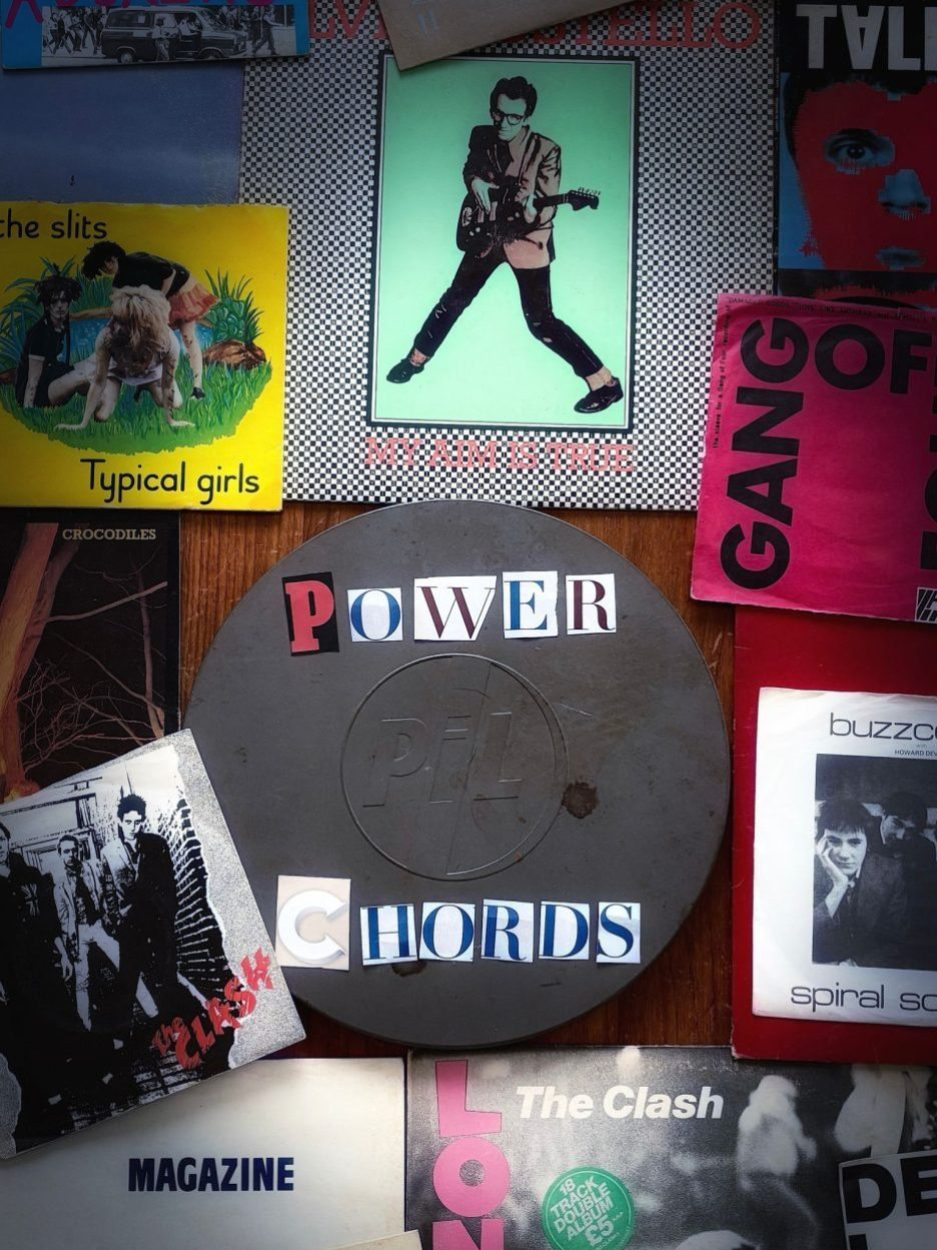
Van Gogh: the letters.

Our view of van Gogh feels so blanketed in known imagery and so ripe with cliches about art, ‘psychology’ and sentiment that maybe we can’t know what’s real. He’s arguably the one we all have some grip on but given the industry of tragedy and romance that time and coverage has engulfed his life and work in, the temptation may be to sit with our collective understanding – that of a man who couldn’t cope with the depth of his own feelings – rather than delve towards unlikely or potentially less satisfying clarity. Why learn more? Don’t we *just know* that he poured himself into his art more wholly and relentlessly than almost anyone who ever lived, and that therefore it figures the dam burst? Aren’t those central truths true enough and big enough?

They probably are… but given the genuine, affecting, visceral enormity of the man’s achievement, maybe we owe him another look. In this case – and does this sound feeble? Maybe? – via the stuff he wrote.

Yup. I’ve gone back to the letters; specifically the Thames and Hudson ‘Vincent van Gogh, A Life in Letters’ which beautifully and skilfully presents 76 of the 820 surviving missives. Chapeau to the editors – predictably all senior figures at the van Gogh Museum of Amsterdam – who a) select well and b) present compelling, authentic, believable chunks of the extraordinary content. There are plates, of course, and many of the letters feature the sketches that the artist so often embedded (and described so revealingly and copiously) within the text. (Guess what? The sketches alone make this an essential read, for their astonishing, three-dimensional but also emotional/symbolic life).

It’s a fabulous, poignant book and a truly historic record. Hard to imagine that there could be a fuller or more generous account of the business of human expression anywhere. The very first bit of puff inside the cover describes it as ‘A literary masterpiece that would be worth reading even if the paintings were rubbish’ – Jonathon Jones, The Guardian – which saves me a line or twelve. All I would add is that all of us who (with or without vanity) wish to be passably cultured should be well familiar with this material. It may define the word ‘seminal’.

The letters prove that van Gogh was an immensely cultured man, as well as a kind of gloriously honest empathist for peasants and The Lowly. His knowledge of literature, music and art, from Dickens to Delacroix via Wagner or Zola or Rembrandt, was remarkable, but also figured, given the family art business and the profoundly religious, rather scholarly, early home environment. Letters to Theo, his brother and saviour-benefactor, are deeply concerned with habits and trends and meaning in art, as well as the endless supplying of materials and living expenses. Vincent was all of the following; a religious ‘weirdo’ (early-doors); bookworm; philosopher and theorist. All to a high level of intelligence. Meaning the notion we may have of a Troubled Artist-of-the-Soil-and-the-Night Cafe is a poor under-estimation. The guy could think.

He could think and he could learn. He learned to draw: look at the sketches! From a late start he scorched or ground himself towards a kind of revolutionary draughtsmanship. Unique: brilliant; technical but deep and soulful and evocative in a way that may be unrivalled. (Meaning this image of him as a godlike but rather fearsomely crude colourist, devouring our eyes with the coruscating Sunflowers or cavorting Cypresses is again a travesty). Van Gogh worked tirelessly to understand structure and perspective and body: he did this knowing he needed it – and probably before he knew how his facility for ‘figures’ might light up the universe of possibilities (and the universe!) in tandem with his colours from the South. He also unquestionably felt that he had to earn the right to be taken seriously – to emulate or follow the masters – by working incredibly hard, with (somehow) invincible integrity.

His correspondence beyond Theo – with Bernard, Gauguin, Signac and others – confirms both that van Gogh was a theorist and intellectual and that this idea we have of him as a tragic failure in public or commercial terms is also an inadequate view. Sure there was no widespread appreciation of his genius or his work. But the artists swapped paintings and drawings, out of mutual interest and respect. And some of van Gogh’s works were hung, publicly. He earned a little money teaching and what we might now call mentoring. If it’s true he was so brilliantly revolutionary with his painting that the world simply wasn’t ready for him then a) this is surely a familiar tale, in the arts and b) this again hardly counts as failure. He was a powerful source and a focus for discussion around art in the contemporary artistic community whilst he lived.

Despite his tremendous feeling for historical giants such as Rembrandt and Holbein, Vincent both rated and respected modernists and those who challenged: but my god they had to it well, and with conviction. He became something of a semi-detached Impressionists, alongside or parallel to the likes of Bernard and Gauguin and despite his being challenging and undiplomatic (or worse), their correspondence alone validates the intellectual contribution the man from the dull grey North made. Of course Gauguin did play a role in the breakdown at the Yellow House (and did flee, arguably rather ignominiously after the ear-loppage) but the two great painters of colour did continue to exchange letters, after the event. Touchingly, van Gogh, having had a genuinely positive review from the precocious critic Aurier, deferred very much to Gauguin’s superiority and importance.

With regard to the ending (that we all feel we know something about), a few thoughts. Look at the letters, look at the paintings. The latter, from the yellow but iconically ‘purple patch’ at the house in Arles, to the ravishing-but-maaaybe-tormented cypresses and the last cornfields, painted in Saint-Remy or Auvers, are amongst the most affecting works of art in any medium. In both locations the artist was very much ‘in recuperation’, post crises. It’s therefore become classically tragic but let’s not that obscure the quality – the qualities – of the painting. It reaches more of us than almost anything in the entire history of art; this despite not being immediately easy on the eye. The mystery around how van Gogh found a gun, and what *exactly* triggered its use *at that time* does nothing to undermine the sense of hurt and of waste, that registers with all of us, even now.

Having re-read these letters I suspect that the family gathering, to discuss a long-contemplated potential escape for Theo from his unhappy employment (and the subsequent setting-up of an independent art dealership) was instrumental to Vincent’s suicide. Both brothers had been hugely anxious for some time about how they might proceed if some new way was not secured. Theo’s hopes lay with a brother of his wife, Jo… but it was not to be. No agreement meant Theo and family remained vulnerable to his own poor health and material angst, and that meant even less stability for his elder brother.

Scared, disturbed and no doubt feeling somewhat guilty and even responsible for much of Theo’s predicament – he had, after all, been utterly reliant upon him for a decade – Vincent shot himself, not immediately fatally, in a cornfield in Auvers-sur-Oise, dying two days later. Theo was devastated. He also succumbed to mental illness (although it is generally believed this was just a part of a medical picture including advanced, untreated syphilis) and died himself, six months later. It was Theo’s wife who published the letters, in 1914 and went on to further champion Vincent’s art.

Without the letters, the art is godlike. But the letters are huge. I deliberately choose not to direct you to a particular place. Read them all.

Films, eh?

It’s not the same – they’re really not the same. But I’m going there.

Apocalypse Now, in a cinema in downtown Grimsby, and The Quiet Girl, ‘at Haverfordwest Film Society, last night. The former immediately obvious as a giant; the latter a quiet insinuator. The scale, thunder and ego of the one and the timeless farmyard-backwater of the other. Brando and delirium and slaughter; grass and potatoes and family.

Both will haunt me, or have registered in a way that feels weirdly comparable. They were both palpably affecting.

In Grimbo all those decades ago we walked out shell-shocked in a deeply disturbed silence that defied the cut of conversation or analysis. The heft of the fucking thing left us gobsmacked – 100 people, maybe. That noise; that scope; that insane, thrilling annihilation with or by poetry! Not understood or received in the same way, of course: not to be snobbish but guessing only a handful of us had read Heart the Darkness but… nobody said or *could say* a word, as we traipsed out. Not us punkettes; not the Ordinary Locals. A) Out of multi-level deference to Coppola’s staggering achievement and b) because it felt necessary to slump against the nearest wall first… and – sheesh – recover.

1979, or possibly 80. But the two lads walking out together were as they say(?) changed by the event: how could we not be when it felt obvious we’d just seen the most powerful film ever made? It was like some public/communal de-flowering – and if that’s a dangerous image, who cares? This was a dangerous, wonderful, ruinous, life-changing moment which went beyond ‘the flicks’. However we might express it – with a shrug, with a nauseated heave – we all knew this was a truly rare affirmation of the power of art.

The Quiet Girl doesn’t look to compete with that – or not in the same key. But it does affect. As the bastard-of-a-father angrily stomped to either collect his wayward daughter or (we can only hope) give her up – yup, probably angrily – to the Other Couple, people around me were already raising hands to their faces. As the credits rolled and the lights prematurely rose, nearly everyone was tearful – and some were exposed ‘in bits’. Sobbing. So The Effect was not the same… but the validation, the triumph, the rubber-stamping of the capacity of words and pictures to move folks, to stir them up or down, was there.

Quiet Girl is traumatic despite being something of an ode to the pastoral. It’s all ‘unspoilt Ireland’, except for the unseen but undoubted abuse. It’s cows and hay and loveliness and that thing of handing over – ‘just for a bit, y’understand’ – a child who may be traumatised already and feels like one too many to cope with. Whilst the baby’s being born. ‘Sure y’understand?’

In case you’re wondering, if there is ever a fear that the universe doesn’t need another exposition of any sort on the mistreatment of children then that concern is emphatically and skilfully dumped, here – in fact it’s never raised! – by the compelling nature of the tale and the acting.

This Irish Story (in the Gaelic) looks and feels grippingly authentic, except perhaps for the brief scene where the girl’s potential saviours (Eibhlin and Sean) mistakenly allow her to be watched over briefly by a neighbour. (Have foolishly just read a review of the film, from the Guardian, to grab names/check spellings – forgive me if I don’t spend ages digging out the accents over some of the names – and it completely contradicts what I am about to say about the minor role of Una. Lols. But out with it). Sean, when the child (Cait) is rescued, swiftly and profusely apologises for the error, describing it as an example of his wife’s naive generosity. She even believed in Una. (This we can believe: Eibhlin is a genuinely gorgeous human).

Two things on this: Una is so witchlike the handing-over, even for a short time, didn’t seem plausible, even allowing for the plot-line development in the relationships. And also, for me, Una is poorly-executed. Neither convincing nor darkly funny. Something may be lost in the translation, but she seemed irritatingly out of kilter with the fabulous acting from Cait’s adopted ‘parents’ and from Cait herself. But this is a minor quibble, given my intention here is to thoroughly applaud the first-time direction of Colm Bairead and re-state that this is an outstanding, affecting film. So much so, I might even quote the Guardian, for my deferential, peacemaking final flourish:

It is a jewel’.

It’s guitar / it’s guitar / it’s guitar.

Firstly, they’re just lovely things; the woodiness is often wonderfully attractive to behold and to feel. And the shapes, being both deliberately sexual forms and fitting so well against the body, are kinda lush. It’s easy to fall for, or just really enjoy the feel, never mind the sound of a guitar.

I’m neither a techie nor an anorak and I don’t have money to ‘collect’ or even consider buying guitars that catch my eye. In fact, I deliberately don’t go looking, mostly, so as not to waste energy or tempt fatal expenditure. I can’t and don’t buy axe magazines and only occasionally meander into music shops, although this is partly a function of geography: there ain’t many geetar stores in rural West Wales. I’m also probably in that strum-prone sector of humanity that recognises its limitations: so may not even play anything in a shop, cos That Bloke Over There looks tasty. Feeble-but-true, then; relative poverty and relative shyness are factors. I do love music shops – and probably especially, yaknow.

Guitars are great. I have three, one of which is my bro’s, on long-term loan. That one’s a Spanish/classical job, characteristically sourced from a charity shop. No maker’s name, (not that this would necessarily mean anything), and very plain-looking but sounds really good. Woody and full. I’m a rhythm guitar chord-merchant but sometimes get a decent flow going. A recent return to regular playing has also meant that the softer strings are well-received – lay-offs do mean that acoustics or electrics bite a little.

Historically I’ve been on my Ibanez acoustic but right now the classical feels and sounds encouraging, even if I’m banging out Cure, Radiohead or Talking Heads(!) (It may surprise none of you that I’m using a soft plectrum, mostly, whilst committing this sin against high culture). I can fake some simple flamenco – or could – but (or because) mostly I’m a strummer, not a picker. I’m working on improving the left hand fingering-thing – the riffs, the ‘choons’ – but a) have never wanted to learn to read music and b) thrashing or embellishing chords or just finding a groove is perfectly satisfying. Oh and c) I have a developing Dupruyten’s Contracture in my left little finger, which is definitely starting to impact on twiddles.

I bought my acoustic as an angry know-nothing teenager, in a music shop in Grimsby. It cost £90, a reasonable wedge in about 1978 and, luxury-of-luxuries, it came with a hard case – now lost. Mum bought the guitar because ‘Dad wanted you to have one’. (He had died, tragically, some months before, of a cardiac arrest, aged 44). So there’s unavoidably heavy sentiment around this baby, but I can set that aside to clinically report that this guitar is genuinely excellent; I completely fluked it, having had a fairly cursory play, and genuinely knowing nothing about either makes or quality. It felt like a real weapon, significantly better than all kinds of Fenders or Epiphones or Tanglewoods that I have test-driven, since. I fluked it: it’s beautiful, having that extra ring or energy or soul that top instruments have.

Hilaro-fact: I did get Bert Weedon’s ‘Play in a Day’ with the guitar, before trying to get hold of (or learn) the preferred punkystuff.

Am suddenly struck with a senior moment regarding whether I bought my electric *before* the Ibanez, or not. No: I think I was given a catalogue electric guitar first – Christmas; the one I took on a pushbike to France – then bought the acoustic.

Either way I was in the business of learning Jam/Clash/Pistols/Buzzcocks/A Certain Ratio, maybe. The phase of Bill Nelson worship had passed: this was indeed the Modern World. Even on the acoustic I was knocking out the spittle: maybe a lurch here or there into anthems or ‘great sound’ – ‘You Can’t Be Too Strong’ Graham Parker. The electric was a toy, mind, and that did need sorting.

Manchester was 120 miles or so away but I got it my head that I would surely find an axe that felt like me there, so I went. Solo: bus, I think. Had no clear picture of what £120 would get me (in about 1979) but as it still felt possible at that moment to launch the greatest band in the history of the universe – rivals to Weller/Bunnymen/Costello and even Pil[1] in terms of wildness and fearlessness and relevance and ambition – it would need to be right.

I didn’t know Manchester and I certainly didn’t have the dosh for taxis to flit smartly around the gaff. Long time ago but I think I only found two or three music shops of any interest. What I probably wanted (Telecaster? Gretsch?) was beyond reach. I should have shrugged my shoulders, blamed the capitalist pigs and gone home. But no. I bought a sunburst Antoria Les Paul copy. It’s alright: it looks kinda smart and the bloke from the Undertones had something similar – although no doubt a full-on Gibson. Despite buying a second-hand Vox AC30  – ver-ry Jam and ver-ry Edgy Postpunk Superwallop – I’ve hardly played the fekker for forty years.

The guitar is goodish. My mate Jay (who could actually play) borrowed it and ‘loved the sustain’. Flash git that he was, he’d bought a new Fender strat and, to be fair, had *very generously* done a two-week swap with me: he thought the Antoria was okay. It was. But it never felt like me, not even when it sounded outrageous – when the Vox was attacking the world order via my passable Joy Division riffs. It’s parked by my bed, as I write. I had it serviced. It can sound half-decent but somehow I’ve never quite liked it; even with new Super Slinkies or Ernie Ball’s. Not me – too Supergroupie or would-be-muso.

Now the more I think on this, the more seminal it becomes. In the sense that however mad the next sentence sounds, it could be true, or contain stuff that’s stacked with possibility/regret/weird, wild delusion. If I had found a fabulous, sexy, spirit-animal of a geetar that day, I wouldn’t be here. I would be dead – indie-famous and then dead. If The (Only) Lads hadn’t buggered off to university – or if, less likely, I had found a coupla soulbro’s or sisses who* really bought in*, I might have been at the heart of a punky, spunky, dark and edgy, upful and monstrously-spirited rock and roll band. I would have launched at it and let it consume me. I would have been ‘inspirational’ and a pain in the arse. The drugs and exhaustion would have killed me.

Instead I’m oldish and I’ve had a different ride. Longer. Better. Wunnerful kids and fulfilling work. Giant gaps – years! – where the music that was everything receded. Where I never lost the spirit of ‘Poptones’ or ‘Hit the North’ but different blessings were the ones.

I stopped playing the guitar and wow, the circle turned. I have time. Is this me time? Maybe. Where’s my money at? How long can I indulge this? Don’t know. Don’t know.

Whatever; I’ll grab a weapon and strum, and maybe find some words.


[1] Yeh, o-kaay, they may have come later.

Them’s the rools.

There probably IS a law that says if you win 6-0 away from home, in a critical game, you should go through. In the same way that if you leg it eight times round Scotland you should get the Elgin Marbles – yeh, those ones – and score the winner. But this didn’t happen for Hempie, or for England. On a perversion-fest of an evening, Bronzie nodded an injury-time ‘clincher’ which didn’t quite clinch and fresh, starry legs somehow didn’t quite freshen. Plus er, Holland.

So the Lionesses, who were ver-ry close to superb, over the last 130-odd minutes of their Nations League campaign, were left with what ifs of a stomach-curdling magnitude.

What if Hemp had tapped in either of those gifts? What if the outrageous James had continued to rage (admittedly in her fabulous, drugged-kitten kindofaway) beyond the hour? What if the swift and intelligent Russo or the surging, willing Toone could have made a blind bit of a difference? But nope. Thrashing Scotland would have to be it. Normally – thrilling. Here – devabloodystating. Out. You. Go.

We can blame the Netherlands for being a) good and b) resolute. We can find moments when either James or Kirby dipped below their level and failed to deliver a killer pass, or Charles misread the obvious, or Stanway was a tad selfish. But mainly we should be saying ‘wow. What drama! What collective effort. What heroic stuff’. England ultimately missed out: but Jesus they entertained us on the way.

Scotland were thrashed. Fair enough. Their level is waaay down on England’s – because of resources both on and off the park. Except that hang on. Wales are similarly a slack handful of goals behind the Lionesses, but they held Germany tonight, so what does all that mean?

 It may mean only that Scotland failed to find the compensatory discipline and energy which ‘lesser teams’ need to latch onto, to offer them a chance. Wales are a match for Scotland, quality-wise: ordinary, to be blunt. But despite having a disappointing, not to say torrid Nations League campaign, they battled like hell tonight, against a German side that on the proverbial paper wallops them five or six several times out of ten. (Good stuff and congratulations to Wales, then). But Scotland.

At Hampden the Scots had only a briefish period of the first half which offered hope or respite. England had gone ahead, deservedly, but the home team produced if not a rally… a flurry or two. Then it was only mild carelessness that stopped England from scoring at will. Hemp’s left-footed pass against the foot of the post wasn’t unlucky, it was a howler – a shocker. And later she found herself around the penalty spot with time to choose a corner: but no. She remained a committed bundle of energy and oozed quality, somehow, on a night when along with James, a hat-trick was surely there for the taking? (She must have felt that? She must be feeling not a little responsibility for England’s exit? Cruelly, for she – Lauren Hemp – is an authentic world star, now).

James notched with a fluke off the defender’s back and then claimed the night’s Sublime Moment with her second. Stood up the fullback, dropped the shoulder a little and eased into space. Curled a sweet one (like she does in her sleep-of-the-ju-ust-fabulous), into the far top bin. Notably – because they knew, they knew – her face betrayed not a flicker as she jogged back to go again. Four nil to the Ingerland at the break but they knew (and were constantly updated) of the requirement to stay three or more goals ahead of them pesky Oranje. Lionesses miss out on the Nations League finals and therefore the GB team (is that right?) miss the Olympics.

The Scotland boss, Losa, apologized to their fans, post-game. Fair enough. They were relatively poor, but out-gunned, patently. Disappointment but no shame. He’s entitled to grumble about lack of discipline, defensively but some of this, inevitably, is about lack of quality – of awareness. Scotland were exposed by better players: you work like hell to avoid that but it can happen.

Is it dangerous to suggest that because of the stage of development that the women’s game is in – improving wonderfully but some years away from the situation where lower-ranked teams can routinely compete – England or Germany or USA or Netherlands *might well* stick five past Scotland/Wales/Northern Ireland? But it’s likely that gap will close over time. Scotland don’t have a Bronze or a Hemp or an Earp or a Stanway (even). Until either those players emerge in their squad or the general level of smarts rises, they have to get organised, battle relentlessly and hope.

Tonight England gave them little hope but their own ambitions were cruelly, dramatically squished. On a night of brilliant football, in fact.

We also did this.

Of the three of you who might read this blog, two may remember that the raison-d’etre of the mighty bowlingatvincent.com span round the sport/art axis, pret-ty much alternately. Meaning I *really did* try to write something sporty then arty.

This I think was more about gentle inclination than actual cunning planning – although I reckon I was conscious that no fekker on the planet was writing on M U then Frieda Kahlo. That minor dawning was about as close as I’ve ever gotten to Marketing , or Social Meedya Planning. Anyway – apologies – I’ve drifted from that aspiration.

I’m not in a position to promise any meaningful kind of comeback; just that I’m conscious of the drift and *would like* to address it to some extent. (In the (allegedly) Real World, I’m writing another book and pouring most of the creative energy into that… so don’t expect any progress on this for some months. However).

We all have faaaar tooo many WhatsApp groups, yes? I certainly do – and I almost hate it. Who are these people who feel they have to set up a separate group for every micro-section of every ‘team’ or department? (Answer; these people are YOU!) Bollocks. They are bollocks, most of them.

I have eight hundred but need two WhatsApp groups. Maybe three, including family. One for cricket and the other for keeping shit together; real shit, like heart and soul and meaning of everything. (Thankyou, lads). This WhatsApp is the greatest and funniest and richest and most life-enhancing WhatsApp group in the history of the universe. Like yours is, I hope.

One of the four individuals within this magbloodynificent posse sent a Spotify covers version-thang over. Most of it was instantly of us. Meaning it was surefire gorgetastic and appropriate: an easy win. Some of it, less so. I’m going to write about one of the tracks.

We all grew up in and through punk and the glorious aftermath. Joy Division, Bunnymen, Costello, Weller, Fall, Magazine, Clash, Cure, Gang of Four, Talking Heads. Later Pil, Specials and all that malarkey. One of us – *cheesy grin emoji* – still hasn’t grown out of the phase predicated on anger. But guess what? I’m writing about K D Lang.

It was a cover, yes? Guess which one?

Nope – or yeaaaah! – A Case of You: the Joni Mitchell song.

This is not my territory. I’m deeply (punkily?) suspicious of the world of melody, of beautiful projection – of choons. Realise this is utter cobblers, the immediate exclusion or de-legitimisation of everything Paul McCartney and Almost Everybody ever did… but still hold onto that ultrapunk notion that making cute, beautiful-sounding things led us to the wall-to-wall masturbatory shite that was the seventies super groups and most of commercial Pop Music.

Us Angry Bastards are still right to be anti-airhead, anti-vacancy, anti-conciliatory: it’s still not right, not enough, to be a music-maker who wants to be adored for their wizardry or musicality. Not when the world needs improving so much. But hey; I’ve gone off on one…

Torch songs are not my territory. Great, tuneful singing rarely moves me.

A Case of You is about Mitchell’s fine, fine songwriting… but mainly it’s about the singing. It’s next-level gorgeous. Lang can sing but here she is into the sublime, crossing and dipping her toes into the stream that is the piano.

Things ease more than they twinkle: the vocal is parallel then sliding or surging ahead. It’s rich and melancholic but (critically?) somehow ego-less. Lang and the sound crew produce a quiet triumph of technical excellence where the soulfulness is in no sense neutered by ‘performance skills’. (In fact the fekkers make it work, goddammit!) This is High Torch but still manages to be risky and human and genuinely poignant.

Try singing it. The spacing – and the range, obvs – are a challenge. Lang is masterful. It’s a dollop of perfection, the kind of thing you want aliens want to discover when they land next August and find we’ve self-incinerated. Because it’s about us. Lang’s singing is Peak Expression of our capacity to relate and to feel. It captures and vouches for us.

The more you listen the more you hear a very rare mix of control and luxuriant risk. It’s full of blood and wine and maybe damage. A Case of You is not, I think going to change the world but it passes the Punk’s Test for value. It’s a great, full human statement: a complex story we don’t need to unpick. I want those space-travellers to find it and nod in approval.

We humans were lousy but we also did this.

It Goes On…

It goes on. Painfully; extraordinarily, the crassness of it all being weirdly relentless – almost as though These People are intent on wearing us down.

Building regulations ‘opened up’… in clear, bullish, provocative contradiction to the water crisis. Deals cut for the Barclays; reams of contracts reeking of the same, foul whiff, succeeding the awesomely flagrant track-and-trace and the (useless) protective equipment deals. Remember those? Remember the bee-line to donors and pals? Remember your cash being systematically pilfered? It goes on.

Johnson’s lazy, assumptive greed may have been at the epi-centre of this historic low: but his Cult of Endowment has spread. The modern Tory seems to generally believe that the rules don’t apply to them. They are without conscience and they recognise no authority but their own ability to push things through.

We can’t let their dumb selfishness, their raw, idle corruption and their hatred of others drag us into the kind of desensitized fog that suits their purposes. We really are (and really have to be) better than that.

Zoom in. Our rivers – the arteries of our landscape – are choked with shit. It’s a perfect symbol for the era of Johnson and Gove, Truss and Patel, Mone and Sunak, Braverman and Zahawi and Rees-Mogg: the time when shamelessness, greed and the worst, most indulgent kind of uncaring trumped the authentic work of government.

Add to that list the names of Shapps, Jenrick and Coffey and we have a pret-ty clear picture of the Deeply Crap People who have constituted the party-in-power for more than a decade.

They were murderously incompetent through the pandemic. They were more obviously corrupt around the sickening Covid Fast Lane (for sidekicks and schoolmates) than any government of our lifetimes. Only #theveryworstofus could turn international but also deeply personal family tragedy into a business opportunity for the clan. Only that Johnson tribe (and its flunkies in the media) could squeeze filthy lucre out of that moment.

But it goes on. Via inevitable subterfuge – the disappearing stories, featuring Mone, Harding(!), All That Covid Money – or through the whole, wretched, perennial Tory donors thing. Environmental standards sliding yet again (despite the outrage around our rivers!) because the Tories need to payback the developers. Sunak the smiling void implicated in a zillion convenient outcomes for his family, for the people he needs. Crass, mindless gifting of advantage to industries or individuals that back the Conservatives – even these Conservatives. Just how stupid do these clowns think we are?

It’s possible that the wearing-down of our intelligence (and therefore our resistance) is strategic. The Soul-Dead Robots advising the Tories *really might be* sensing, in their foul, ‘pulse-gathering’ systems, that pressing the Small Boats button or the ‘look, Wokes!’ button hard or often enough might see these charlatans through.

We have to be better than that. I think we are. We have to gather ourselves; protest; use the law – even when the process feels tilted against us. Not only must these Tories go… but they must be held to account.

Pic from Reuters.

Quality will out?

Better team won? Think so. The first half was a good watch, the second that familiar mix of drama, am-dram, controversy and disjointed play… but Spain unquestionably deserved the win.

Wiegman was stirred into action at the half, changing formation and personnel. Whether you think this was shrewd and positive or belated, given the likelihood that a Walsh and Toone or Stanway axis and a back three would be stretched (if not unhealthily contorted) *by this opposition* will of course depend on the level of your Sarina-lurv. (Mine is high-ish, but Spain have quality, they have intelligence and they have a team shape/’way of playing’ that is going to expose lack of numbers and/or width across midfield. The universe knew this).

England started well; brightly, with Hemp doing that bustling striker thing with notable conviction. Russo was less involved, perhaps predictably, but under-achieved a little on the keeping possession/linking play front. This, and the need for tactical re-organisation, meant the central striker was withdrawn at the break: that will have hurt but it did make sense. Walsh was again present… and yet not; her contribution, like too many of her team-mates, being fitful or ultimately ineffective. It may be telling that the defensive bulwark that is Carter was the Lioness emerging with most credit, on the day.

The story of this World Cup should maybe start and end with the astonishing antipathy betwixt management and players in and around the Spanish squad. Several worldies flatly refused to play under the Vilda regime and yet they not only went and won it but looked like a team buying into something, throughout. They played largely in that groove. It’s an extraordinary achievement for both coaching team and players to be so divided and yet make something this complex (and fraught with variables) work.

The goal was a gem which felt like a rehearsed execution. Bronze gave the ball away, criminally, in midfield. Sure, her comrades had not done enough in terms of making angles for the pass but Bronze ploughed on, greedily, head down, her angst brewing with every yard of error. There were ways out of that mess she chose to ignore.

England’s brilliant veteran has again too often looked like a Huge Talent veering alarmingly between overconfidence and over-thunk misjudgement. Here, as she stumbled towards the centre-circle, Bronze did not look like a player over-doing the reigning-in of her superior gifts and athleticism. She looked a bit daft: she was culpable.

The inevitable concession of the ball preceded the simplest, purest, most ruthless exposure you can imagine. Have ball, head up, go left. Full-back in space (known to be vacated by Bronze). Pin-sharp drive across the keeper. Goal. A truly glorious *routine*.

Carmona’s symbolic, statement, quiet-wondernotch won the game – and rightly, somehow reassuringly so. That it came early may have contributed to the rather unsatisfactory nature of the second half, which was disjointed, stressy and almost bad-tempered by comparison. We saw some fluency again, from Spain, but England were physical – sometimes in a way we might characterise as ‘borderline’ – ‘direct’ and still unable to raise a significant or sustained threat.

James, Kelly and England came on, to little effect: the latter two being frustratingly wasteful when they must surely have been heavily instructed to use the ball with care and commitment. There were fouls and a little exaggeration. There was an hour-long wait for a penalty, against Walsh, for a relatively minor (but obvious) movement of the arm towards the ball. Earps, after some blatantly cynical but arguably successful interference from Bronze, saved.

The referee lost some of her nerve and control as the half proceeded and the stuttering and shapelessness began to dominate the football . Bronze should have been booked. Hemp and Stanway and some of the opposition should have been booked, for clumsiness and/or that now ubiquitous ‘breaking-up’ of the game. Paralluelo, (if the letter of the law, blah-di-blah) should have been sent off, for kicking the ball away, having been booked earlier. (That might have mattered).

The Lady in Black opted out, not enough to spoil the contest, but, in a competition where one of the major plusses has been a marked improvement in the admin, this was unfortunate. Penso was lucky, in a sense, that her drift appeared to be non-instrumental. The team in red found more space and more angles than the team in soft blue. They looked more likely to extend their lead than England did to nullify it. In short we got the right result.

Yup. In sport we want the best and most entertaining teams to win tournaments, yes? Spain may have been a narrow second to Japan on the watchability front, but they brought a particular, highly-developed quality to this that no-one could match. So good luck to them. I hope they enjoy their separate celebrations.

England, meanwhile have had a good tournament, in which they have ‘max(x)ed-out’, by playing well once or twice, and ‘finding a way through’ on the remaining occasions. (Such is tournament football). More importantly, they will undoubtedly have inspired the next generation. They have players and are likely to remain a force.

Spain, with top, top players *outside of the current squad*, may find themselves building a dynasty.

Producers.

Another vid; this time Leeds. It does burn, eh? That arrogance, that gulf of apparent indifference. Headsets on, blinkers on, dead souls dreaming of cornerflag dance-moves. Fans? What fans? ‘Banging choon, dis, Lukie!’

But friends we better acknowledge – because it’s surely fact? – that plenty of footballers are good guys (and gals). It’s just the other stuff that makes them seem like mindless twats.

In the last few days I’ve seen two England players – Trent, and Callum Wilson – project some authentic positivity and awareness. The Liverpool man has launched himself with some conviction into the flash but scandalously dumb world of the Academies. (Dumb because the Great Arrogance holds: that riches lie in wait; that the world will be scoured; that selection and development can be shite, because Everybody Who Could Possibly Have a Shot At This, is in the building. Dumb because a zillion players will be cut, with poor preparation and aftercare – hence the Trent Intervention).

Wilson, in #MOTD interview, spoke eloquently and wisely about poverty, exclusion, embarrassment. We do see this and we need to, partly because many of our footballers did come from ‘nothing’. Their background was scruffy and under-privileged. And it’s therefore only right that there are Football Officers at every club, doing real community work. So… how come we see that gulf, so often? Players behaving appallingly or heartlessly or with no feeling for either other people, or for the responsibilities they must know come with their profile? Do they know? Ain’t that part of the Academies’ job?

Lots of players are stupid. Some are genuinely arrogant and uncaring. It’s entirely possible that incident A/B/Z might trigger the concern that many lack any real understanding or attachment to what we the Solidly-Decent Ones might consider to be acceptable, non-negotiable values. Some of this crassness and delusion is learned behaviour, centred on or springing from the Academies and their status. And predicated on mind-scrambling money. Like the pandered elite, these kids really don’t need to care. They know they’re important, because the facilities and the environment infer that. Plus they have sixteen cameras on them, or will have. And some bloke will be thrusting an urgent ipad or a wee whiteboard under their nose(s), and they’ll be told to speak behind their hand, because they hold precious secrets. Everything’s vital; the game-plan, the barnet, the moves.

Truths do lurketh, but this provocatively traduces so much and so many. There are wonderful people working in football at all levels just as there are in cricket or any other sport. So the modelling of behaviours can be magbloodynificent, too. But footballers do seem to behave and/or react disproportionately badly, whether that’s ignoring or not even registering the existence of fans or cheating, faking or routinely and foully abusing officials on or around the pitch. (Bold opinion: footballers are shocking for this. As are managers, of course). Importance and self-importance must play a significant role, here.

Football People on your tellybox are very often lying, manipulating, or at the very least myopic. It’s accepted. Despite the physical impacts and clashes being patently less loaded (and therefore less provocative) than they were, footballers react badly very often, either being dishonestly ‘dramatic’ or plain cynical. Again, fascinatingly unknowable how much of this is bastardised vanity – stay down, roll around a bit, you’re on the telly – and how much tactical cuteness. (Milk it; make it work for you – their fella might get a card). Whatever, the void where the instinct-to-play should be, the ‘get up and crack on’ impulse, never mind the values-thing, is depressingly ever-present.

It’s also unclear how much of the poor behaviour is coached. If Zaha – now substantially reformed – was at one stage the most obvious diver in the Prem… was he coached to do that? Were Kane and Sterling coached to adjust and engineer and feel for ‘contact?’ Did they throttle back on that, somewhat, after Southgate had a word? I suspect that this is more learning-in-the-environment than explicitly instructed, but don’t tell me that strikers don’t get told to ‘go down’ if they feel a touch.

This asks questions of the leading managers: like who can we respect, for their civility? For their fairness?
Klopp is a good man, a Football Man who loves the game, his players and understands Liverpool. He gets most things, he has soul, you suspect, but even he explodes, outrageously at officials – as he did during the Tottenham game. (And don’t go telling me he was provoked. Unacceptable: he almost seemed to concede that by joking about his mid-abuse muscle pull). Pep is generally able to keep a lid on his emotions but does like the occasional incandescent rage. Arteta I find unlovable, for his own, peculiar, deeply-brewed, extravagant inflammations and that dark, pointy vitriol. Plus those strategic ‘break-up-the-game-by-going-down’ rotations. Given the extraordinary profile these guys have, their level of discipline and respect is obviously woeful – not just woeful. This is undoubtedly why the phrase ‘role-model’ has gone from the game – because many of the most central figures are too often an embarrassment.

For me the idea that we need to cut these fellas some slack, because of the intensity and pressure in the game, is cobblers. And ‘passion’ of this sort is not ‘part of the theatre’, (Mr TV Production Geezer), it’s part of the problem. Because, speaking as a sports teacher and coach, I can tell you that young people are influenced, negatively, by what they see. In games lessons – not games! – I have been harangued by kids who cannot accept my fairness and cannot control their emotions. I can think of a young, strong lad who ‘stays down’ for minutes virtually every time he experiences contact. (It’s absolutely hilarious; he will roll and silently fake deep, deeeep agony but it’s also weird… & depressing).

These kids think they are Kane/Sterling/those Gods on the Telly. When it comes to decisions, contention is their kind of default position, not acceptance. They are imagining the cameras, the spotlight, the high-resolution impact and import of this moment.

Let’s re-set. Because there are also moments when the likes of Match of the Day offer a glimpse of decency, social-conscience and intelligence. And may even evidence the care and commitment that can and does come from players – the best of it, away from the limelight. Alexander-Arnold and Wilson impressed me, over the weekend, and they are not alone in giving something back. I doff my flat cap – sincerely. But if we look at football behaviours in general terms, there is an argument that a crucial part of the sportsmanship*, the honour**, maybe even the point, is irretrievably gone. It ain’t coming back.

(For what it’s worth I’m sympathetic to this view, that we compete wholeheartedly, and therefore honestly***, and I register the slippage away with real sadness).

But does this then, overwhelm or preclude all other state-of-the-game hypotheses? No. We may think that in other general terms, football is as good or better than it’s ever been. City under Pep are amongst the most fabulous, watchable sides to have played the sport. Defenders are now more rounded players, more capable players than ever before. (They just can’t defend – lols).

I’m sympathetic to this view, too. Meaning that, spitting blood, I’m being bundled towards another unsatisfactory conclusion, both stylistically and in terms of meaning. The universe now has us where its cheesy, salesy Producers want: between, goddammit, beauty and the beast.

* & **. Yup, I know. Archaic or anachronistic. But also some truth, yes?

*** And yup, I guess I am saying we aren’t competing entirely wholeheartedly if we’re not competing honestly.

Moral Authorities.

Aaaargh! Keane, ‘analysing’, actually uses the c-word – clever – to describe Paquetà’s hideous thirty-foot, spine-distorting dive to claim the pen, for West Ham. Half-challenged by the host, he then adjusts to include the possibility that the player may have cheated, by saying that he’s ‘not saying that he cheated… but’. The hilariously execrable Hasselbaink goes along with him. It’s another depressing moment for this game, football, the playground of #PremierLeagueLegends, and for sport.

We are all Keano, these days. Entrapped by the laws, by VAR, but mainly by a universe where players routinely ‘seek to draw contact’. It may just be an extension of the whole truth-void phenomenon. Trump lost, Truss was let down and Dido Harding was all over everything in a good way. It’s both obscene and o-kaaay.

Paquetà has no other thought than to adjust his feet & body so as to maximise the chance of drawing *any contact whatsoever*, at which point the centrifugal whirligig-thing kicks in, and propels him into the next county. Even live you could see that the defender, fearing his own potential misjudgement, withdraws everything withdrawable, to try to prevent the slightest of touches. He probably or possibly fails. VAR and Keane think it’s a penalty and perhaps it is. But it’s also an obvious travesty.

Can anything be done/should anything be done, about this? Does it matter?
It would seem my appallingly pro-decency view of this is an outlier. But what the hell. I still think that there could and maybe should be some accounting for cheating or deception or cynicism; ideally calibrated to work against its most offensive forms. I do not accept, friends, that it’s okay to set out to (for example) get a penalty. However laughably out-of-touch it may seem, in the face of relentless acquiescence around behaviours that may be lawful but patently awful, I advocate a fightback. Note the cheating – log it and/or tot it up. Significantly publicise the results: in short, call out these Clever Clever People.

Fans know who the cheats are, or what cheating is – even if their tribalism excuses the naughtiness from their players in the moment. Keane knows exactly what Paquetta has done but thinks that the defender was clumsy in the miliseconds before and probably made contact, despite trying not to. Therefore he goes along with the decision. Simultaneously, he think it reeks… and I can live that… because these things are complex.

There’s an acceptance by some that strikers are entitled to seek contact even if they move arms/feet/legs ‘un-naturally’ to achieve it. Others – like me – think both the idea of that entitlement and the practise of engineering contact are shit. A player’s intention can of course be open to interpretation: it’s therefore ver-ry tough to prove that Kane or Zaha faked or dived, but this can be accounted for by intelligent witness and by noting or scoring the transgressions skilfully. So for example Paquetà gets a debit mark for ‘seeking and adjusting to attract contact and obvious exaggeration, with dive’. Or similar. The heaviest and most heinous examples of whatever kind of crap get the strongest response… from our unashamedly Moral Authorities.

In my happier daydreams stuff like this really happens. Weekly reports are drafted and a league table of scheissters produced. There are even penalties – I mean real ones! Not financial, obvs, they mean nothing. Games missed and a certain level of public humiliation. A calling-out.

You with me? 🤨

*Wonders aloud*: would the Premier League pay me & a couple of others to grade matches for Sporting Behaviour (or whatever they wanted to call it?) A wee panel, covering every game; noting miscreants.
Thirty grand seem reasonable? 🤓

We are Town.

The universe conspired not only to keep me from this game… but keep me from watching it. No matter. The sound, holistic thrashing this very good Premiership team delivered to our allegedly ordinary League Two side has the ultimately reassuring ring of some Deep Natural Order about it. Rights righted: qualities writ large. But we were right to dream, and dance, and wave our daft fish about. We have qualities, too, from the wonderful, selfless loyalty of our travelling fans to the next-level, humane intelligence of some of our board. On the pitch, outclassed. Off it, as good as anybody. Hands raised in gratitude and pride: we are Town.

Yes we are. Though we moved away, we are still Town. Not unduly conflicted by living all my working life in Wales, boasting Welsh-speaking kids, working in *another sport*, having grown up not just Town but with Town blood on-board. (Mighty Vic Dodsworth, GTFC 1930-something. All-too-briefly, as it turned out, cos crocked. Wee underdogs Manchester United took a chance on him. But crocked). I can’t be the only one who grew up a Proud Something-or-Other and became a Proud Something-Else… as well?

So from my home hamlet in Welsh Wales I’m absolutely buzzing for my home town’s carnival day. Sure I’m medium-gutted I couldn’t get a ticket, and more devastated for soulbro’s who unquestionably deserved them more but still fell short. But all of us know that it’s dead right that season ticket holders and full members got in there first. (4,600 snaffled before you could say “E for B and Stuart Brace”). The club is doing lots of things right on and off the park; Jason Stockwood’s Administrative Army continue to play a blinder around the ethics and issues of running a football club.

You may have heard good things. My understanding is that Stockwood and the Corporate Posse behind the Mariners *really are* those rare beasts the conscious capitalists. They do not separate football activity and/or ‘success’ from work which supports the community and the environment – meaning the town, not just Town. Sure you’ll hear a few of those rather concerningly workshopped soundbites about ‘passionate’ this and that, but there is plainly a gritty commitment in the club hierarchy, as well as a smoothish patina. What the Guardian termed ‘social entrepreneurship’ does appear to have taken hold in a remarkably positive way: methinks those are not words that might traditionally have been associated with this club and this town.

Grimsby’s been a joke, we know that: one that our friend Sacha B-C tried to turn into something. The stereotype of an ugly, dated, litter-strewn, beery, ‘tough’ Northern coastal town will be hard to shift, partly, of course, because these slanders all hold a little truth. The docks did kinda die, waaay back then, after the Cod War. The ‘flyover’/Cleethorpes Road quarter still speaks to the era of closure and hardship and booze and anger on the streets. Much of the walk in to Blundell Park still feels like the scene for a progressive documentary on football hooliganism. But Stockwood and co are smart, willing and aligned against old failings and lingering prejudice. They want better for the town and understand something about the conjoined powers of sport and identity.

You don’t have to be a football historian to be aware of the ridicu-season that GTFC enjoyed, last year. (Whether you are or no, go dig out the record-books, and look at the journey to promotion). The series of extra-time wins to get to the play-off final was extreme sport: thrilling; shocking; unbloodyprecedented – or it felt that way. I was at West Ham (the London Stadium) to see the Mariners splutter to a win. It felt destined; or like one of those few things that really deserve to happen.

For Town to be in another football epic, so soon after, is both fabulous and bewildering. But it also figures. There is a vibe around the place. They have players. The manager is maybe flawed (this is my own view, from a distance, of his tactical vulnerabilities… but I say similar about Gareth Southgate) and yet also wonderfully true and consistent and even-tempered. Philosophical, one might say – like the hierarchy, perhaps? Things have been directed or they have conspired but in short it feels good to support Grimsby Town. They present, in the modern, media-conscious parlance, like a good outfit. In interview, footballers toe the party line, to the point of vacuity, generally. Town players seem to mean this stuff about loving the club.

But Brighton loometh and Brighton are cute. They’ve played more fine footie than most in the division, this year. And yes, that would be the Premier League. (I’m not a subscriber to the view, by the way, that the Prem is that great: it’s surely more that there are great players than any depth of brilliant teams. Tottenham, for the top four? They’ve been shite, for months!) Brighton are bright and well-coached. They have a compelling (and possibly worrying) combination of pace and imagination. They play with both control and urgency. The gaffer may be at Real Madrid (or Liverpool?!?) before you know it. Southampton, they are not.

In that previous round most Town fans concede that though it was one of The Great Days, Town were poor. The God Of Doughtiness that is Waterfall was strangely subdued and the defence porous or even ragged. The Talent that is McAtee was flat. Even Holohan – who gathered himself admirably to convert the two pens – was unable to do that precious, beat-establishing water-carrying thing. One of the Great Wins was also a weird under-achievement.

In one sense this might augur well. Us glass half-fullers will be thinking there’s so-o much more to come from the Mariners that Brighton better look out. Waterfall really is one of the lower-league gods – absolutely no disrespect intended, he’s well-capable of winning any game, at either end of the park. The keeper, crucially perhaps, is generally solid. Town can play, in and through midfield. McAtee has a wonder goal in him. Plus it’s the cup, the Town fans will be Really Quite Something and let’s face it, it’s a free hit: the fella Hurst is already, if metaphorically, holding the trophy.

The reality and even the coverage will be all about the support. Masses of grinning Grimbarians wielding inflatable fish; for the second time in the campaign, on the South Coast. Heavy mileage, who cares? The overwhelming majority of those in the away end love their home and their club deeply. They are Town.

But look there’s no time for or value in existential guilt about who’s real and legitimate: zillions of us aren’t or can’t be full-on authentic supporters. I follow on the Twitters but rarely get to games because of the 340 miles twixt venues. I’ll be coaching cricket, believe it or not, whilst the game’s on(!) You, meanwhile, wherever you are, could get behind The Grimsby for one day and join in with that woolly stuff. The romance. The feeling that Town can register something beyond football. Go with the daft magic about Harry the Haddock and Harry Clifton (one of our own). Tell your mates that them bloody fish were rainbow trout, first time around. Raise a glass, maybe. The Lads may need us.

The Boy Linaker dun gud.

It’s brought out the Wise People and the utter morons. It’s mind-crushingly obvious and kinda MASSIVE with subtle richnesses. As I write, it’s a massacre, with both the BBC and this, the filthiest and lowest government of my lifetime, fabulously skewered by everyone from Lineker and Wright to the external articulate voices of the centre and the left.

For the plainly compromised Beeb, with its laughably compromised Chairman and Tory-littered hierarchy, this is A Moment. For some years, many of us have been simply unable to trust in (or even watch) the headline news and current affairs output because of the embarrassing luxury of pro-right-wing talking heads or ‘storylines’. One example – and surely history will judge it this way? – has been the responsibility of BBC (amongst many others, of course) for facilitating Brexit and the similarly race/xenophobia-based projects of recent years, by hosting Farage and equivalents disproportionately often. It simply cannot be that he appeared appallingly endlessly by anything other than deep-lying design.

News output remains complicit now, by falling in behind the repugnant #smallboats soundbite. Hosting the ‘illegal’ (but not!) migration of desperate, endangered people as though it was ‘an invasion’ is a travesty of the facts as well as suspiciously helpful to the Tories. (The BBC are using that phrase – that phrase! – routinely, as though there’s no other way to describe it. Almost as though Sunak’s PR team are feeding it in there).

Let’s be clear; this gang of heartless, shameless bastards pushing the immigration agenda are doing it a) because they are evil and b) because they know that in terms of electability, hatred is all they’ve got. For the key public broadcasters to fall in so pathetically behind a patently racist campaign is extraordinary and abominable, making this something of a historic low-point, both in terms of amoral politics and journalistic integrity. Shame on all those involved.

We need to make it explicit that naturally there are people of integrity at the BBC: there will probably be more lefties than fascistic goons, simply because most beings with any level of intelligence must gravitate towards what we might clumsily call liberal ideas. But I’m not going to list yet again the chief influencers at editorial or full-on management level who have either funded the Tories or worked in the cesspit that is the right-wing media. It’s just fact that too many Beeb Bigwigs are not independent or neutral: (this needs sorting). It’s just obvious that the gaffer needs to go, for being in and/or lining Johnson’s pockets. It’s just obvious that because the game is up for the Conservatives, the leadership is going the nasty, red-meaty route.

Gary Lineker is brightish, goodish man. (The Mail, Sun and Express will shortly being trying to contradict that notion by digging out filth upon the fella but that notwithstanding, he has form for being a tolerant, generous human). If you can be bothered to look at *what he actually said* in the tweet that started this furore, you will see that he rather carefully constructed his observation: it’s neither crude nor especially inflammatory. Lineker uses the words ‘not dissimilar’ as opposed to saying that the language of the Tories was actually taken from the Nazi playbook. For me this suggests a degree of thought and care markedly absent from many of the responses. But that’s semantics: let’s get back to the facts.

It’s a fact that this government is deliberately raising cheap, visceral fears and enmities in order to distract from other failings and to focus the public/political agenda on stuff that might be a winner for them. No matter how low, or twisted, or immoral, or untrue. No matter that the ‘crisis’ itself is largely invented. Or that we take massively less refugees than other, comparable European nations. No matter that it’s wrong and inhuman to portray scared, vulnerable people in inflatables or small craft as nailed-on criminals and cruel burdens on the state – as scroungers, or worse.

This is what Lineker is drawing attention to and forgive the repetition but again I’m going to say it’s obvious. It’s undeniable. It’s true. He is saying that our government’s response to these events (or relative non-events?) speak of prejudice and intolerance in a way that makes us think, inevitably, of 1930s fascism. For this is the demonisation of innocents.

It may be dangerous or inappropriate in any context to talk of ‘decent people’, in 2023, but surely all decent people – even Tories – know that the small boats travesty stinks. We must be better than that? As I write, more and more of Lineker’s colleagues are backing his stand. So there is hope, friends.

The bowlingatvincent.com Multinational Corporation Review of the Year – 2022.

bowlingatvincent.com – literary wing of the Protest Channel that is @bowlingatvinny – had a strongish year. (I know ‘cos I just looked back). Except that it accidentally traduced the original purpose of the whole damn enterprise, which was to roar about sport and art pretty much alternately. I may reflect on this.

Of the fourteen blogs during 2022, five were about football. I rather unpicked Wales’s World Cup Adventure, got into United and Ten Hag (v West Ham), covered England’s Lionesses v USA and through their Euros win and watched my home town Town at the Play-off Final. Astonishingly, of the eight zillion opinions and tactical judgements I expressed through nerve-janglingly live coverage of all these occasions, I can – even in the allegedly sobering light of day – find none that were wrong.

  • Contest. And then maybe not? I was dead right that Wales needed to play better and that Bale should retire from (certainly) international football and probably club action, too. Now.
  • ‘Where are Wales? What level they at? Are they heroic over-achievers, in a cruel, more heavily-endowed-with-everything kindofa world? Or what? Where’s the Wales Place, in footballing terms – and maybe the other stuff? Football-wise, are they brave and bold, or are they ungenerous and perverse? Are the ‘limitations’ enabling or stultifying? Where do, or should Wales pitch themselves?’
  • I was right to note with some embarrassment that the USA – not Argenbloodyteena – ‘slaughtered’ Wales in the first 45 minutes of their campaign and that for all the justifiable gas about a rare and wonderful World Cup appearance, Page’s ‘pragmatic’ conservatism disappointed. Sure, Wales have few great talents (so responsible caution blahdiblah) but the endless holding patterns only seemed to undermine both individual performance – no surges; no racing adrenaline for player nor support! – and the essential hwyl that has carried Wales for aeons. It was all a bit lame.
  • I nailed the Rashford Thing and the signs of re-growth, under Ten Hag, in Holding Players. Elanga was similarly *seen* and Fernandes un-picked, en route.
  • …’quality-wise, there was little difference. In the first ten both Casemiro and Eriksen showed glimpses of their rarified best, either threading or spraying fabulous passes into feet, offering real hope that the mythical(?) corner into Team Flow and Sumptuous United-ness might yet be turned. But no’. 
  • In Things Have Changed I trumpeted the stunning transformation in women’s football, in England, and by implication, beyond. Ingerland ‘bossing the yanks’ said it all, after a decade or more where North American soccer all-too-serenely ruled over us amateurish Brits. I noted the ‘supreme equanimity and humour (as well as tactical intelligence)’ of the new gaffer – Wiegmann.
  • More controversially, perhaps, I mischiefed-up the Euros Final, fearlessly calling out relative under-achievement, performance-wise – even in victory – on the day. (Come ON. Don’t you get bored of the faux euphoria that massively over-inflates the *actual performance(s)?* It’s perfectly possible and generally the case that trophies are won in ordinary games by ordinary performances. This in no way deflates the fabulous significance of the achievement).
  • So, in Clickbait? You betcha! I do argue that recent SPOTY winner Beth Mead was one of several who were mixed, rather than brilliant, in an absolutely brilliant tournament win. I correctly identified that presser invasion as ‘the best moment in the history of sport’ and named Millie Bright Player of the Tournament… because she was.
  • Finally – well, previously – I *actually went* to the home of West Ham United FC, to cover the Mighty Mariners. Great day/crap game.
  • ‘It’s absurd in 2022 to use phrases like ‘attractive football’; worse still to associate that with abstracted, rose-tinted community goodness but as I look around the acres of ‘park’ now home to the Happy Hammers, the clash of values, vistas and jazzed-up-verbals is somewhat mind-blowing’. 

The Other Channel, now sportslaureate.co.uk , carried more football but bowlingatvincent.com was always the home for rugby. Life and *things* – like cricket, mainly – have regrettably drawn me away from funny-shaped balls but I managed to post homages to the egg on three occasions.

Despite being a Likely Phoney – male, middle-aged, possibly voyeuristic; at best a flawed dilettante – I watched a good deal of the Women’s Rugby World Cup. It was sensational. England may not have produced to their absolute peak but they have been utterly magnificent – frighteningly, powerfully so – for two years. France are not far behind. And then there were the homefolks.

  • The final, between England and the Black Ferns, had to somehow bear comparison with the semi, between New Zealand and France, which may have been the best rugby match of all time. I wrote rather wryly about the Black Fern’s ultimate, inevitable win; again creating mischief, again misunderstood. England had a player sent off – rightly, under the rules of the modern era. It (the offence) wasn’t malicious and it happened so early that the contest was effectively re-drawn as a training-ground routine. England held-out wonderfully gamely but were done, from the moment of the card.
  • ‘The second half may have been as colossal as the first. It was an exhausting watch, with the defiant visitors floating through chunks of time, before selflessly, heroically heaving against the inevitable. Both sides naturally made changes and inroads. Both scored. But the universe had been shifted. The crowd knew it. England were overhauled, before striking back. Then overhauled. With three points in it, the battered visitors kicked for the corner rather than look for the three points that would bring extra-time’.

I wrote two posts on (men’s) Six Nations stuff, back in February. They stand up, too. One of them channelled both The Mekons and Dylan Thomas: it also morphed into part-coverage of Eng women v Aus, at The Cricket, with ‘Rafters clanging. Sea rumbling’. It’s likely that I was in a caravan, in one of those storms, at the time, so it wasn’t Heather Knight who was fearing airborne adventure. Oh: I may or may not have been drinking.

There were but two artsy posts. One on Freddie Flintoff’s TV caper and the other around the Sensationalists/YBO’s art and lifestylery. I am critical of both… but right… as you will see… if you go back through. I’m really not sure what caused the apparent shift away from The Arts: they remain at the core of my life and my learning. I still believe I have some contribution to make, to reviewing and/or ‘criticism’.

From Sensationalists: people who might convince us: ‘Morons at the Mail, poor or tokenistic arts education and profound levels of ignorance have engineered a situation where we are a) visually illiterate b) suspicious and small-minded and c) too bloody lazy to stand in front of an artwork and let it do its job – beguile us, transport us, challenge us. This, for what it’s worth, is my context; the belief that art matters and that artists carry that privilege of being our conscience with courage and often a deep, deep, incorruptible honesty’.

From The Sublime to…

The unfortunate truth is I felt compelled to write upon multiple occasions – well, four – about the Tories, or Our Government. These are angry pieces.

In more than one of these blogs I savage Johnson and regret not a word of it. Plainly he is the worst Prime Minister of my medium-considerable lifetime. In A Christmas Puppy? I almost dare to bid an un-fond adieu.

‘So could the Age of Embarrassment finally be over? Might the Bumbling Buffoon, the Etonian Mess really be done?

It’s possible. In a characteristic veil of porkies and shameless, conscience-less swerves between the reported fact, his Urgent Gatherings and the forbidding fridges of a life lived in cosseted anarchy, Johnson really may have spent himself. It’s possible. The lies and the deceit and the vile uncaring will of course go on, endlessly, but it may be that his time in the Real Spotlight is over’.

I am content, foolishly, perhaps, to judge him morally as well as describe his practise, which has brought chaos, death and shame to an increasingly grubby kingdom. There is surely a kind of Shakespearian wickedness, an epic foulness around his skiving off from the first five COBRA meetings, in a world emergency, in order to a) sort his ’women problems’ and b) finish writing his effing book. This is un-caring – not needing to care – on a truly appalling level. It’s absolutely him.

So I’m fuelled with hatred and contempt, for Johnson and his thin acolytes. There are dishonourable mentions for the whole filthy clan: Mogg; Truss; Kwarteng; Hancock; Cummings – and by implication for the quietly grotesque hinterland, into which the likes of Dido and Mone hope to disappear. They appall and offend me, as does the xenophobic Brexit catastrophe and the ongoing, raw corruption across those VIP Lanes, corporate favours – particularly the gaze-averting re our scandalous water industry – and the whole, humiliating House of Lords gravy-train.

My dismembering of the Tories is less forgiving, less funny than (say) Marina Hyde’s – deliberately so. I fully accept that driven, polemical writing of this sort may contribute little to the task of ‘turning things around’: but forgive me if I simply bear honest, angry witness. Despite the fact that nobody’s paying me to do this, it does feel like ‘my job’. (Plus lacerating hostility may not necessarily devalue the writing).

The year, then. Set in a matrix of an Ingerland that feels like it’s unravelling further – or at least the brink seems closer.

Thankyou to all who do read. Regulars, who may have a sense of how ‘niche’ I remain, will understand that there are times when I am tempted to either give this malarkey up, entirely, or to further streamline, by gathering all the writing and twittering into one place. This may yet happen, but might curtail my ability to speak the truths I want to speak. We’ll see.

Anyhow. Please do continue to visit the two websites and, if you would, RT on the Twitters – that’s oxygen, for us bloggists. In case you’re wondering, if energy permits, I hope to produce a sportslaureate.co.uk Review of the Year, too.

Love and heartfelt thanks to all: have a wunnerful New Year.

              Rick.

Contest. And then maybe not?

Where are Wales? What level they at? Are they heroic over-achievers, in a cruel, more heavily-endowed-with-everything kindofa world? Or what? Where’s the Wales Place, in footballing terms – and maybe the other stuff? Football-wise, are they brave and bold, or are they ungenerous and perverse? Are the ‘limitations’ enabling or stultifying? Where do, or should Wales pitch themselves?

These and more LIVE QUESTIONS lie resolutely unanswered beneath… in my live blog from Wales v Iran.

I note to the universe the wonders of the human eye. Because the eight zillion pounds a pop cameras covering #Wales #Iran are plainly battling against the glories of the light. (*Insert smart-arsed Dylan Thomas gag, here*). The stark incredi-contrast between bright and mercifully shaded areas of the park are almost too much for mere, space-age technology. But the Beeb Camera-people and the rest wrestle on, manfully.

Wales start well, disappear for ten minutes then Moore should score from a curling cross from the right. Not clear if he really is hurt by the defender’s boot or whether he’s just lying there, mortified. In a (rareish?) moment of clarity and brevity, the commentator on said channel pronounces this a ‘contest’ – and he’s right. Encouragingly.

Iran have hoisted a ball or two longish, early, to expose the Wales centre-backs turning-circle. It nearly works and it’s an interesting, perhaps counter-intuitive tactical ploy.

On fifteen minutes the whites ‘score’… but the onrushing attacker has rather poorly gotten ahead of the ball. Clearly off: a ‘you had one job moment’. Alarming, though, for Wales – the opposition already looking like they will register. Bale is mildly contacted in the fizzog by a loose but unthreatening arm. He rolls theatrically to the floor, just on the off-chance that the ref might produce a red. Gaz may be a god… but that was cheap as chips.

Twenty-five minutes in and Iran are marginally the better: they aren’t remotely slaughtering Wales in the way that the USA did, in that extraordinary first period of game one, but they have more controlled possession and do look more threatening. Marginally. Then Ramsey is looking a little more influential, which may augur well in terms of establishing rhythm and a level of ease with the occasion. The game is tense but rather low-key: there is space to play but not enough quality, from either side, to string multiple passes together.

Again Iran go long. Understandably. They have plainly identified a weakness in the core of that Welsh defence. Suddenly, one-on-ones look a danger. Rodon and Davies have both had to scramble. But Wilson responds, finding Williams in a luxury of space on the left of the Iranian box. Unusually for the flying full-back, his touch is poor and uncommitted. A real opportunity is wasted.

First corner on 42 minutes: Iranian keeper claims. Already that feeling that both sides are prepared to accept a Phoney War, in the knowledge that this will become unacceptable come the (what?) 75 minute-mark. A draw really not likely to be enough for Wales: however much they protest their lack of fear for England, Southgate’s side are significantly superior. The Page Posse must therefore look to bank some points, here.

Iran are probably less good than the USA, but they will feel that a win against Wales offers some hope for going beyond the group stage. They will consider a draw in that final game entirely possible. Four points might take somebody through, especially if England go through the group with three victories. All of which brings us back to notion that both sides must look to win this fixture – despite what coaches, captains and fans might say, should this turn out a draw.

At the half, a draw seems likely. Just before the break, Iran came close to breaking the deadlock after a controlled move down the right finished with a smart, curled cross that Rodon just managed to shepherd away. A critical view of Wales might be that again they have failed to retain possession or build attacks. Against Iran, the weakest team in their group. For all his inspiring brilliance, Bale has again been quiet. He may be a past master of finding or waiting for His Moment but another view of this is that he is simply not offering enough.

Palpably, Wales have limited playing resources – even acknowledging that this group has more players who can genuinely live/compete at international than any Welsh side for many years. They have lived off team spirit and occasional flickering moments of genius or high-level execution from their skipper for aeons. Now the captain has again to deliver, not just in terms of snatched goals – although manifestly that would ‘do’ – but by playing well, influencing the pattern of the game. Ditto Ramsey, the other player of high (if faded) quality. Wales needs more than the occasional miracle: they need to play better.

We kick off. Again neither side presses hard, so there is scope to gather and get your head up. Iran’s defensive shape looks to be holding, with some comfort, any Welsh incursions. The reverse is less true.

On 51 minutes Iran ‘must score’ three times. They burst clear on the right, Azmoun beats the keeper but the ball clatters back off Hennessy’s left-hand post. Within seconds, Gholizadeh belts his right-hand upright, with a fabulous, curling, left-foot drive which rebounds out to the diving centre-forward, who nods into the keeper’s chest. Barely credible. A real surge, now, for Iran. Perhaps the single-most concerning period of pressure, for Wales.

Page must be concerned but he has no choice: despite being in trouble, he must throw on attacking substitutions. James and Johnson, for Roberts and Wilson.

The flow remains with Iran. An hour done, and for the first time I’m thinking Wales win this 1-0 with another Bale against-the-grain intervention. Iran have another gear; are zestier, more energetic, more ‘likely’. They deserve to be ahead. Perfect territory for a Gaztastic heartbreaker.

Azmoun – who has been excellent – retires, looking exhausted. Dan James does that thing where he looks to have gained a crucial yard but fails to deliver. Wales do have real pace on the park, now, at least.. but will either Johnson or James have the composure to convert… or produce the gift that Wales so desperately need?

Hennessey has to save a slightly scuffed shot, diving to his left. Corner and more pressure. Then another. The keeper has to punch clear twice. It’s ‘all Iran’. They make a triple substitution on 75 minutes. Allen replaces Ampadu, for Wales. James finds another blind alley. It’s feistier, maybe scrappier. Angst is rising with the tightening of the time. Bale fails with a rather indulgent flick: it’s almost certain the guy’s playing hurt but he’s made no meaningful contribution and his side have been second-best – not overwhelmingly, but without question second-best.

Finally Wales produce an encouraging passage of play. James crosses long and loopy. There is a some teetering -on-the-brink before Davies is teed-up. He smashes high.

Then the Great Moment of Drama. Iran burst clear and Hennessey clatters the attacker. Has to be red – initially yellow is hoisted. The referee, rightly, is hauled over to the monitor and forced to correct. There are only a handful of minutes remaining but Wales remove Ramsey to sling in the replacement keeper, Ward.

It’s time to get behind the sofa, for the watching Welsh. Into the 90th minute but there will – of course, at #Qatar2022 – be a lump of added time. Even with ten, Wales still have to look for a win. (Repeat, no matter the traditional Welsh defiance towards the English, (and the possibility they might beat the enemy over the bridge) this is the game they have to win. Iran have looked waaay more likely to win, in this second period in particular.

Iran, however, possibly lack that killer instinct – they’ve been good, but not clinical. They are now looking a little tetchy, which is unlikely to help. Wales even have a sniff… but no. It’s all gone a bit Headless Chicken.

There are nine minutes of added time but they are largely scrappy. *Until*…

Another Iranian surge. In the 98th minute a fine right-footed strike from the Iranian number 15, Chesmi, from twenty-seven yards, finds the bottom corner. Ward may get a fingertip on it but in it goes. Finally, something to roar about: the stadium obliges. All those fans, many of whom openly wept during the forced sing-song that was the Iranian national anthem, pre-game, are jumping/screaming/bawling again – only for joy. What a sight, what a sound.

We’re not done. In the 100th minute the lead is doubled, with Wales cut brutally open. It’s one of those cruel breakaways that tends to happen when a team is left with no choice but to ‘gamble’, recklessly. Iran don’t care: Rezaeian scores after the space has opened, with a cute dink over the goalkeeper. Devastating for Bale, Page – for all of Wales – but they were beaten, as it were, on merit.

Following morning. I wake up with the strong urge to note something further about Gareth Bale. It’s simply this: that he will probably retire from internationals, after the England game. (This of course on the assumption that Wales go out of the tournament – which I fully accept is not a given. But it is likely).

Bale really is a god, here in Wales: truly loved and adored by both the Proper Fans and the Folks Who Ain’t That Bothered About Football. This despite him being a rather undemonstrative sort, personality-wise. And in return he gets that special thing about Being Welsh… and has delivered both on that and on the park – largely because of that inspiration. Bale loves Wales.

Know what? I’m thinking now that if he does sign off, there may be a post to write. ‘T will, be lost, as per, in the other zillion but maybe I’ll return to this. So enough, for now. Except to say that in my view Bale is ver-ry close to being completely shot, as a player, now. On the one hand it’s clear that playing for Wales has been the real driver behind his football for the last several years: he’s hobbled through in order to play in red at the Big Events. Now I think he should stop.

Done

Gripping and yet from an English (and possibly a World Rugby Community) perspective, gallingly predictable. New Zealand – the Black Ferns, on this occasion – win the World Cup. Meaning there is scope for conspiracy theory as well as joy.

England’s winger Lydia Thompson was removed from play in the 18th minute, for a ‘head-on-head’ challenge. The TMO, belatedly, reversed a line-out call, in New Zealand’s favour: he was correct but plenty folks were wondering if that level of scrutiny would have been applied, had the situation been reversed… and this not been a notably feisty Eden Park. Forward passes may have been missed.

Red Rose supporters may not be alone in resorting early to “what if”s or “yeh but this is what you get”. I barely know a Wales fan who doesn’t routinely suspect special privileges for the All Blacks. Acceptance of their utter brilliance is universal: disquiet around bias is medium-widespread. But hey; this kind of nonsense fuels the game, eh?

Few would dispute the veracity of the Thompson decision, in the contemporary game. The referee was calm and clear; pundits agreed. However there may be some merit in the argument that Simon’s tackle on England’s other winger, Dow – which drew a yellow – was marginally more dangerous. Neither were malicious or entirely wild but the Black Fern *may have gone in* with a smidge more concerning pace and something closer to carelessness. Whatever. This was a febrile blockbuster of a match.

England, unbeaten in thirty, had started as though they might destroy New Zealand. Two early tries and phenomenal execution by both flyers and undeniable earth-crunchers. The Red Roses have been squishing less physical teams, with organised forward play the like of which the women’s game has never seen. We saw some of that. But the England handling and running was also ominously good – incredibly good, given what was at stake.

For maybe ten minutes, the wall of sound and fury within one of the most intimidating stadia on the planet, was shredded. On Eden Park, the team in black were getting absolutely monstered… and in such a way that fear and capitulation from the locals seemed a live option.

But no. The Black Ferns responded with characteristic flair and no little ooomph. Tries were traded – there was an extraordinary sense that even with two outstanding defences on the pitch, both sides would score with every attack. It was a feast. The break saw relative parity, at 19-26.

Most informed neutrals might begrudgingly concede that the best side in the world – England – are the only side in world rugby who might possibly beat the second best side in the world – the Black Ferns – one woman-down. But do the math. Thompson gone in the 18th; meaning 62 minutes of that cruel chasing game, against one of the best and certainly the most fluent and creative side on the planet – New Zealand. *That moment* was everything.

The second half may have been as colossal as the first. It was an exhausting watch, with the defiant visitors floating through chunks of time, before selflessly, heroically heaving against the inevitable. Both sides naturally made changes and inroads. Both scored. But the universe had been shifted. The crowd knew it. England were overhauled, before striking back. Then overhauled. With three points in it, the battered visitors kicked for the corner rather than look for the three points that would bring extra-time.

In another game, with fifteen staff on the park, they may have chosen differently – or not. England’s line-out and driving maul had been literally irresistible, even here, even tonight. So one more?

Maybe that call spoke of their understanding that the fates were closing in: that more game-time would be a cruel, one-way torture. Best get it done. Kick for the corner, catch and drive. 34-31 the score; the clock about to go red.

The Black Ferns spoil the line-out. In a great, visceral, joyous, tragic roar, we are done. England, bounteous England, brimming with players and investment and Serious Intent, take a lot of credit for dragging women’s rugby into a spectacular, professional age. But it’s New Zealand, the side more inclined to endless adventure, who take the trophy.

Who else… and how?

Whoopeedoo. Our friends at AOL are reporting that the unseasonably warm weather in October has probably saved our glorious government 260 million smackers: monies that would have gone out to the Great (Undeserving) Unwashed to cover heating costs. Rishi and the team will no doubt crack open a coupla bottles of something half-decent to celebrate.

I may have missed the stories about how a #WindfallTax on the energy giants – plainly a legitimate, popular and equitable solution – would have fixed this particular inconvenience. And I may have been distracted when the unanswerable arguments for taxing the super-rich were pumped out, along with the other urgent stuff about Strictly, Meghan’s make-up and the new Three Lions vid. Forgive me for being so lax, you AOL-peeps.

260 mill is obviously a smidge of a deficit – or bonus – when we do the Whole National Math. (I get that most of us never do and are indeed ill-equipped to do the Whole Math, but yaknowhattamean?) Even dumbos like me understand that the Brexit-sized, post-Truss-&-Kwarteng-sized hole we’re in is a fucking monster. Interest rates, food prices, fuel going or gone scarily up: political choices heavily squeezed. A time for good, responsible government.

Fat chance. Rishi may have rather skilfully been positioned as the gentleman-who-knows-what’s-good but with his personal powerbase and charisma negligible and his party still in the throes of a weird, exceptionalist and deeply nasty ideological mud-wrestle, sustained careful steering seems unlikely. Sunak (the Impossibly Wealthy One) may have a wee bit of credibility amongst those gullible enough to associate his working experience with financial competence but he’s also, patently, another obscenely privileged toff. The plebs may easily turn.

The PM does have the advantage of not being as crass as Truss and Kwarteng. He’s less noisily, stupidly strident, ideologically, and probably less stupid, all-round. He will allow himself to be guided, to be considered, you suspect, in a way that his predecessor and her oddball Chancellor shunned. They were consumed by a sharp, masturbatory, Tufton Street-curated frenzy; Rishi is too well-groomed, too self-aware for that. He’s quietly mad – Freeports, hedgefunds, that depressing ease around Market Forces – as opposed to barking and under-equipped, like Liz and Quasi. Despite the pitiful incompetence of a succession of Tory governments, Sunak is likely to seem okaay… and to close the yawning gap in the polls, over time. Incredible-but-true.

‘People’ (or enough people ) may forget Partygate, Dido H and the systematic looting of the Covid resources. Despite both being offenses of a contemptibly filthy nature; despite that almost shocking, ‘un-British’ stench of corruption and deceit. Some are already either forgetting or have been consistently beguiled by the amoral clown that is Johnson: let’s put it on the record, the worst and most grotesquely shallow Prime Minister ever to have smooched with the dispatch-box. It will be fascinating and probably cruelly depressing to see how ‘things settle’, in Sunak’s favour, as the various oven-ready catastrophes fade into history.

Large swathes of the media will obviously either make it their business to distract, or somehow acquiesce to the endless protection of the great families, the shadowy elite, the Establishment*. Johnson and Harding are unlikely to face justice. The roster of palpably hopeless and/or careerist Ministers of the Realm escaping scot-free with a pay-off will be noted but then slung in the chipper with the rest of the old news stories. Politics of a sort will resume.

This may be a difficult period for Labour, depending upon how the execrable mob still labelled The Government can handle the next few months. Starmer has, understandably to some extent, been a non-protagonist throughout the chaos: no doubt advised that it’s wiser to keep his counsel re- Brexit, immigration, even the modest redistribution of wealth. He’s both failed to lead – been a kind of silent passenger – and chosen not to. Some of us find that abdication-by-focus-group depressing and unwise. Not only does it feel a dereliction of duty to allow politics itself to become bland to the point of meaningless; it also deprives the country of hope.

When a succession of appalling Conservative governments shamelessly and endlessly allude to (and deliberately conflate) race/immigration/’invasion’, dragging the discourse into the swamp, it must be the job of the Opposition to oppose, articulately and with moral force.

Currently Braverman is an obvious national disgrace – as was the Johnson/Cummings campaign before her – with regard to that lowest common denominator, racial signalling. Sadly, bigotry, so heavily supported in the national press, appears to draw as much positive agency as revulsion. But people understood that there was something powerfully wrong about Partygate. Then something cruelly cynical about unlimited bankers’ bonuses and tax-breaks for the rich. So there is a measure of decency out there. A Labour Party that proudly champions things that are right and just and explains the rationale in terms the population can understand is a) fulfilling its purpose and b) (probably) grabbing hold of the political narrative.

Those of us who sympathise with the centre-left understand Starmer’s cool determination to win. We see the barriers. We suspect, however, that any movement needs leadership; that if Sunak gets a smooth ride – remains essentially unchallenged – things will conspire towards restoring a general faith in Tory competence, however ludicrous that may seem.

A final thought. With philosophical discourse drowned beneath either a general disillusion or the acidic rants of the Twitterverse, there is a worrying vacuum. There are dangers here, which bots and Press Barons might be/have been quick to exploit. On the plus side is there not the possibility that a single individual with manifest decency, integrity and appeal (horrible word but…) could transform this vapid/wretched environment?

If any one of the progressive parties could find such a voice, in such a void, surely people would fall-in, and an Alliance Against Xenophobia and that other Nasty Stuff might begin to heave us all back towards civility and a certain level of social justice?

You may (I hope) have names in mind and agree with my good self that this feels like a job for some cross-party cooperation? Beyond Labour I can’t help but think that in Sturgeon and Lucas – very much ‘for example’ – we have people who could make a contribution.

But who else… and how?

*Some folks argue that the likes of Johnson, Rees-Mogg, Truss, Farage, even, are too right-wing, too bursting with fervour to be of the Establishment. Cobblers. They are all cosseted, all protected; they all reek of money, exceptionalism and privilege.

Pic (I think) is from Spectator, Australia. Forgive me if wrong.

Holding players.

So United, then. One-nil winners against a West Ham side who pressured hard and may have deserved an equaliser, late-on. Rashford’s exhilarating goal with a rare, committed thunk past the keeper being ‘the difference’.

But quality-wise, there was little difference. In the first ten both Casemiro and Eriksen showed glimpses of their rarified best, either threading or spraying fabulous passes into feet, offering real hope that the mythical(?) corner into Team Flow and Sumptuous United-ness might yet be turned. But no. Casemiro looked statuesque and composed at times, and Eriksen was goodish and as central to any football as anyone, but this was again a relatively disappointing scramble.

Up top Ronaldo continued to seem shrunken in every respect: playing in a different game to his alleged partners Elanga – who again looked like a reserve team player thrown in during some flu epidemic – and Rashford, who only fitfully raised the hopes of the home support.

How the universe wishes that Ar Marcus could really blossom! From this occasionally wonderful, pacy, watchable, worthy local lad into the full package – the genuine United-level striker. A power header and a run or two was again not enough to convince. He was the pick of the strike force but Gary Neville’s Man of the Match Award was staggeringly generous; another sign that the universe *really does* want him to do well.

Rashford has a lot going for him; given that pace, dynamism and his substantial experience, you wonder why he remains so ‘up and down’. And if that wastefulness and inconsistency will always suppress his value to the cause. I fear it may: that he will always alternate between boyish profligacy and eye-catching vim. Cruel. Elanga was rightly withdrawn: the team had played poorly but he looked a misfit. Ronaldo barely had a meaningful kick.

The generally fair and frequently insightful Neville pointed out that a United midfield of Casemiro, Eriksen and Fernandes is a statement of culture and belief, from Ten Hag. Belief in quality, artfulness and in direction. They are all positive, creative players, essentially, in there to control possession and develop threat, as opposed to stem the flow from the opposition. (O-kaay, Casemiro has been holding but his lack of pace and inclination to bite marks him out as a passer – a ‘player’). This relates to both the manager’s (Dutch, Total Football-tastic) worldview and the United Way. It may not be ATTACK ATTACK ATTACK but it IS forward-looking and kinda generous.

Fernandes has now had a sustained dip in form. He’s become irritating and irritated; unable to flash even short passes to their target; easily distracted into verbals and resentful of every perceived injustice. Energetic, yes, but now mouthy and weirdly inconsistent. Battling against his previous: that notion that he is (or was) the King of Old Trafford, Playmaker and Leader of the Surge.

West Ham, particularly in the case of the consistently excellent Rice, stymied United’s rhythm. The Hammers often looked better with the ball, in fact, or at least had relatively convincing spells of possession. What the visitors couldn’t do was create clear-cut chances. United again could rarely string more than about five passes together without handing the ball back to the visitors; meaning the match was largely mediocre.

Dalot and Martinez were MU’s best players; both intervening aggressively and decisively throughout the game. The latter is likely to be a much-loved fixture in the side for some years, I suspect, for his hearty indomitability. De Gea looked solid. Maguire did ok, strolling around in that particular way of his, but there were moments when the heart of the United defence seemed about to unhinge and some of this seemed to be about his positioning and generous – that is to say trawler-like – turning-circle. (I may traduce the fella. But that wholly admirable composure on the ball does feel compromised by his capacity to find himself exposed). Varane and Martinez will be the first-choice partnership, in a four, surely?

The manager spoke well, after the event. He’s not sugar-coating the amount of work there is to be done and he plainly has the Ronaldo issue/ego in hand. The world superstar has clearly been emphatically bollocked for his recent petulance and knows now he will not walk into (even) this misfiring side. The expectation must be that he will go, on receipt of the first decent offer – go or retire.

For the second time in a week, Ten Hag felt compelled to shut up shop, as West Ham dominated the later stages. McTominay and Fred are a ver-ry different combination to Eriksen and Casemiro: in short they are nowhere near as good… but the gaffer hopes they might do that manning-of-the-hatches thing. You could see McTominay working in a rampaging United side – a Fergie team – as the tenacious clatterer behind inspirational flyers, but his DNA is closer to Celtic or Rangers than Man City or Bayern. He may survive if United inherit a new clutch of irresistible forwards: if they don’t (or Sancho/Rashford/Anthony continue to underachieve), the tall Scot will remain a squad player, on merit. Or go, possibly, alongside his fire-fighting Brazilian comrade.

A cold view of Manchester United might be that this mighty club still has too many players unworthy of the badge. Too many who look like Academy players-plus, journeymen, or guys who simply lack the mentality to live at that level, in that shirt. The manager appears to have a handle on this and is gradually re-building. He knows what they lack and has the authority and strategic intelligence to nudge this intimidating project towards authenticity and contention. West Ham are a well-organised, mid-table outfit with minimal cutting edge. United just about held out.

A Christmas Puppy?

(An apology: the last thing I wanted to do is to make everything ‘all about him’ again. But the reason I do that is because I really do have some hope that this really might be it, for Johnson – an ending. I’m not optimistic about a Sunak Premiership, however short, what with likely roles for Braverman and other Nasty Party rightists but there would be some satisfaction at the thought that BJ’s time was rather unceremoniously snuffed-out. Let’s hope that proves to be the case).

So could the Age of Embarrassment finally be over? Might the Bumbling Buffoon, the Etonian Mess really be done?

It’s possible. In a characteristic veil of porkies and shameless, conscience-less swerves between the reported fact, his Urgent Gatherings and the forbidding fridges of a life lived in cosseted anarchy, Johnson really may have spent himself. It’s possible. The lies and the deceit and the vile uncaring will of course go on, endlessly, but it may be that his time in the Real Spotlight is over.

Rees-Mogg’s insipid declaration of confidence proved as thin as the man himself. His ill-matched bedfellow (the lard-arsed one) never, ultimately stood, preferring to come over all ‘tactical’ until defeat slapped him in the kisser. It’s widely believed that the 102 MPs were as genuine as de Pfeffel’s protestations of love, and that Johnson’s toying with politics may now be short-lived. The good people of Uxbridge have barely seen the former PM, what with all the foreign holidays: they are unlikely now, to be graced by long-term service – nobody (but nobody) gets that.

Boris doesn’t do contributions of this sort. Ever since Eton, his singular egotism has blinded him to the whims and needs of the un-Boris. Surely the whole charade that is his life has been a kind of gristly reflex towards the destiny that family and place had promised? Masses of fame, masses of moolah; fawning women and footmen a-drooling. The irresistible fact, then, of Great Office (briefly) precursing comely adventure, from exotic break to highly-remunerated Public Speaking Engagement. In so far as Johnson is capable of planning ( I think in his case these things tend to be assumptions), this has been The Plan. Tick the big juicy boxes, proffered by happy circumstance towards one; reap the rewards.

Much to its shame, the universe has provided. Women got on their knees, blokes laughed at the ‘quirkiness’, folks voted, presumably out of that feudal inferiority complex that defers to Them Who Know Best: yaknow – the toffs. Silver Spoon-dom; Eton; Balliol. Boom.

Even having the Most Embarrassing Father In History somehow failed to work against him. Five missed Cobra meetings; patent corruption and murderous incompetence around Covid planning and response; relentless extravagance and grotesque indulgences within Downing Street itself (largely at some mindless but presumably mortified sponsors’ expense). None of this seemed to register against; except, perhaps Partygate.

Finally the clowning seemed unfunny. Enough of the ordinary Mail-reading psycho’s felt a twinge. There was a cover-up, there were further blanket untruths and omissions but even without a Kuenssberg or a Peston Revelation – like how could they not know? How could they not have personal experience?!? – Partygate stank the place out. People could smell it. That whole culture of taking the piss, of being superior, of not needing to care because the rules just don’t apply… leaked out. And there was no other place for that to be centred than on B J.

Boris, we all knew, had been guilty all his life of believing in his divine right to indulge, freely and without conscience. But now it was obvious this included during lockdowns. Whilst we were – whilst the Queen was! – behaving or making cruel sacrifices for the common good, Johnson and co were popping the corks. We’re not so foolish as to believe they will ever be truly held to account… but we know they were guilty of this. That transgression landed. Shockingly, a miniscule number of Tory MPs acknowledged the nature and the heft of the betrayal and the Opposition seemed – appallingly – unable to call out the great sin of the age. But it landed enough.

This is why Boris was unzipped; disowned by 60-odd MPs, ultimately. They finally found safety-in-numbers and finally called him out. Now his unseemly bundle back has been stymied. A last porkie – 102 supporters, lols! – waived in front of a gullible press. A phone call to Mordaunt to schmoozle her into backing down. But nope. That old magic has waned.

Sure there were a few spineless cretins calling him ‘boss’ right until the end. Some actually believed there was a future in it – a Boris 2. But it’s likely now that neither those hand-relievers nor the Press Barons themselves can keep the Johnson delusion afloat. The bloke’s still under investigation – and again whilst natural justice on the matter is unlikely, ultimately to be enacted, I’m guessing now that (hilariously, finally!) enough Tory MPs view him as a serious, short-term risk to the party’s credibility.

It may be possible that lots of people would, if given the chance, still vote for the Big Dog. But a sufficient consensus has arisen, within Westminster, to keep the unkempt beast chained. He may yet become, in political terms, at least, a Christmas Puppy: loved briefly then ‘too much trouble’ – forgotten.

Alexander Boris de Pfeffel Johnson, born New York. Made for life, of course. Will flit from speaking gig to courtesy holiday. Will play the jester and delight those predisposed to crawl. Never, actually, a serious political figure: now, quite possibly, ‘over’.

Sensationalists: people who might convince us.

I have covid, and maybe some of that ‘brain fog’ so this may be foolish on all kinds of levels. But I want to write something about modern art and I have just watched Saatchi, Hirst, Emin & co on the tellybox.

Let’s start with a wee bit of credit. BBCiplayer Arts is a treasure trove; one which I dip into regularly, especially when that What’s On, Bruv? moment drops. (There’s always something on the iplayer).

More rank positivity: it’s my opinion that the overwhelming majority of artists (yup, even contemporary ones) work with a huge amount of integrity and even honour. They ask the Big Questions for us and almost without exception their work is deeper, better and more multi-layered than we perceive. Broadly, we chronically undervalue what they do.

Public understanding of and respect for modern art is generally an embarrassment, reflective of the stupidity and bigotry of (for example) The Daily Mail – which unsurprisingly features in the 3-part series.

Morons at the Mail, poor or tokenistic arts education and profound levels of ignorance have engineered a situation where we are a) visually illiterate b) suspicious and small-minded and c) too bloody lazy to stand in front of an artwork and let it do its job – beguile us, transport us, challenge us. This, for what it’s worth, is my context; the belief that art matters and that artists carry that privilege of being our conscience with courage and often a deep, deep, incorruptible honesty.

I’m happy to out myself as some kind of enthusiast rather than a bona fide expert. I watch and read about art and even Theories of Art. ( I know, weird). So Sensationalists, a series about Young British Artists/that London scene, whilst not necessarily being top of the list, was always going to get a look.

I found it relatively disappointing. The subtitle ‘Bad Girls and Boys of British Art’ maybe didn’t do us any favours. It wasn’t entirely cheap and headlinetastic but the casual clumping-together of two very different social phenomena – punk and the dance/rave scene – was just one example of rather lazy inference. Those warehouse parties were all bout loved-up escapism. Punk spat at the politics of the universe and the depravity and (yes!) immorality of capitalism/the Music Bizz.

I’m not sure if any of the YBA were punks. There was subversion, yes, of the laughable Arts Establishment and there was lots of punky mischief. And of course that whole being on the lash thing smacks of ‘edginess’. But the utterly central role of Saatchi and (some of) the artists’ complicity in both the rather shameless hedonism and ultimate gentrification of parts of East Landun do ask questions. Whilst respecting that right and even imperative for artists to ask those Big Questions, might we ask why much of the YBA cannon is apolitical? (Cue the arguments for it being ‘bigger than politics’)…

Hirst is a fascinating man. Perverse, savvy, brilliant and possibly lost. I may need to look harder at the whole of his output because it’s ver-ry easy to conclude that his obsession with the business of art is a joke that only needed telling once. I really don’t want to traduce him so let’s put on the record the signature contribution – telling, shocking, reverberating, truly powerful works of art. (You know which ones). Installations which announced something new and did transform a feebly necrophiliac industry. But, in the absence of a killer interview or similar, and with the sense of potential wankerdom looming largeish- Groucho Club Laddism, endless wealth-gathering – what are we to make of him?

My default position remains. That shark/those cattle were profound.

Sensationalists is okaay and I recommend you watch. Understand we need Popular Arts Coverage but I wanted and think the seismic lurch into scary, conceptual art required some elite-level voices. (They don’t have to, obvs) but many wonderful artists talk or write spectacularly about art, or their work.

A recent doc on Munch and Emin utterly vindicated the latter as a Serious Artist. Her real, human messiness and her cheapish, temporary East End Squat-zone Posse mischief rightly got an airing in the series but, interestingly, pretty much the only Brilliant Mind on display in Sensationalists was Jake Chapman. (I know – FUCKFACEs!)

Emin can talk. Chapman can plainly talk. Given the poor understanding abroad for the leap into Art of Ideas, we needed more articulate people. People who might convince us.

Things have changed.

(Pic via Daily Mirror).

First half and it’s England who are bossing the Yanks. Wow. Yes, those Yanks, who’ve been light years ahead for a decade. But suddenly – or is it suddenly? – things have changed.

The change of regime has plainly been a factor, here, as is the inevitable turning of the talent cycle. England *do* now have a clutch of ver-ry good and very experienced players who are playing, for the most part, in a Women’s Super League that is almost unrecognisable from the division of even a couple of years ago. The environment, the context has surged electrifyingly forward, skill-wise and particularly in terms of composure – just watch the matches on the tellybox. The subtle movements, the retreating into space and opening-up of angles is so-o much more sophisticated than it was. Bright, Greenwood and Daly have all transitioned from relative journeywomen to relative ball-players.

Wiegman must also take huge credit. Not just for the delivery of the first major silverware since the age of the dinosaurs but also for the cultivation of a high level of execution. And consistency. And ease, at this elevated parallel. England were nervy and ordinary as recently as the early stages of the Euros but the gaffer’s supreme equanimity and humour (as well as tactical intelligence) was surely a major factor in the development of a more fluent, confident side. A side that floods forwards relentlessly and fearlessly for 40 minutes, against the United States of America.

It’s 2-1 England, at the half, after Hemp bundles in and Stanway slots a pen. The England midfielder had earlier dwelt criminally, if momentarily, on a weighted pass from Bright that she simply had to biff away, first touch, under the imminent challenge. Instead she tried to ‘do more’, was caught, and the brilliant Smith cracked home. VAR may have robbed the visitors of their second equaliser but the home side deserved (if that’s even a thing?) their lead.

After an old-fashioned bollocking from Ted Lasso – I jest, of course, though a) they, the U.S. needed it and b) he was knocking around – the Americans turned up, post the interval. They were better, for 20 minutes. The game and the stadium quietened. Or it started to moan more, at decisions, in frustration.

Kirby – who has been on the margins – is replaced by Toone. There has been an absence of heads-up football. That sense of potential reality-check (for England) builds. Rapinoe comes into the game, without exactly influencing. Both sides make errors as the frisson, the contagion develops. Toone gets tricky *with a view to drawing a pen* but the ref rightly waives away. The pitch appears to have shrunk, or players are somehow less able to find and revel in space.

In recent days, there have been serious revelations about widespread abuse of professional female players, in the States. A horrendous, shadowy narrative that we can only hope will be shifted towards justice and resolution by powerful voices in the game such as the now-veteran American playmaker (and public/political figure) Megan Rapinoe. Tonight, on the pitch she again stands out, but more for her strikingly purple barnet than for any of her *actual contributions*. The movement is silky and assured but the effect minimal. Even she can’t string this thing together, entirely.

Stanway symbolises the whole drift by easing with some grace into the red zone then clattering agriculturally wide. The standard of officiating drops in sympathy with the play. Having emphatically and instantly given a penalty, the ref has to concede that the backside of an England player is not the extended arm she presumed it to be. In short, a howler cleared-up. There are multiple subs – this is a friendly, after all – and the (on reflection) ultimately below-par Rapinoe is amongst those withdrawn.

Late-on, Toone is wide, in space, in the box. Player of the Match Bronze finds her but the volley is medium-rank. Similarly, Smith lazily under-achieves with a ball that drops invitingly twelve yards out. Hmm. Neither side can find their players.

When the whistle goes, it’s clear the crowd’s loved it, anyway. (With the ole scoreboard saying 2-1 England and the statto’s confirming 23 matches undefeated, who am I to argue?) I won’t argue. England are in a really good place – women’s football is in a spectacular place – with improvement, development and quality visible for all to see.

Yes. Let’s finish by repeating that. Two of the best teams in the world. A massive, near record-breaking crowd and quality visible for all to see.

I. Moral.

The word ‘immoral’ has been bandied about, eh? In politics and on social.

Fair enough, in fact thank god; any sentient being must have felt the creep of depravity and self-interest swilling over from the nauseating Johnson administration (hah!) to the newly-hatched but similarly reptilian Truss Crew. It may even be that A. B. de Pfeffel (etc)’s only profound contribution to British Public Life was the re-ushering of considerations around goodness and decency… because the twat was so manifestly bereft of both.

Yup, surely beyond dispute that the dishevelled clown was amoral – lazy and utterly uncaring? Secure in his repellent cocoon, protected by generational privilege and just enough ‘quirky’ wit to seduce a sufficient percentage of morons out there in The Country, as well as a few fading, doe-eyed, probably aspirational debutantes within his, or The Party’s clutches. He raised the flag for the slags – male and female – and the heartless.

Hard to be sure how much Truss loved and/or admired him, but plainly there are *connections*. Johnson’s weird ‘libertarian’ bullishness becomes her Free Market Mania. His wallowing in pomp and casual signalling about race and value becomes her pointy-thin English nationalism. Neither give a toss, nor know anything about the lives of ordinary people.

I confidently expect Johnson to be the worst P.M. of my lifetime but in that grubby contest, fair play, Truss has gotten off to an absolute flyer. She is less obviously steeped in entitlement but more openly pro- Those Who Have than he was. Astonishingly. The now infamous mini-budget, concocted with fellow servant-of-the-toffs-and-corporations Kwarteng was perhaps the most mind-blowingly brazen genuflection towards concentrated and unlimited wealth-gathering within the great families and corporations that this country/these countries have ever seen. Truss and Kwarteng shoved it in our faces. Those Who Have will get more – you other fuckers will get less, to pay for their ‘growth’.

Growth. Say it like the swear word it is. On a dying planet; in an ‘advanced society’. Four billion years of evolving life and these evil puppets are saying this is how we should work? Forget that which is decent. Forget equality or any sense of philosophical civility. Forget the Climate Crisis. Let the obscenely rich… be richer?

Biden’s notable but understated rebuke around the laughable and patently discredited ‘trickledown theories’ – unacknowledged by Truss and co, but plainly at the empty core of their vacuous ‘policies’ – was one of the minor highlights of recent political badinage, on the Twitters. (Put your hands up, friends, if the sight of a serving Brit PM getting called out for so obviously being a dumbo, made you smile – albeit ruefully). Even the (centrist) Yanks are laughing at us; at our hopeless, mean, un-educated transparency.

But maybe there is hope. Because it’s not just Andy Burnham using that word immoral. Despite the relative absence of political intelligence in the population, there is some decency. Folks know that there really is something foul about bought-Tories (like Truss) and Outed Toffs (like Kwarteng) opting to line the pockets of their allies. There is no windfall tax on the energy giants. Tax cuts *do*, barely credibly, favour the rich. The lurch both to the right and away from that which is right has found another gear. Oh, the arrogance! Did they think we wouldn’t figure this out?

On top of the willful, cheapening, xenophobic project that was Brexit, the Truss Conspiracy piles more economic and cultural madness. There’s an argument that the key driver here is prejudice – certainly it’s powerfully present. Prejudice (or lack of care) around ordinary folk, because they ‘barely contribute’. Or because they will never grow. Prejudice (of course) towards Others; those who are foreign, whose value is less than us, the Exceptional English. Prejudice born of estrangement from normal lives.

Whilst the Tories plainly got in because of this prejudice – the whole Johnson/Cummings campaign was constructed around it – something’s changed. It’s possible that many of those gullible to racial constructs are less persuaded by strategies built around class: particularly where the thrust of advantage seems mono-directional; that is, to the overwhelming benefit of the rich.

Interestingly, Truss feels relatively isolated. Even before she shocked some (but not all) of her party colleagues by being embarrassingly shambolic, it seemed like few Tories actually believed in her, or were following. (The figurehead that is Truss has always felt decapitated, has it not – even from the nonentities and bit-players that now make up her cabinet?)

The Conservative Party may, post-Boris, have been ripe for more nationalism and more strident neo-liberalism, but I’m not sure they expected this shite. Appalling competence, woeful messaging and startlingly reactionary economics.

One of the most telling allegations against the Tories since the asinine May era is that there’s been no voice for the good. No-one protesting for decency and fairness. Under Johnson, naturally, urgent or mindful voices were subsumed by the essential hedonism of the individual. Bojo was expressly amoral: nobody called him out. That cowardice – the absence of conscience – may yet decimate the party. They deserve it.

Truss is an ideological fool, soon to be caught in amber with her arms-length colleague, Kwarteng. They may actually believe in their growth theories but nobody trusts their intentions. Events – funding/’contacts’/the facts of their upbringing – present them as neck-deep in either corruption or privilege or both. They have outed themselves and some would say, the Tories, as Defenders of the Haves. They have done it more shamelessly than any government we might remember: even Johnson was less economically-wedded to the class he burst forth from.

The government are indeed immoral. Though that might not be the word that Everyman might find, it is the sentiment that will bring this callous cohort down. Soon. The people know.

They – the Tories, these Tories – are #theveryworstofus.

Clickbait? You betcha!

Hey. Front-loading this (from last night) with a sentence on *that* presser-invasion. That presser-invasion by the England Women players may have been the best moment in the history of sport.

Now read on.

Feel like doing something cheap and inflammatory – much like the fella Kelly and the fella Bronze did, late-on, for England. (They are blokes, right? Or could it be they just pretended to be, at the death there?)

So yeh how about that cheapest of cop-outs – the Player Ratings thing – along with some comments? Let’s get at it…

EARP. 8.5: tournament score 8.5.

May have been England’s best player of the tournament and was ver-ry solid again tonight. Commanding under the high ball; had no chance with the German goal. Does she score extra style points or lose some, though, for the Loving The Camera thing? Comes all over a bit David Seaman/Jordan Pickford when she feels the lens upon her. Whatever: good work. You stay down there for ten minutes gurll, if ya can get away with it.

BRONZE. 6.25: tournament score 6.

This may be the best, most dynamic athlete and *player* in the England squad and she may know it. She’s off to Bayern next, no doubt seeking ‘a new challenge’ and a purse commensurate to her talents. (Most of which is fine, of course. Except possible inflated ego and limited loyalty). Bronze is a worldie who has spent much of the last two years either playing soo faaar within herself that she is almost absent, or being wasteful or under-focused (particularly defensively) given the immense talent she has. Poor tournament, given the success of the team and shockingly blokey cynicism (reffing the game/looking to inflame/amateur dramatics in the last ten minutes of extra-time). Should certainly have been booked for that nonsense. So yeh. We see you, Bronzey. We don’t need you thinking you’re a male Premier League Legend. Get playing.

BRIGHT. 8.679. Tournament score 9.

May be England’s most limited player but Player of the Tournament nevertheless. A Rock. The Stopper. The Lioness Army on her own, pretty much. *Maybe* might have closed down Magull earlier or better for that German goal but otherwise a close to flawless competition for the erm, Rock Stopper.

Williamson. 7.8. Tournament score 7.231.

Hugely accomplished player and excellent foil for Bright. Reads the game, can thread passes. Goodish but not at her peak in this adventure.

DALY. 7. Tournament score 6.9.

‘Honest’, old-school full-back. Meaning likes to clatter wingers and do that defensive graft. Limited composure and quality on the ball. Will battle.

WALSH. 6.572. Tournament score 6.572.

Holding midfielder who can play. But didn’t, all that much. Can see a pass but didn’t, all that much. Lacked presence, both physical and in terms of influence.

KIRBY. 6.1. Tournament score 6.3.

Fabulous player who has had significant health/fitness issues. Lucky to have seen this campaign out, having been scandalously absent in certain matches. Real shame she barely featured again tonight: Kirby oozes quality and skill and composure when purring. This evening, on a stage made for her, she barely made a pass.

STANWAY. 7.82. Tournament score 7.28.

Mixed again, from the playmaker. Not as ineffectual as Kirby but not convincing or influential in the way her team-mates, fans and coaching team might have hoped. Got drawn into some of the spiteful stuff and rarely picked her head up to find a killer pass. Good player marginally below form.

HEMP. 6. Tournament score 6.

Surprisingly low? Not for me. Hemp is a tremendous player, who does torment opponents week in, week out. But she started nearly every match looking paralysed by nerves and (as well as making some good runs and the occasional threatening cross) she ran down faaaar tooo many blind alleys. Fully understand Wiegman’s No Changes policy but Hemp’s mixed contributions were so obvious that she might have been dropped in another high-flying side. In short, another underachiever given her ability.

MEAD. 6.75. Tournament score 7.243.

Golden Boot winner: scorer of a couple of fine goals. What’s not to like? Mead’s wastefulness wasn’t at the level of her co-wide-person, Hemp but her early contributions tended to be somewhere between woeful and mediocre. So nerves. When she settled or didn’t have time to think she smashed the ball in the net. So significant plusses. But I maintain she was significantly down on her capacity.

WHITE. 6. Tournament score 6.

Fine all-round striker who lacked her edge. Good movement but missed chances, including an early header tonight. Intelligent, crafty, even but neither involved sufficiently in link-up play nor the Fox-in-the-Box she aspires to be. She may not care, but not a great tournie for Whitey.

SUBS.

RUSSO. 6.75.Tournament score 7.45.

She’ll (and we’ll) always have that backheel – probably the Footballing Moment of the Year(?) – and she featured well on appearing around the hour. Has a certain physicality White lacks and does threaten magic. Wiegman will be feeling pret-ty smug, I’m guessing that her Russo Project delivered.

TOONE. 7.82. Tournament score 7.49.

Beautifully-taken goal, against the grain of the match. Historic, I guess. Is a talent and, like Russo, has the gift of sparking something. Quite possibly unlucky not to have started games: was quietish, mind, apart from the goal.

KELLY. 6.2. Tournament score 6.2.

Bundled in her goal but like most of us half-expected it to get ruled out for the way in which she fought off her defender. Then went mental. (Think her goal was probably legit but would it have been given in Berlin, I wonder? The officials were consistently poor, were they not?) Have no problem identifying as a Football Purist so thought Kelly’s repeated and deliberately inflammatory way of ‘going to the corner’ was literally foul. An awful way to finish a good tournament.

Don’t care if folks think I’m being embarrassingly retro if I say it’s a slippery slope, that, down to where the scheisters in the Bloke’s Big Time hang out to ‘draw their fouls’. Cheap shot after cheap shot – unnecessary. The manifestly higher levels of fairness and respect in the women’s game are important. Don’t fall in to shithousery, please. Thought the lead pundit on the telly-box – former England keeper – was appalling around this and her pitifully one-eyed view of the game, generally, was unedifying.

SCOTT. 7. Tournament score 7.

Scott’ s brief for some time is to run around for a limited period of time and rob the ball, then keep it simple. She tends to do that well. She’s feisty, too. Fading memory – was it her, wassit her?!? – of a Classic Moment when argy-bargy broke out and Scott bawled “FUCK OFF YOU FUCKING PRICK!!” into the face of one of our European sisters. Guessing our Jill is a Brexiteer.

WIEGMAN. 7.985. Tournament score 8.972.

Clearly a good coach/manager of people. Don’t entirely buy the Oh My God She’s a Genius meme, because England were outplayed for too long by Spain and Sweden (and for some periods tonight) without sufficient reaction from either the England players or their coaching team. But she’s good, and she couldn’t do more than win the bloody thing, eh? Apparently she’s a right laugh, too. So maybe add a full point to those scores, on reflection.

PRESSER INVASION. 10.
The best, funniest, most human thing a daft bunch of wunnerful football stars have done for aeons. Magic.

OVERVIEW.

MASSIVE that England have won a tournament. Weird, you may think, that they have won it with half the team underachieving. But I do think that. #WEuro2022 has been a good, often fabulous comp with an ordinary final won by a team who maybe had a little luck. So what’s new? Most tournaments go that way, in fact many are poor quality, in truth and have a duffer of a showpiece.

It was important and often thrilling that we saw some top, top footie, with real quality, composure and skill at this event. France were outrageous at times; Spain gave England an hour lesson; Sweden and the Netherlands were tremendously watchable when at their best. But England went and won it; scrapped and flew in there and battled and then won it. They are to be congratulated. Here’s hoping we can look back on this in a wee while and bring out the ‘l’ word – legacy, dumbo! – without rolling our eyes (a la London Olympics, etc, etc).

I’m thinking this could be huge for women’s sport all over Europe, not just in Ingerland.

Field of Dreams.

A challenge, this: to wrangle with the conflictions around Flintoff and somehow appreciate fairly the reality-docu-dip that was his “Field of Dreams”.

Let’s blast away at the opening concerns, and indeed the opening credits. Crap intro which ladles on the Freddie-lurv and traduces the state of the game as it stands. (Of bloody course cricket is dogged by elitism – I spend half my life trying to oppose or render it obsolete – but it’s not THE most privileged sport in Britain. Let’s not start with a shameless dollop of clickbait and a slack falsehood: that debate is important).

Get that this is ‘popular TV’ but not sure that means we need to launch with Sun readership-level positioning of the central issue; that faaar too many kids are either denied the game entirely, or are rendered ‘irrelevant’ by lack of facilities/coaching/dosh. Wonderful that Frederico is (belatedly?) struck by the need to do something… but c’mon, let’s have a wee look at the thinking or motivation behind that. Then we can un-pick the socio-economic/class-based problems and hopefully look with clarity at the pitiful, possibly unsustainable failures of leadership.

Do I doubt the quality of Fred’s feeling for the game, or his impulse to pitch in and use his profile to put something back? Absolutely not. Would I have preferred it if he hadn’t made a documentary series off the back of that concern – i.e. if he had quietly but maybe more magnificently done all of this stuff off-camera? (Yes).

On the one hand Flintoff’s generosity shines through, here but it’s also the case that the former cricket-god has form for being relentlessly attention-seeking: in short Fred’s made more appalling telly that almost any man alive, and much of this seemed to be driven by a deepish neediness which may spring from his own, heavily-reported issues. (Issues I am absolutely not under-estimating. I’m just speaking plainly). Flintoff, like many great sportsfolks, has both an ego and some not insignificant baggage.

Flintoff also authentically has that Northern Way of being good and being honest. He is genuinely concerned for and genuinely proud of the mixed bag of dysfunctional ‘nutters’, borderline depressives and fabulous ‘under-achievers’ that make up his group. There are legitimately poignant (and even important) stories intertwined with the inevitable gather towards comradeship/achievement/growth.

Speaking as a Northern Lad (originally), brought up with sport in the blood and hugely conscious of the role it can play, it struck familiar chords. I didn’t grow up with or encounter Afghani immigrants who had cut their way out of lorries not knowing where the hell they were. I did, however, grow up (in the fullest sense) with lads who were allegedly ‘a waste of space’ everywhere but the sports field. I have coached a million hours in Community Settings and am proud to know people who spend their lives doing what Flintoff did – offering that way in. I know cricket can be a platform, a shelter, a right bloody laugh.

So I welled up, listening to lads who are nearly lost; imagining my kids on the streets; seeing Sean’s clandestine brilliance so dismembered by circumstance.

Freddie Flintoff’s Field of Dreams” is enjoyable and compelling but flawed – of course it is. Fred’s that way himself (and so say all of us). Cricket is neck-deep in privilege and therefore dysfunction but this join-the-dots shuftie at ‘estates’, idylls and elite private schools, may not have added much to the urgently necessary discussions around administrative change and resolving inequality. (To be fair, that probably wasn’t The Brief).

Fred, and the essential team of (community) coaches who (though largely absent from our screens) clearly effected much of the cricket development, did some great stuff. I love and honour both them and the game, for that. The obligatory former SAS hunk threw in a team-building exercise that might have taken gold at the Blokey Back-slapping Olympics and Our Lovable Rogues *really did* make progress, not just as cricketers but as citizens.

Fred got some scallywags got off the streets, off their arses and (yes) inspired them to *do something positive*. Some fell in love with the game. Some made much-needed mates. Perhaps most importantly, about half of them joined the local club after the TV Caper was done. Flintoff used his clout, some of his personal wedge and an infectious lump of encouragement to make a difference. To paraphrase him, late-on; it may even be that the listening, the offering, the life-changing malarkey was waaay more important than any win over a bunch of toffs could be. This was bigger than cricket.

Pic courtesy BBC TV.

Johnson.

We can’t just leave it to James O’B, so…

Johnson. The heave-inducing haystack; part lard, part Scarf(e)ian nightmare . The Liar. The Cheat. The Truly Grossly-Entitled One. The son of his father. ‘King of the World’. Did all of this stuff really happen?

Of course it did. And however much we absolve ourselves – even those of us who knew (who knew!) what sort of a malign prick he was – every single one of us has some serious thinking to do.

Without setting aside the Johnson-specific howlers, the international embarrassment, the murderous strategic failures, the government-by-racism, we have to be smart enough and generous enough to think beyond our justified contempt of the man. It’s fair enough to hate him, he’s a low-life in a surreal, truth-less realm he really does think he owns; a particularly foul individual. But this can’t happen again; this can’t all just be about him. Let’s deny him that.

We have to seek progress, do we not? So need to be as clear as we can about the enablers. (We won’t, sadly, be able to do much about the systems of privilege and prejudice in these islands but we must call them out).

Murdoch, Dacre and waaaay too much of the media has either created the environment for Johnson’s grotesque rampage or facilitated it via omission – by failing to call lies lies. Look with any intelligence or fairness at what the Mail/Express/Telegraph/Times have been pumping out and there’s a truly sinister level of delusion, bigotry, disinformation. The whole concept of news has been subsumed under a kind of contemporary signalling: imagery and relentlessly crass soundbitery hussling readers towards a mean, othering worldview. It’s strategic – meaning choreographed towards a specific purpose. Big Money, in short, is being protected.

I’ve just watched James Rob utterly eviscerate the Daily Mail and nodded along with the (yes, gedditt, plainly flawed) Alistair Campbell’s twitter onslaught against the worst PM of my lifetime. How many other significant public figures have been actually calling out Johnson’s filth and amorality, directly? Should it be down to Johnathon Pie to steer the public consciousness towards what’s really going on? Is that not the very purpose of The Media? How have they been so absent when The Story – that we’ve had a plainly debauched Tory leader with a high-viz capacity for lies, corruption and cronyism – is so obvious and undeniable? To repeat… is it not the media’s very function to report and therefore make judgement possible?

Of course it’s not, when they themselves are driving the urge towards cheap, dumb, race-based patterns of behaviour.

The Mail (surely a candidate for Most Vile Newspaper on the Planet?) enabled Johnson every step of the way – championed him. Dacre and co. made possible the rise of xenophobia and evil that powered Farage and Brexit, and the conflation/reduction of every political discourse to a dreamy return to a Proper Ingerland: white; noisy; exceptional. The Daily Mail coaches zillions of old, dim reactionaries towards a more exceptional bigotry every day. It is really not alone in this but everything from the relentless lying to the disappeared corruption around Covid contracts, Track and Trace, Arcuri, cash-for-honours, Russian influence, lobbying and second jobs, as well as the editing-out of the central horrors that are the Covid deaths, Partygate and the astonishing extravagances and outright law-breaking of the desperado couple, Cummings and Johnson is a function of the Murdoch/Media Baron Environment. We have to break that somehow.

Zooming out, the deliberate damage to political life and discourse is scary. The fact that Keir Starmer has been steered away from ‘controversy and ‘divisiveness’ for so long is indicative of a deadly failure within the system. The Opposition dare not oppose, for fear of a) Tory rags whipping up yet more dumb rage against them and b) this rage winning out, electorally. Only now, that Johnson is going (pleeeeeeze god), are we seeing any legit moral outrage from the Labour leadership. Previously, he daren’t call out lies for fear of scoring own goals.

On many levels this is offensive and inadequate – it serves us badly. But plainly Starmer has been advised not to appeal to people’s intelligence and decency, because three inch headlines about immigrants or scroungers will hold sway over that. That is, there is no (or there is insufficient) conscience out there – no sense that historic boundaries or norms around individual or collective behaviour remain valid. So nothing matters. When the PM’s getting blowjobs in parliament and/or been trying to get his mistresses jobs or jollies, or finishing his book/sorting his divorce instead of attending to international emergencies and this stuff somehow leaks away from view, things political are being steered ver-ry dangerously.

We’re still being run – being played – by a few families. Folks with colossal power, unthinkable wedges and an iron grip on all of us. It’s only occasionally that the truth of this cuts through. Cummings loved to paint himself as some anti-Establishment guru but he was (is) neck-deep in money and privilege. Johnson’s father is the very epitome of Olde English Entitlement: he will enjoy those privileges alongside those now afforded by his residency within the EU. (By the way, could there be a better symbol of Tory Hypocrisy than Our Stanley? True, there are a glut of contenders but everything about Johnson senior reeks of the very smuggest form of exemption – of the rules simply not applying).

Alexander Boris de Pfeffel Johnson – c’mon, let’s hoist him by that petard (no doubt) imposed by pater – is going. He hopes and expects to choose the time of his going – of course he does – and apparently expects us to host and underwrite his extravagant wedding during this period. After that he will (of course) slot into the easy life that is gifted consultancies and the After-Dinner Circuit, where he will command huge fees. (Can it just be me who’s thought all along that the whole degenerate Prime Minister Project has for Bojo been just another way of collecting anecdotes with which to entertain Lady Amplebosom, of Hartley Wintney? The shameless bastard will probably have his own talk show, never mind as many £100k speaking engagements as he wants. And he knew this would happen for him.)

Masses more of ‘Boris’ then, in the offing. Because the truth is paths will open, scandals will fade or disappear. Power persists. Johnson, despicable man that he is, will probably never be held accountable. And if he was, he wouldn’t care – wouldn’t need to. We may never know if his flirtations with Russian Intelligence were genuinely a threat to our national security, nor where the missing Track and Trace billions have landed. When it comes to Elite Family members, even the ‘quirky’ ones get protected.

London Calling. Or Falling? Or Stormed?

So waay too late, I went to an Olympics. Or an Olympic stadium. Aeons after the world loved London, Ingerland – ten excruciating years, in fact, by my reckoning – I’m there.

Now, somewhere between dystopian weirdness and jarringly-immediate come-uppance – and shit, at the moment of writing! – the fat, privileged, idle, laughing-stock who has robbed us of our very authenticity, preened the very worst of our national prejudices and creamed-off much of our silver for his pals in Stockbrokerville has been presented with a significant hurdle. Come the end of the day he may be spent. And this may be a turning-point back towards a kind of general decency and respect: a kind of England most of us could sign up to *at some level*.

(Yes, friends, I live in Wales so yes there are a million sub-clauses and qualifications inferred here. Don’t be insulted if I fail to itemise them?)

Meanwhile, *switching*, West Ham – the football team – smacked of a kind of earthy loveliness long before the London Olympics changed their geography as well as their profile. They were Bonds and Hurst and Peters and Brooking and Clyde Best. Their whole spirit was somehow characterised by the rolled-down socks (but metaphorically rolled-up sleeves) of that first-named club icon. So they were liked.

It’s absurd in 2022 to use phrases like ‘attractive football’; worse still to associate that with abstracted, rose-tinted community goodness but as I look around the acres of ‘park’ now home to the Happy Hammers, the clash of values, vistas and jazzed-up-verbals is somewhat mind-blowing. The mind drifts. The New Universe is built of gravel and murals. A metallic bowl, in cream and concrete and claret; opened-out spaces to accommodate a world of visitors; the greyish hinterland of planned policing.

I get there early so as to find stuff: Stratford, the stadium and a pub in Hackney Wick. It’s quietly thrilling to see so many Town milling about, more than two hours before kick-off. Already clear Solihull Moors gonna be swamped, on the terraces – or, ahem, in the seats.

Yes. I’m Grimsby and I’m there because I’m Grimsby. Despite being in West Wales for the whole of my considerable adult life. (Hands up, schizophrenic don’t cover it: proud of family and mates but substantially estranged from Ingerland. Particularly now). A National League Play-off Final has drawn me to The Smoke, not the prospect of a Boris be-heading, or the Plat Joob – which I have openly unsubscribed from.

Don’t blame me if the kaleidscopic madness of everything is conspiring towards another action painting. Blame them murals.

22,000 in the ground and towards 15k of them are GTFC. (No kidding. This may merely mark the size and history of the respective clubs but it feels incontrovertibly good, as a Town fan, in the building). Solihull – fair play – make a nonsense of this by quietly massacring a limp Mariners side for twenty-five minutes. They do all the ‘playing out’. They do all the ‘ball possession’. All the stuff we’ve been demanding, over beer and fodder in the local hostelry, they do.

Town have a fella called Fox in central midfield. He gets his head up. He gathers and looks – more than almost anybody in the National League. He should be playing alongside Clifton and he/they should be getting the ball. Hurst, the Grimsby manager, lacks the game intelligence to see this. Solihull boss the game faaaar too easily and Fox falls back on the easy role of dogged interceptor and header of midfield bombs. Clifton has a mare throughout. He’s not the only one undermined by nerves, tiredness and/or poor strategy but it’s a particular shame in his case.

Moors nearly murder us (see what I did there?) in the opening half-hour. Instead the lead at the interval is a manageable 1-0 – the eight foot twelve striker Kyle Hudlin inevitably nodding home just as folks were beginning to slide off for pies and pees. It’s been mixed fayre – and it remains that way – with Town’s dominance off the park barely reflected in the relatively uninspired action on the pitch.

It’s the National League; I get that. Guys are nervous and in the Mariners’ case, entitled to be drained. (Already two EPIC knock-out games ticked off. Remarkable, exhausting games). But there is a lot of poor, wasteful play and percentage-wise, a fair lump of that comes from Sousa, who, despite being gifted, seems to specialise in infuriating profligacy and Smith, who cannot pass. Others under-achieve but if I were to brutally dissect… those two guys seem the obvious candidates for release*, before the deeep breath and go again thing, in League Two, next season.

*Fully understand that some Town fans will powerfully disagree with this. Sousa’s dancing and Smith’s resilience have made a contribution. But for me they aren’t players for the next step.

The Town Faithful, perhaps blithely confident that somehow the Mariners will find a way, make their presence felt, periodically. And periodically, McAtee, the Boy Most Likely to, looks likely. Then he scores.

Seventy minutes gone, with Town threatening in bursts. McAtee beginning to look a tad laboured – been playing hurt, I’m guessing. A threaded pass offers a yard. He nails it, calmly threading the angle across the keeper. A million agents make another note. The lad may be in the Championship promptly; cruel for Town but plainly on merit.

We get our third consecutive bout of extra-time. Their right-winger gets his eighty-fourth cross in, unopposed by Amos. There is space and Town have thrown on the alternative, pacy strike-force to snatch this before pens. Abrahams is racing lustily around, Dieseruvwe showing the occasional good touch. Hurst’s late positivity feels like a healthy gamble.

The trauma of pens is avoided in probably the most predictable of fashions. Even though National League defenders spend most of their professional life defending aerial threats, (my) recent experience has been that they ain’t that proficient at doing it. (Witness Wrexham, here… and everything). A long throw is piled in to the six-yard box, from somewhere east of Lowestoft. A yellow-shirted neck cranes cruelly but the ball glances dangerously on. Maguire-Drew launches and gets a nudge. 2-1 Town.

Us part-time supporters (and Englishmen) go ballistic. It’s a ver-ry special eruption of pride, defiance, community. THIS TEAM have really triumphed. THIS TEAM really did refuse to lie down – serially. McAtee, soon after, is talking about 11 months of non-stop graft. The lad’s exhausted but wonderfully free of the arrogance that might come once somebody gets in his ear ‘about his worth’. He’s loved this club and loved this moment. He’s seen what it means to ‘these fans’. This is legitimate joy.

Anybody casting an eye over the decent sports press will have seen the columns that Jason Stockwood has been filing. They’re a kind of Decent Capitalism-Plus. The chairman gets it: people; value; patience; belief. I can’t argue with his support for Hurst – though in strategic terms I think he gets things wrong. But what the hell? There is something profoundly right – though indescribable – about Grimsby Town battling/earning/enabling an immediate (but endless, agonising) return to full-time, professional football.

Let’s draw no daft equivalence between that wonderful storming and the one the bloody nation(s) need. Travelling back to Wales, the issues, the anger, the surrealities will only garishly multiply. My ears have popped, bursting out of some West Of Ingerland tunnel. Deep breath and I’ll be all over the news channels.

Six Nations under one groove…

L’eau: c’est claire et bleue, n’est-ce pas? (Did I get the feminine thing, right?)

Clear blue water. It feels that way, the morning after: France at a higher level. With Matt Dawson’s recent description of Scotland as ‘world class’ looking ever dafter – or evermore like some kind of weird but familiar (and peculiarly English) Existential Guilt. An over-compensation.

Murrayfield was swiftly quietened. Then England Wales felt and often looked slightly Division Two, with Eddie Jones’s crew again looking like a team that lacks identity – quite possibly because Eddie Jones changes the line-up every time they step out on the park.

The hierarchy seems clear, then: France ten points better than everybody else, with Ireland and England closely matched, behind. Les Bleus go to Cardiff – where they should win – and host England, who may yet offer a challenge. Should Natural Justice prevail, however, the best and most entertaining side in the tournament will win a Grand Slam. Few would deny them that.

Scotland have closed a metaphorical gap, to their credit, in recent years, but remain reliant on inspirational sparks from the crowd, or from hearty, ball-carrying individuals. It’s notable – and disappointing for us neutrals – how Hogg and Russell have underwhelmed, thus far. Wales, meanwhile, are somehow both close to a slump… and occasionally brilliant. Here are my two live blogs, from Saturday.

Du Pont! Generously waiting a full seven minutes before dancing and smashing through the hosts. Classically ‘French’ try – meaning all-court rugby of a particularly expansive species, made by the scrum-half’s endless, penetrating break. Murrayfield stamps its feet quietly and shakes out the cold. May be resigned, early doors.

A minor response – an important response – as Russell knocks over a pen but within another five or six minutes a second, genuinely glorious try from as France surge, sling, then bundle over in the corner. After fifteen, the visitors lead 12-3 but have already minced most of those absurd expressions of confidence from pro-Scottish pundits. (C’ mon: it’s been obvious. Scotland were fortunate to beat England, they are an improved side but still a relatively moderate one AND NOWHERE NEAR AS GOOD AS FRANCE. Whatever happens from hereon in).

The wind is blowing strongly, in Scotland’s favour – assuming you accept that a following wind is a boon. The thought strikes that Hogg’s monumental kicking game may be key to keeping this close ’til half-time… but beyond that?

Scotland managing set-pieces okay: they rob a line-out and van der Merwe opens his legs. Encouragement. Then a Big Moment. Jaminet launches at the high ball but clumsily mis-judges. Yellow? He is maybe fortunate. What the full-back’s error does do is offer real momentum to Scotland. They capitalise, after an extended period of pressure: Darge powers over after a tap penalty. After the extraordinary expression of superiority from France, in those initial exchanges, the scoreboard reads 10-12. Ridiculous and rather wonderful. *Perhaps especially* given the growing sense that a few French heads are reverting to stereotype: i.e. lost under pressure.

Scotland again get the penalty upon contact: then France strip the hosts. Then a knock-on, from Jaminet – who, in fairness had to reach behind himself in the attempt to gather. (Poor pass). Incredibly, we reach 35 minutes (in about 12) and this entertaining harem-scarem feels even. No phases, lots of excitement.

AAAARGH. Clear green water for van der Merwe then Hogg must surely score?!? The pass is out front… a teaser… a killer. The skipper can’t get there but can’t stop himself reaching and knocking on. Could decide the match, that – a score then and even I might believe in a ridicu-grind towards a Scottish victory. Instead, we approach the half and France have a line-out on the twenty-two.

The first opportunity is missed, strangely because of a slightly lazy long pass, form the godlike Du Pont. No matter. France, well into red time, keep this alive and scorch diametrically towards the other corner. Pace and power again combine, as Fickou barges over and in. (Perhaps that might have been defended?) Whatever. 10-19 may flatter France a tad… but surely does represent the relative strengths of the sides?

Second half. France score early (so I’m looking wee bit smug). Danty may have been a tad fortunate with the bounce but again, that sense that Natural Justice is at work: an improved but out-gunned Scotland are being, yaknow, out-gunned. 10-26, now.

Half of you may not like my dismissal of the Scots: it ain’t personal. I rate and respect the development and the skill and spirit (especially) they are showing again, here. But they are not The Contenders some of the Top, Top Pundits have been saying they are. And I do think that’s been obvious – even when they’ve won games, showing a healthy mix of ambition and of guts.

France are kicking a bit like France; otherwise the differential might be bigger. It’s blowing, at Murrayfield but our friend Eunice is long gone. Notable that Russell is having little influence; a kind of non-developing theme, in this championship?

Have Scotland suddenly tired? The French winger Penaud suddenly has acres to jog into, unopposed. One of the weirder ones – and surely dispiriting, for the team in white? Converted, so we now sit at 10-31, in (whatever the French is for) mullering territory. La Marseillaise; magnificently.

The game does that thing where it goes into Inevitably Scrappy Mode. Scotland have no choice but to look for tries, and battle courageously. France seek unanswerable superiority through multiple phases which the hosts, to their credit, deny them. It’s a clear away win and has been, arguably, since the fourth minute. The breakdown is contested manfully, to limit the damage but Penaud again finds a paddock available as Ntamack kicks serenely into space. 36-10.

Finally, something for the locals to cheer. Kinghorn runs… and runs… and offloads to the grateful VDM. Thrilling but almost irrelevant. A knock-on in midfield prompts the whistle. 17-36: away win, of the convincing variety. Warburton waxes lyrical about France, who come to Cardiff on 11th March to entertain us – and *I do mean* us. I’ll be there!

Les Bleus are earning the right to be talked about as world-leaders. That’s unknowable or un-provable, surely, as yet(?) but they look like a side that could go to-to-toe with the icons of the South. Meantimes, they must be targeting a Grand Slam, to cap off an exhilarating championship. It’s what they deserve… and I strongly suspect most neutrals would welcome that eventuality.

England versus Wales.

Smith gets us going. Great hoist. England have it, just a few yards out but concede the penalty… before claiming one in return. Easy kick for the glamour boy – drilled home. Jones’ Posse looking bright and aggressive: the worst chant in world sport gets an early airing by way of erm, encouragement. A second penalty, again exactly where the fly-half would’ve wanted. 6-0; all a bit easy.

Sniff of an opportunity, for Wales. Tompkins pings a probing punt forward but nothing arises. Decent defending, from Daly. (A-and the Alliteration Overload Award of the week goes to)…

A sudden burst of pressure offers the visitors hope, via scrum then line-out, deep into the twenty-two. Longish advantage before Biggar opts for another throw in the corner. Lawes robs it!

Wales notably unhappy with the refereeing: not just their skipper ‘having words’. Cuthbert breaks but concedes a penalty on contact. But some encouragement for the red shirts, who are shading things, in this wee period. It remains 6-0, after 15, however.

Gorgeous step and no-look pass from Marcus Smith electrifies the midfield. Again, within seconds, Wales have offended but the England pivot narrowly fails to capitalise. (Kickable, nine out of ten). A mixed game, quality-wise, with limited phases. Randall looking confident, mind.

Ewels within an inch or six – hands under the ball. Prolonged break for a review of Williams’ sly mitt. The full-back is binned, eventually, and England are five metres out. Scrum. Rinse and repeat, messily, infuriatingly – consider re-setting the lawsingly.

Wales get the pen; Sinckler standing but getting no sympathy from the ref. Best part of ten minutes near the Welsh line but almost no rugby. Finally, Wales clear. Injuries and spillages. Basham rips brilliantly, Lawes gets one in the eye but still almost no rugby – or *only* rugby of that competitive-but-suffocating variety. Cowan-Dickie subbed, injured, on twenty-four minutes. Another scrum. No sense, in truth, that Wales are a man short.

The visitors surge, Cuthbert dismisses Nowell faaar too easily but another error follows. Scrum Wales, in a decent, central position. Ambition, from Biggar as he tests opposing wingers with a floaty, cross-field kick. Nothing results but the clock has ticked down. Slade’s neat step almost threatens but it’s a tectonic clattering from Curry that ultimately offers Smith the chance to increase that lead. Slotted nicely from thirty-five yards.

Now Liam Williams is back. He may be happy enough that the board confirms an increase of only three points in England’s favour. Given that conditions are perfect – really perfect – I’m wondering (after 35 mins) if this game is going to reveal the relative (that word again) mediocrity of both teams. (That harsh? Perhaps. But this is ordinary fayre).

Finally rugby breaks out. Phases; movement; threat. Smith is absolutely at the heart of it, bursting intelligently, drawing and popping, utterly justifying his place. He thrashes over a simple pen. England go in 12-0 up.

Ugly, ugly, strategic, deliberately sapping breakdown work, from England. Part of the Great Grind? Fair enough. It may be the way to win this.

OH GAWD!! Uber-clanger, from Wales gifts Dombrandt a try. The number eight has only to catch the shockingly fluffed line-out and his momentum will carry him through. He catches, he stretches and the lead goes to an inviolable 17-0, as Smith misses the kick from wide.

Wales do respond, with some sustained attacking – well, relatively, but inevitably the visitors cough up possession. Pivac will be angry, never mind disappointed.

As with Scotland, so with Wales: we get spirit. (Then we get the Royal Bloody Family).

The game feels gone but Williams throws a sharp one out to Adams… and the flyer finishes clinically, as he tends to. 17-5, 25 minutes remaining. Surely not? Wales have found some purpose. A further try is not unthinkable. And then who knows?

Line-out five metres out. Phases with some control. A TRY SEEMS LIKELY. Tompkins, deservedly, gets in. With Biggar being characteristically emphatic from the tee, Wales are flying and the margin is only 17-12. Youngs comes on for his record-breaking appearance. England need him to manage this.

A little territory, for the home side. Cuthbert breaks out but is isolated and expertly crunched by Nowell. Penalty. Smith – at the furthest extent of his range, you suspect – converts, for an eight point lead. (So important). Marginal, but that may have been against the grain of the match; certainly of the half.

Wales offend at the line-out after a clearance from Slade. Kickable. Smith again delivers calmly. Nine minutes remain. 23-12. Commentary team quite rightly making the distinction between the margin on the scoreboard (eleven points) and the ‘lack of (real) authority’ in England’s performance. Untimely pens and/or recurring pens have cost Wales.

Two minutes left and Wales looking to make some statement of defiance. Line-out routine. They have a penalty. England asleep as Hardy taps and goes. In! Jones will be angry and disappointed – particularly as Wales will have one more phase of possession. 23-19. Tension where there was none.

The visitors retain and auto-circulate, showing tremendous resolve – and skill under pressure. Williams does brilliantly to stay in touch… but Wales again contrive to concede possession. Game over? NO!! Lawes concedes a deliberate knock-on (and pundits all agree he should be yellowed). Ridicu-tension, now.

After a near-epic spell of edgy, competitive, necessarily expansive rugby, England get their hands on the ball. The roar of relief can be heard in Brighton. Were Wales ‘hard done by?’ In the sense that they were better and more threatening in the second half, yes. But they lacked both the top-level sharpness and discipline to hurt England enough. And England lacked authority. Some drama, belatedly but this was mixed fayre from two unremarkable sides.

Where were you?

Where did that reference to The Mekons come from? Oh yeh. Twitter. Those profound, weedy, ridicu-lyrics: somebody posted. As did I, ’bout lunchtime, Sat’dee.

Meanwhile it was sleepless sleep, in the howling, battering gale and watchful half-skewed relentless triptych-vision. Daft, undulating, golden, white resort-sports for the White Stuff Generation on the one screen, footie and/or cricket on the other. Maybe radio too.

The rugby, you have to watch. Even if you absolutely do, now, fall into the category of Six Nations Dilettante. (Yup. Sadly. Having previously followed club action/the wider game, I now find myself unable, somehow, to grab a hold. Too busy; too much else). But this, despite mixed or even lowish standards, is a good tournament. Never more so than when the green/red/navy danders are up, the tribalism off the scale and the gales a-blowing.

England slaughtered Scotland for an hour, without turning dominance into points. Then Smith – the Hoddle, the Poster-boy, the Soft Centre – was withdrawn, as the stats (probably) or the GPS (possibly) said he was 0.023 down on something. Despite having just raced thrillingly across the try-line, thereby raising the flag for poetry and instinct in a way only probably he and his opposite number could even contemplate, Marcus was pulled: Jones and his 1400 sub-coaches looked to Ford to ‘manage the thing from here’.

That moment of soul-crushing pragmatism prompted the ancient-but-righteous gods of joy, IRN-BRU and twinkling perversity to gather immediately around and hoist their kilts. The hitherto impregnable Cowan-Dickie wilted in the maelstrom, pansy-patting the ball forward and out of play, to deny a possible score for the foaming, lurking Graham. It was both a robbery and a moment of grace: the penalty try being awarded, apparently, as punishment for the deliberate, if barely-controlled slap at the ball, without consideration for whether the attacking player would have gathered in cleanly and touched down. In that sense, controversial. Morally, a win for the resurgent jocks and all of us.

Meanwhile, before, Ireland stunned Wales. *All the ingredients were there*, as they were in Edinburgh. Febrile ether; gale; beery breath. Plus a marginally more complex ‘national relationship’ between the protagonists. (They tend to be Celts together after proceedings. During, there is *feeling*). Ireland launched and never came back down – or hardly – the intensity of the thing being simply too much for a mediocre Welsh side, who could not, despite keeping the score respectable for 40 minutes and more, compete meaningfully across the park.

It was a series of impressively purposeful, urgent flurries by the hosts that wore Biggar’s side down. The new Welsh skipper has a mighty, doughty spirit to go with his management skills. Even he was found shaking his head in disbelief and disappointment, late in the game.

Zoom out; remember. (Christ it was only yesterday!)

Pacing the energy-use was key, eh? And re-fuelling with care. Early alcohol was deeply unwise – it generally is – but throw a healthy pile of nosh and a tactical kip in there and you find yourself upright for The Cricket, later. (Upright in bed, anyways). Aus have won the toss and are asking Heather Knight to carry her team through another onslaught. She can’t. Nor can Sciver, the other Significant Hope.

England bat, understandably but also illogically – the series has gone! – with caution. Winfield-Hill is both dreamy-good, with her expansive drives but also unable, with her early partners, to garner more than three an over. When her coach Keightley and her 178 sub-coaches know that Healy will coast nearer to six, from the off. So it’s reasonable madness, from England. They splutter to a chillingly disappointing 120-odd all out: Winfield-Hill gets her customary 30. It’s never-in-a-million-years a competitive total.

But I slid towards fitful slumber at about the twenty over mark. When England were still below 80, from memory. Rafters clanging. Sea rumbling. Had to lie side-on and perch a pillow over my head to blot out – just a little – the sound. Felt both bit like smothering yourself and retreating into childhood and adventure. Oh, and final phone check – just to turn off, really. But yeh, twitter…

When I was waiting in the bar, where were you?
When I was buying you a drink, where were you?
When I was crying home in bed, where were you?

When I watched you from a distance, did you see me?
You were standing in a queue, did you see me?
You had yellow hair, did you see me?

Mekons.

Vicious but fair?

Desert Island Discs. We all do that thing where we pick our choices, yes? Or get part-way through, or come over all excited and find we’ve chosen twelve that absolutely have to be in there, before – having treble-checked with a responsible adult that it’s a relentless, brain-jangling, relationship-busting eight – we combust. Eight. Only.

Life lurches, again: this theoretical bastion of ease, this very symbol of Beebism and aural-pastoral reassurance becomes yet another bloody angst-apocalypse. Shit! Is this COOL ENOUGH? Are there at least two tracks here that only four people in the UK would have chosen? (In my case) given that I’m happy to sling out the universe of ‘classical’ – entirely through ignorance – do I have to give a wee nod to Free-form Jazz/Black Music/DEVO/Albanian Prog Rock? How much exactly am I performing here?

There’s something thrilling, maybe, about that rash and dangerous and in my case heavily instinctive culling of Stuff That Is Undeniably Wonderful. But that instinct does run up against both the maths – bollocks! Eight! – and the pictures that inevitably waft in. Palm trees. Sand. Lizards. Blazing mirages. How many mournfully introspective indie toons can I lever into this, realistically? Do I let the sunniness dictate – or the potential loneliness? (Confession: loneliness not an issue in my case). To what extent is this a practical choice, meant to ‘see me through’ and how much a validation, a deep, heartfelt pattern from the soul?

I’m a part-time supporter of plenty of stuff but maybe particularly Desert Island Discs. Occasional listener. Sometimes turner-offer, mid-way, too – or even earlier if the music is crap and the interviewee dull and posh – and *this happens*, right? (Here’s a brutal truth: there are a lot of oldish worthies on this programme. There is that sense that D.I.D does represent the Beeb in that most of the folks you’re gonna be listening to went to private schools then did something grand. That’s how the universe is, for sure but it’s a pret-ty significant turn-off for this particular listener).

But let’s get to the fun bit: the bit where we can argue. My choices. Will be trying not to overthink these but will undoubtedly fall right into that trap of making my case, for each. *Fatal*, I know.

Toon numero uno:

Nightswimming – R.E.M. https://www.youtube.com/watch?v=ahJ6Kh8klM4

Don’t even think about arguing. One of the great, beautiful and (sure) most deeply melancholy noises ever made by humans. Needs to be there. Everything humans have ever been is in this. It’s a towering achievement.

Two:

Keys to your Heart – The 101-ers. https://www.youtube.com/watch?v=tx8bM05mmQ4

Yup. Obscurish but no apologies. The guitar sound and the understatement; the almost-acoustic thrum. The soul-punk heartiness of the Strummer vocal. The call to goodness. Joyful and invincible.

Three:

This Must Be The Place (Naive Melody) – Talking Heads. https://www.youtube.com/watch?v=rVoPzA0g3Ac

There are plenty Talking Heads toons I could have chosen – three or four from the unsurpassable ‘Fear of Music’ album alone. Gone for this because of its colour, its lovely meandering depth… and (maybe unusually for me) because of its sheer musicality. Speaks to something – to many things – close.

Disc four:

Poptones – Public Image Limited. https://www.youtube.com/watch?v=b8e2CTB9oeQ

Political, in a sense. Metal Box is a truly extraordinary racket: provocative, difficult, rich. The veil through which we must pass is a real protagonist. Lydon is defying you to dare to walk on through. For me, that’s part of the brilliance – that these guys are seeking to go ‘right past music’. You might find it offensive or pretentious. People I like think it’s some sort of weird Germanic(?) Prog Rock… and hate it. The glimpsed-at imagery – forests, murderous intensity, ultimate banalities – shrieks genius, to me: likewise the trickling guitar and mad, subversive bass all over this album.

Disc five:

It Doesn’t Make It Alright – The Specials. https://uk.video.search.yahoo.com/search/video?fr=mcafee&ei=UTF-8&p=the+specials+it+doesn%27t+make+it+alright&type=E211GB384G0#id=1&vid=d1ffe800b70ef0e618cd018eddb510f3&action=click

Loved and indeed still do love The Specials. Could have chosen anything from The Greatest Number One Of All Time (Obviously), Ghost Town, to the soaring Free Nelson Mandela. Chose this for its modest typicality and preciously non-precocious message towards anti-racism – which may be the message for the age, yes? Elsewhere the obviousness and ‘worthiness’ might be clunky: not with these guys. The Specials have truth and magic.

Disc six:

Transmission – Joy Division. https://www.youtube.com/watch?v=6dBt3mJtgJc

Something essential and pure and simple going on here. Something which destroys radios, or the whole concept of ‘air-play’. A riff, one of the great bass-lines, some strangely affecting vocals. A storm of purifying angst. Curtis paraphrasing and somehow raising the bar that Costello hoisted with Radio Radio: annihilating ‘the fools trying to anaesthetise the way that you feel’. Stripped-out, godlike; a new wave. Of its time, of course… but timelessly fresh, I reckon.

Bloo-dee Nora – disc seven:

Trying not to let the clamouring Bunnymen and Cure and Nina bloody Simone, fer Chrisssakes(!) in. So actively disallowing too much historical, proportionate consideration. Instead, going back to Poor Old Soul – Orange Juice. https://www.youtube.com/watch?v=RmpNSpzx2wI

Another understated worldie. Ridicu-literate and jangly and full of that utterly authentic integrity that Proper Songwriters can find and can offer us. Defying the tsunami of pap and of casual, idle affairs. Strumming towards something crystalline and gobsmacking.

Then charging on… to disc eight, where it does get scary.

Except I’m re-committing to this idea that on another day five of these get changed, so all pressures are off. And it doesn’t matter that this dates me. I can surge on, irresistibly and fearlessly. I can and am going to tell you that Radiohead have been the greatest rock and roll band of the last twenty-plus years… and that therefore I must and can and will go to their stack of stonking, enriching missives.

Going for No Surprises. https://www.youtube.com/watch?v=u5CVsCnxyXg

Those words; those chimes; that worldly, artful irony. Squeezing out sparks, squeezing out the essence of where we’re at. Somewhere dark, thin, bland, un-worthy.

A heart that’s full up like a land-fill

A job that slowly kills you

Bruises that won’t heal.

Hardly a laugh a minute, but there is plainly, obviously, undeniably beauty and insight and truth, here… and therefore protest. Could be I’m saying (with these choices) that folks who are somehow active are my chosen company for a spell on a desert island. Make of that what you will.

Now. Who comes with you?

Oof. Just been asked which one I keep. In the spirit of punktastic and diabolical cheek… I’m keeping Whiteman in Hammersmith Palais, The Clash!

In a similar spirit, can see me adding Things I Forgot to this *definitive list*…

Multifarious apologies for any cruelly intrusive adverts that may interfere with your listening.