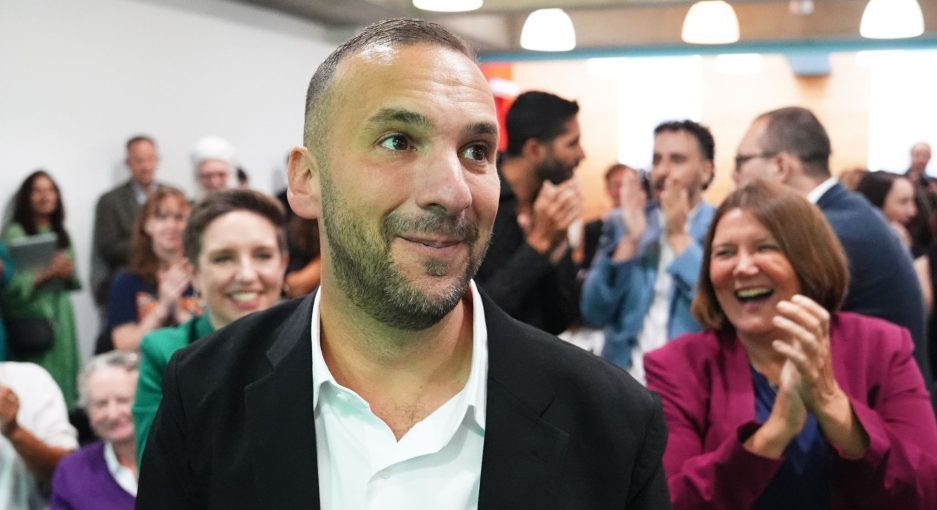
The Occasion.

If it’s possible to *really feel* vicarious angst then I’m in there. After the playoffs. Won’t embarrass the fella too unduly by naming him but bezzie mate’s a Leeds fan (for his sins) and season ticket-holder, so traipsed down to you-know-where, earlier.

Now it could be that my absence from the event and pseudo-concerns abart everyfink free me up to be independently irritated and disproportionate (wot, moi?) about the whole cowabunga here, but let me spill the bile. After a brilliant opening, Leeds were staggeringly bad – given this, given that.

The England-destined Gray went from being upright and assured to flopping foul-throws at a comrade four feet away. Gnonto had a 100% incompletion rate and was lucky not to be hooked at the half. Somerville disappeared; the intent/application/confidence/fluency of the whole bloody team went on holiday (or boot camp?) after about twelve minutes. Extraordinary… and yet of course not. Just to do with The Occasion. (In Leeds’ case, that may be in the plural: they’ve lost a bundle of these playoffs in succession. Is that a factor… or just a stat?)

Southampton were on the rocks for eight minutes then, without stringing four passes together for the whole match, turtled their way to the sea untroubled. Eggs laid in the form of an excellent, incisive pass/run/finish. Or maybe that should be run/pass/finish? Armstrong did his best throughout to look like a wily professional ready to escape this mediocrity: he did it really decisively once. Enough.

Farke, the Leeds gaffer must have been sick to his stomach – and the urge to barf must have built. I have no doubt his players were prepared and willing, not to say pumped, pre-game. Wembley would suit their sharp movement and threaded passes; their strike-force would dance all over this. It looked that way only cruelly briefly.

Immeasurably, bewilderingly, predictably (and all the more fascinating for it), Wembley – in fact finals all over – has/have the habit of sucking the lifeblood out of folks. Eyes glaze. Players hide or flick the ball away, wanting things to either work or just be over. Heads drop both in terms of looking, of vision and then spirit: one ridicu-fluff leads to a freakin’ epidemic. How many times did Leeds players make bad, baad choices when easy passes were on? How many times did Rodon or players who can *actually play* hustle in clumsily and gift dumb fouls? (To be fair, both sides did this: there was a constant, unedifying theme of defenders clattering through the back of receivers – under-punished).

We could lump all this stuff in under the category of ill-discipline, or maybe that of infectious nerves. For christ’s sake lads, have a think!

Wembley saps you and occasions sap you. Big tough characters become pussies, in respect of their ability to resist the capitulation to under-performance. Nonsense errors creep in. You try a worldie of a pass when the fullback has acres to storm into. You stop seeing.

This is ver-ry hard for managers to manage, during the game. Theoretically it happens before, over weeks or months – you build what you think will be an invincible culture of confidence and intelligence. Then, come the day, passes get ballooned and crosses go out for a goal kick. The Leaders and Characters in your squad turn into passengers; or wanderlings; or Lost Boys. They can’t for the life of them do the things they did last week (when thrashing oosit), or in the first ten minutes of this fekkin’ game! Gone.

(This is not the best or most obvious example but) Ampadu is a good player; offers composure and influence beyond the scope of most defensively-minded individuals in the league. Fetches and carries with confidence for Wales – is a play-maker. O-kaaay, so maybe he had a different role, today… but where was he? Who was eyeing the nearish horizon? Where were the midfield and the attack, come to that, after the fabulously misleading opening salvo? Given that Southampton offered virtually bugger all – didn’t need to – throughout, the entire event collapsed inwards with failure, folly and even embarrassment like a wedding speech gone bad. The wife’s name was mispronounced. The wrong hotel credited. The DJ cranked up Patsy Cline waaay tooo early. It was a weirdly extended howler.

Maybe I exaggerate. But fans do – even vicarious ones. For Gray to lose his laddish lustre and Somerville his tricksy genius so early and completely, hurt.

Us Victims of Football expect finals to be crap; they normally are. Maybe it’s this low expectation that exacerbates the lean into psycho-gubbins. Or maybe that’s just me?

pic from Getty images.

There is hope.

Intelligence and good faith. And decency and art – or artfulness. It can destroy evil. I believe it.

Braverman is like some icon of dumb, performative, calculated vileness. She *actually has* a brain, of course, but is so lost in poisonous ambition and that all-too-prevalent urge to penalise, to look to strike back by sticking it to The Other, that she allows herself to fall into obviously racist malice.

She’s probably coached there, by Tory shitholes – probably youngish; probably guys ‘following the ‘trends’ – who tell her that it will play well: it’s Route A for the populist. But let’s not excuse, to any degree, her responsibility and her profound immorality. She’s making choices: they stink.

(For her) to be so far from humanity and understanding must be bleak. Actively seeking the approval of the foaming gammon; courting it; stoking it. Dragging that corpse into the light. Weird and soullessly dark.

Question: is there anything lower than the deliberate, cynical exploitation of the cheapest tribal fears we can muster? Probably not. It’s all the tories have had, for years. I think even some of the divs who voted for Brexit realise that, finally. There’s just a sense that everybody knows, now, that the Conservatives aren’t just incompetent and self-serving, they’re corrupt to the core, with hatred and with greed. Even those with a low brain-cell count have ‘concerns around this’, in as much as they can process moral issues. They know, too, or sense summatz iz up.

So the tories are fucked. A series of appalling governments, with heartless and/or entitled ‘leaders’, not just physically and sociologically estranged from everyday needs but actively accumulating through the crises; busy embezzling, in effect; shameless as well as clueless. Single-message puppets for the cheapest of instincts – driven there by convenience and utter absence of goodness.

The result, a kind of vacuum – or worse, a noxious well. Into which the slimeballs and supremacists have been encouraged.

In time we will have to accommodate the Red Wallers and the Out There Racists; despite feeling that their stupidity was and is monstrous. That’s our challenge. A) To git darn off the high horse and b) to be accepting of their right to be wrong and even foul. We have to accept that many have both voted and acted out of fear and yes, ignorance – no choice, we have to make this work! – and that *even they* can and do make important contributions to family and social life. In short they have, in certain respects and areas of their lives, values and value. (We may think we know what’s right but we ain’t always poifect, eh? Move on; co-exist; make this better, in a civilised way).

Testing as this is, striking that balance between righteous and rightful action and tolerance (even) of excruciating prejudice has to be the way forward. Call it out but let the law do its job: and encourage or improve the legal process over time. All tough, all necessary.

Wonderful and revelatory as this is, it barely feeds in to my signature point: that the @MarshSongs contribution to the long and honourable line of intelligent protest is an example of the beautiful slaughter of political depravity. We need that. It restores us.

Beautifully specific and appropriate to the Moment (when Cruella B gets picked apart by glorious silence) and deliciously bang on the philosophical money, the Marsh Family undress this un-suss, unsuspecting populist clown in the same way that the silent protestors did. She gets it worse than she would in a tongue-lashing from an angry-but-righteous activist, or from someone like me, blasting away from a safe distance.

Bless those protestors and bless the Protest Singers. They keep use sane and alive.

Standards.

Here’s something: hurdles. Willow or hazel. Kindof woven fences. They’re beautiful.

Beautiful and I like them. I’ve used them many times, most often when I was a demon landscaper – actually for many years, in Pembs, in that proverbial ‘former life’ – when I was equally hopeless at sucking a meaningful living out of the earth.

They’re soft, and yet not, being literally but somehow pleasingly coarsely woven from either willow rods or cut hazel. You can buy them at fixed sizes – 6′ x 3′, maybe for hosting borders, or 6′ x 6′ if you need a standard boundary – or you can pay an extra lump and get them custom-made.

But hey they’re not standard. They’re stand-out. Cousins in General Aesthetic Improvement. The one stiffish and redoubtable (but still homely), and the other slicker and speaking more of damp and fluency and slickness.

Willow rods or withys/withies get soaked for aeons after cutting – something to do with tannins and also to extend their suppleness – and they’re often reddish-brown, drying when installed to brown/grey. Coz I’m an extravagantly gifted artiste (as you know), I worked out early doors that you can curve your structures: we made some groooovetastic garden dividers and shapers and sexy-border-backers by gently arcing hurdles. You can do it by simply driving in wooden posts and easing the hurdles into shape.

If you’re not thrillingly sculpturally-inclined like myself, you can bang em in straight: they still look great. You just need bog standard 3 or 4 inch round posts – two or three to a hurdle, depending on size and exposure to wind – a post rammer, and some wire or tie. That’s it. I’m but gobsmacked so few people use them to mark their boundaries or tart up their gardens, given their immediate and obvious wow factor.

They’re not even that expensive. Hazel hurdles, which are heavier-gauge and more robust than the willow, came to me yesterday for £80 each, all-in – so including delivery from Zummerzet (I believe. Or was it?) These were six-footers. Strong and striking and bloody good value: I put them up in less than two hours. Willow equivalents *are more*, possibly £130 a pop. But still worth it.

In that former life I was sad or fascinated enough to visit both the National Willow Collection (Long Ashton, near Brizzle) and to actively consider growing willows. I even had preliminary chinwags about using some of the National Botanic Garden for Wales’s land, to produce them. (Weirdofact no. 827: our landscaping mob did a significant bundle of work up there). I got on well with Wolfgang Bopp, then the Top Man, who was interested – liked the idea. I also tried to persuade my next-door neighbour, Robbie the Inflammable Farmer, to lease me coupla fields: neither plan came to fruition.

I just liked them – the hurdles, I mean. And the garden features and even the basketry-stuff, woven from willow. It seemed a lovely ‘cottagey’, crafty, skilful, righteous way to invest your time. But there were and are negatives.

The trips to Long Ashton and to willow growers, in Somerset, was *revealing*. I watched guys building hurdles on a ver-ry simple frame, and thought ‘blimey, we could do this’. (‘But you’d have to knock ’em out quickish, to make it at all worth your while’). I learned that (shockingly) the willows were sprayed twice weekly, in season, to knock out competing plants and munching critters. And that despite the fabulous and rich diaspora of willow species, almost the entire growing universe was down to two species of salix – maybeee even one. (It was thirty years ago but guessing the Drive Towards Progress may not have civilised this ‘culture’).

This genuinely appalled me. I thought of all the crafty people – o-kaaay, there aren’t that many but they would be exactly the type of person to be Rilly Appalled if they knew their withies had been repeatedly drenched in chemicals – and baulked. Or stalled. When it became obvious that we as a family (and a mob) couldn’t justify the likely indulgence of doing something in this apparently largely disappointingly perverse industry, and couldn’t get the land without battling scarily hard, we swerved the idea.

Wanted to use willows/grow willows. Wanted to do it organically, despite the advice and practice or state of the trade. Was gutted, in fact, that despite the seemingly wonderful tradition for family farming down there in Somerset, the reality was relatively ethically-barren, certainly in terms of chemical use and monoculture.

But hey. Bought some hazel hurdles (to replace willow) and banged them up and they look great.

Final thought: I’m aware that many of those who’ve considered investing in hurdles have been dissuaded ‘because they don’t last’. It’s true this can be at issue. But factoid no. 8 zillion and 82: ours (in a maritime location, in West Wales) lasted a decade. Why? Because we grew or transplanted bog-standard ivy against them. The ivy keeps them going – holds them – and it’s a nicer way than slopping loads of wood-preserver all over the landscape; that being the other alternative.

Hazel is a lovely beast. Yellowish and grey and soft and nutty. With added witches and buccolic wotnots. Willows are beautiful; whether weeping or just producing those erectile functions (rods) year after year, upon that cruel-but-horny autumn prune. Go out and feel them. Feel them. Or get them in your garden.

Who cares? But HOLY SHIT!!

Two poor sides going at it, with most of the universe decidedly un-bovvered? One dour manager – the most dour, surely? – a fella who’s failed entirely to build his usual doughty-but-dull-but-‘manly’-resistance within the group versus a bloke who had a tasty season or so at Tottingham in about 1929? Not just unappealing, but irritating: Dyche’s *sole purpose in life* has been to grind out survival. Pochettino has got nowhere near organising his delusionally self-important bunch of poseurs. So who cares? Put some David Attenborough on – he’ll be along any minute. Rather him squeezing out yet another angle from marmoset psychology than some Southern Softie prima donnas v these feeble toffeemen?

Be honest, we felt some of that stuff, pre-game. Then the game, erm, kicked off.

It was hysterical. Pickford was on drugs. Palmer was, as the locals might say, avvin a larf, before fighting (or handbagging, inevitably) with two of his colleagues over who takes the pen for the umpteenth goal. (Madueke and Jackson were the other combatants, further enhancing their claims for Flimsy Flouncer in a Non-supporting Role). It was a romp and a goal-fest; it almost exploded into violence nearly every time a Chelsea player received the ball with his back to an opponent: Everton were all of fizzing and inflamed and supine and weirdly determined to battle.

Mudryk and Caicedo looked like they may once have been or might yet be players. Jackson was 20% unplayable and the rest the usual island of indifference to the team concept. In fact, in that sense he was ver-ry Pochettino Chelsea. Not wildly dysfunctional, but liberated from the traditional understandings around collective responsibility or pattern.

Hang on. I may be over-doing this – or lumping in the view of a couple of seasons. Jackson has been no lousier and no lazier than his ‘team-mates’. Tonight he was good, in patches and the catch and swivel for his goal was undeniably sweet. But the genuinely unseemly scrimmage over the penalty was a horrorshow of antipathies and cheap grudges. Half these players hate each other, have the sensitivity and self-awareness of the average air-raid, and/or are so juvenile they can’t let stuff lie, even when coasting to a thumping win. It was a particularly graceless public stinker: an elite-level stinker of the most galling and embarrassing kind. Something else for the gaffer to get topside of. (Fat chance, given the evidence of the last x months?)

Thank gawd, then, for Gilchrist. His utter and unrestrained joy at scoring for his boyhood faves was the proverbial breath of fresh wotsits. As was Palmer’s serene first half performance, where he both literally and metaphorically megged the opposition towards lumpen bewilderment. Two of his goals were rather special – even if Pickford’s howler assisted the curling lob. England have fabulous attacking midfielders in Foden and Bellingham, but this young man is pressing them hard.

Everton were and have been poor for some time. It makes little sense to ditch Dyche, but he could have no complaints. That one-job thing of his – to smother and sledgehammer a way to safety – has been hopeless. Forget the deductions. Everton were outplayed in the first half last weekend *by Burnley*. They were annihilated here, by a team who may have been momentarily hot but who, like them, have been making the descriptor ‘out of sorts’ an unavoidable option. The Toffees deserve to go down.

Catching up.

Well what a weekend that was. Missed the United-‘Pool game, live but watched *a lot of* rugby, before coaching most of Sunday. Into Monday and I’m wondering if I’ve actually got sleeping sickness, or just succumbed again to one of the other the eight zillion medium-hardcore viruses stalking Pembs. Post the oval ball binge, I sleep from about 9pm Sunday to 9 am Tuesday, with brief interludes for Match of the Day 2 and New Zealand White Ferns v England Women. So night is day and day is… whatever.

I’m feeling somewhat recovered – otherwise I wouldn’t be joining you (obvs) from Haverfordwest Library, with its almost-views of the elsewhere beautiful Cleddau and the crass, heavy-bricked ‘precinct’ surrounding. Incidentally; aren’t libraries great?!? Yes. They are.

I enjoyed all that rugby but hard to say why, exactly. Maybe it’s just that the Six Nations is so full of tribal accessories and yaknow – feeling – that even mediocre games mean something. Wales’s almost catastrophically poor first half against the resurgent Italy (volume trentasette) meant most of my neighbours were seriously pissed-off but more stark evidence of the black hole where Wyn Jones and Faletau recently battled gravity surprised few of them.

Given that the one thing we know about Gatland is that he tends to be good at organising teams – making them robust and hard to beat – the relative frailty and low quality of the current side may indeed reflect the seriousness of the downturn across the principality *at large*. In the Italy game we saw a worrying amount of Warrenball minus the crunch and (dare I say it) the heart. If the team shape was understood there was still an alarming absence of intensity and physicality: nothing to build from.

No wonder then, that the rumbling about the Regional Game in Wales has gone up a notch, resulting in the normally impressively measured Sam Warburton coming up with some contentious stuff about diverting the overwhelming bulk of monies available into the pro’ game – even if this detracts from grassroots. Rugby in Wales is in a trough. And at the distant crest it feels a bit like nobody knows how to either re-structure it or re-capture the precious elements; freedom to play; irresistible energy; hwyl.

Ireland were of course playing at a higher level – though they failed to maintain it. Against France they put down the most emphatic of markers, effectively ending the tournament as a contest, before half the teams had kicked or handled the ball. Nobody was going to live with their completeness as a side. (Sure, England beat them, but don’t go telling me that Borthwick’s coaching compares with Farrell’s, despite relatively comparable resources). England may finally have shown the many hostile neutrals out there that they can attack (against France) but they were bang ordinary (again) for much of the tournament. Improvements are coming almost by accident – often a sign of uninspired coaching. Ireland, meanwhile, should be manifestly disappointed not to have won the slam… and I bet, deep down, they are.

But I enjoyed the tournament. Enjoyed the expected dose of Scottish flair tempered by inevitable(?) defeat against better-resourced squads – Ireland, France. Was kinda moved and *almost shocked* – and yet not – by the wildness of that Welsh comeback against Scotland. And I liked that Italy felt closer again to being a meaningfully competitive outfit. The Six Nations tends to really work.

If the energy holds, I may yet write about Garnacho or Heather Knight. But first, perhaps, a tactical kip.

#Books and #writing and all.

I know this is kindof niche and I may not be in a position to entirely deny the Cooo, Sales Opportunity factor, but I re-read this (below) and found it mildly diverting. So revisiting.

It’s the transcript of a talk I gave, coupla years back, to Writing Room (writingroom.org.uk) on the ins and outs of self-publishing. Hoping it may be of interest and if not, there are a couple of laughs and the occasional philosophical insight-attempt. With Beautiful Games now unleashed into the wilderverse, and having grabbed a further bundle of knowledge about The Process of Getting Books Out There, it feels okay to piggyback the original event.

To the underslung, I would add, then:

I still really like the whole notion of self-publishing; the freedoms; the Independent Record Labelness; the relative speed of delivering your missive. In terms of practical minutiae, I *now know* that it’s the online behemoths that push for a pre-order period of a month, to allow time for the book files/cover/metadata/whatever to fully load onto their systems. Seems a bit daft in 2024, but this is just how it is. Amazon (e.g.) can put your book up there on Day One but the info about said book, online, may not be correct, or fully described for some weeks. So they call that faff-abart-time a Pre-Order Period and scramble to get things looking right – whilst obviously improving the groovy-‘early’ sales factor.

I have used Grosvenor House Publishing for Beautiful Games, because the people I dealt with were/are tidy and The Dots Will Not Be Joined felt and looked like a kosher book. (In short, happy to recommend). Costs are pretty much unchanged from those included below, other than the increase in prices for copies *to me*, for my book launch and personal supply. This I expected, given the general hike in printing costs, et al, to the producers themselves. Happy to field enquiries on anything around writing or publishing – particularly, obviously, the self-publishing route.

Here’s the new book – https://www.amazon.co.uk/Beautiful-Games-Rick-Walton/dp/1803817763

The rest I think is here…

ON SELF-PUBLISHING.

Hi & welcome to everybody, wherever you’re ‘at’, geographically or writing-wise. I feel like I should start with a patently, refreshingly un-focus-grouped soundbite so here it is: I’m here to ENCOURAGE. I really am.

Am I an expert? Nope, almost certainly not… but I have gone thru this self-publishing thing. So I will and CAN give you some PRACTICAL INFO as well as waffle or spout opinion extravagantly. Ignore all diversions – there will be nonsense and mischief en route – just hold on and I will prove to you I am kosher in the sense of having self-published a book. Recently. You may, should the thing fall into your hands, powerfully dislike THE DOTS WILL NOT BE JOINED and therefore think I’m an utter fraud as a writer but the process would be the same for your fabulous, authentic equivalent.

Brief WHO AM I?

I’m Rick and I’m a writer and a sports coach/P.E. Teacher – mainly the latter, in fact. I’ve always ‘written stuff’ – whether that be songs/poems or bigger lumps of words. Always. For me. For me this is personal, so if you do take away one message from the following kaleido-rant(s) let it be this: I think we write because we can’t stop. The Rest is superfluous (for me, anyway): whether we’re famous and brilliant or mischievous and obscure and daft. (Guess which end of the spectrum I’m waving, madly, from?) The Doing is the thing. Your contribution is the thing. Please create this stuff. You need it/I need you to do it. You make the world better. Get your writing done.

I love Nearly Man/Nearly Person stories. I’ve got some byooots and if we have time I’d love to hear some of yours. Wozzat all abart? I think We Writing Peeps may need to be kinda durable or ‘philosophical’ but we may also need a sense of humour about the madness and anti-meritocracy of all this, yes? Maybe more of that later…

My story is… in god-knows-when my first play was workshopped at the Nat Theatre Studio, in London. It was entirely possible that I was gonna make it: I do actually remember a director saying “Christ, Rick, you’re gonna be SO-O BIG!!” LOLS! Been getting smaller ever since.

I shook hands with the top man there – Nick Wright – over the fact of an upcoming production of one of my plays, then got on with my life. They had ‘wanted me in the building’ so I wrote something else on a second visit. IT NEVER HAPPENED. Not because they realized I was the mischievous impostor/rebellious jukebox I may have been but because the funding was cut for new writing festivals etc. I imagine half of you have experienced something similar – the new stuff, the risky stuff being cut or excluded. I didn’t care. I just kept writing – kept living my life.

Apologies, know this is indulgent but let me stick with this momentarily on the off-chance that this feel somehow relatable and mildly diverting. I’ll mention in passing that a reader at Hampstead Theatre dubbed me a ‘free-wheeling absurdist’ (always wanted to stick that on my passport) and an equivalent at the Royal Court called me ‘the diamond in the dung-heap’ and I think that gave me enough belief… but know what? All that belief/confidence/vindication malarkey… that could be an endless discussion in itself… mainly I was happy, living in Pembrokeshire, with NO EXPECTATION or AMBITION to be somebody – be that kind of writer or public figure.

Have no regrets about this. Never, I swear sought to push open that metaphorical door: never bought directors coffee. Always knew I was a longshot and an outsider because of who I am, how I write. I wasn’t going to change that; they weren’t going to change that. We’re all wonderfully different (and I know this can sound incredibly arrogant but) for me there was and is no conciliation around this.

Know it’s going to sound weirdly against the grain of what follows here, if I say I’ve never considered the public aspect of publishing important. But I really haven’t. This is personal and I fear it will sound insufferably pompous or something… but I don’t, essentially seek or need vindication. I just write. So yeh – uncompromisingly.

THE PROCESS

Started with having the headspace and time to write a book, instead of blogs. (Am an accredited cricket writer and bloggist – have two websites. Have also had articles published in various papers and magazines; sports-stuff mainly. Wisden). COVID made the first tome possible.

Conversations (with folk I trust), who might know, about agents/publishing/stuff I’d need to aware of.

Some publishers INSIST on agents forwarding work: think that’s bollocks but it’s how it is. Didn’t expect to get an agent but googled them and chose a few. Did the same with publishers, at the same time, because a) impatient b) knew my work too ‘left-field/’unstructured’ to land with most mainstream publishers.

Looked hard at publishers, on t’internet and chose about ten, to forward manuscripts. Most want the opening 30 pages, with a chapter breakdown and/or similar highlights package. Took this seriously but opted to present in my own inimitable style, in the expectation of ‘failure’, but the hope of maybe just hitting a like-minded spirit in their camp. Didn’t!

Most publishers take months to get back to you – if they do so. They then pre-warn that any subsequent publication will take a year or more after that. This was intolerable for me, given my book feels contemporary to that 2019/20 moment – was about that moment. Feels urgent.

IN SHORT I THINK IT’S RIDICULOUS (in any case) that it takes 2 years to publish a book. In 2021/2/3? Madness. Simply don’t believe it’s necessary, in the digital age and it was a major driver in pointing me towards self-publishing.

Wrote the book between winter 2020/21 and early Summer 2021 with a view to publishing that autumn. Timing-wise, felt daft not to try to collar some of the Xmas Market. Lols!

 (It had become apparent, from more conversations and possibly email exchanges with publishers, that even with lockdowns meaning half the universe was writing books, self-publishing could happen start-finish in a matter of weeks/a few months. That was the clincher, for me).

So, basically, I didn’t wait for many agents and publishers to respond. I saw an ad on-line, probably under The Guardian banner, probably on the Twitters, for self-publishing via Grosvenor House. I remember asking my good friend Paul Mason if he had any experience or knowledge around this and he said he was aware of other options, but no. Didn’t recommend his agent, neither did the other guy I spoke to. No easy ‘in’: I emailed Grosvenor House Publishing Ltd.

DETAILS AND COSTS.

Abstract: I wanted complete control of my book. I’m a Stiff Records kindofaguy rather an EMI geezer. I didn’t want proofreading or copy-editing services: I was always going to do as much editing and re-writing as anyone but I wanted to make all the choices. Independent Record Label equivalent. Self-publishing makes that possible. It can be thrillingly punky in a way I like.

In July 2021 it cost me £795 to sign up with Grosvenor House. We had inevitably exchanged some emails – you get an individual assigned to you – which prepared the ground in terms of what the writer gets and what the publisher expects. Then you get a Publishing Agreement, (show it!) with just a few pages of contractual stuff – none of which was too intimidating to a newbie like myself.

What the writer has to do – probably not an exhaustive list!

  • Write the manuscript.
  • Produce some publicity/back of the book blurb.
  •  List the book correctly for web searching (metadata – had no idea myself but not over-taxing). Not *actually sure* how vital that is, but they want you in the right box and some people will probably search.
  • Choose or design a cover and internal pics – at £5 per image, from memory. Best part of my adventure: Kevin Little. Somebody I trust, who GETS ME. We talked, I gave him some keys and a picture and away he went. Magic. IT WAS FREE – he understood. He enjoyed it. He brought His Thing. I needed some of his technical knowledge as well as his understanding of me and the book. Find a soulmate in this!
  • Take responsibility for slander/liable/originality etc.
  • Provide ‘an electronic file in Microsoft Word of the book text plus digitally scanned photographs/artwork in the correct format’.
  • Choose fonts and formatting (you’ll get some advice, in my experience). Also matt or gloss, etc.
  • Choose what price you want the book to be.
  • Allow the publisher to distribute sample copies free of charge. (Not sure if this happened, in my case).
  • IMPORTANTLY, THE AUTHOR MUST DO ALL THE MARKETING & ADVERTISING.

What the publisher agrees to do:

  • Arrange and provide an ISBN number – essential, people tell me.
  • To typeset sample pages and send them out to the author for approval.
  • To provide an electronic full proof within 30 days.
  • To assemble a cover – either from material the author provides or from a royalty-free website. (Grosvenor House can, for a fee, design your cover).
  • MANUFACTURE BOOKS ON DEMAND as orders are received.
  • ‘Supply our distributors with your book’s metadata/synopsis’ to ‘all major retailers/wholesalers in the UK and to Amazon.com’. Will list the book with Nielsen Book Data.
  • Make royalty payments twice a year – got £640 for my first!
  • Provide the author with 5 bound and printed copies free of charge. Supply the six national libraries of the UK with a copy of your book.

IMPORTANT NOTES.

Grosvenor House offer services such as editing/proofreading/design. The base rate for that is about £35 an hour but they will offer you specific quotations for particular tasks. They will professionally check-over your manuscript for about £200, in short. I didn’t want that and couldn’t really afford it, given my confident expectation to lose money at this venture. However, I inevitably missed a couple of typo’s and restoring those cost me about £100, post-publication.

The marketing thing is key. You, the author are doing all the marketing. They effectively produce the book and put it on Amazon. You sell it. I absolutely hated the idea that my only realistic option was to sell via Amazon BUT IS THIS IS PROBABLY HOW IT WILL BE.*

EVERYTHING IS DOWN TO ALGORITHMS AND CLICKS (apparently).

Grosvenor House did advise me that pre-publication sales can be major: if a certain number are sold, early doors, that triggers algorithms (or something) that may release your book into actual shops – or get it noticed by actual shops, who then order copies in. THIS DID NOT HAPPEN WITH MY BOOK -I’m a nobody, why would it? But FIND OUT ABOUT THIS STUFF. Lean on the publisher?

*Or by-pass Amazon, maybe… by buying lots of your own books and touting them around bookshops, yourself. (I am going to seriously consider this for my next book). Grosvenor House told me they would sell me any number of my first book at about £4 each – I bought 50, for the book launch.

 Next book I may contemplate buying many more and going on a road trip: let’s do the math.

Haven’t really thought this through but it may be possible to buy at £4 and sell at £10, having persuaded the booksellers to split that remaining money. If you take £7 & the bookshop gets £3, I make that £3 profit per book, for both of you. You may only need to sell 3 or 400, to break even. Could you face that initial expenditure, that risk, that work – that selling? Could that be part of your adventure?

We’re racing ahead. You need to be cute. You also need to be realistic – or not. I simply accepted the near-certainty that I would lose money on this adventure and daren’t buy 400 of my own books – didn’t really want to charge round the country with a car full of books.

My chosen route may have been something of a cop-out, then. I bought just enough books for the book launch, and to place a few in a local hotel and a couple of local shops.

Re-wind. WHAT I DID cost me around £1,000, trying to keep costs down a bit. The Killer Truth is that if you SELL YOUR BOOK FOR around £10 Grosvenor House will pinch £4-plus of that, and so will Amazon or equivalent. MEANING YOU WILL GET A ROYALTY OF (ONLY) £1.40 for every book sold. Outrageous but true.

I bit that bullet and tried from the outset to a) live with the loss but b) push to sell as many as possible.

MARKETING.

Nobody knows who the f*** Rick Walton is. He has no clout, no real ‘presence in the market’. But he knows a man or two that do(es).

I’m a Twitter fiend and have one or two celebrity Twittermates. Or Twitter Big-hitters. Critically for my ego (maybe) and certainly for any sales, both these guys think I’m a decent bloke and an interesting writer. They have many thousands of twitter followers and they both were kind enough to pump the book just a little, on that sagacious platform. The result was I sold about 5-600 books and gathered about £700 back from my outlay.

CONCLUSION.

I loved the whole process of self-publishing. It suited me. Never for one moment did I think it would make me a profit: I was doing it for other reasons. Primarily, rightly or wrongly, I feel there’s something I have to say. It felt like a next step. If the reality is nobody’s going to take me on – no agents, no publishers – so what? I can do it anyway.

It was a brilliant, gratifying adventure; I strongly recommend it. But think about how you might sell a lot of books. You’ll probably need to sell best part of a thousand to get yourself close to parity, dollars-wise, if you do it the way I did.

So who do you know with 300,000 Twitter followers? That’s, in my experience, the way to go. Or what’s your equivalent to that going to be?

Van Gogh: the letters.

Our view of van Gogh feels so blanketed in known imagery and so ripe with cliches about art, ‘psychology’ and sentiment that maybe we can’t know what’s real. He’s arguably the one we all have some grip on but given the industry of tragedy and romance that time and coverage has engulfed his life and work in, the temptation may be to sit with our collective understanding – that of a man who couldn’t cope with the depth of his own feelings – rather than delve towards unlikely or potentially less satisfying clarity. Why learn more? Don’t we *just know* that he poured himself into his art more wholly and relentlessly than almost anyone who ever lived, and that therefore it figures the dam burst? Aren’t those central truths true enough and big enough?

They probably are… but given the genuine, affecting, visceral enormity of the man’s achievement, maybe we owe him another look. In this case – and does this sound feeble? Maybe? – via the stuff he wrote.

Yup. I’ve gone back to the letters; specifically the Thames and Hudson ‘Vincent van Gogh, A Life in Letters’ which beautifully and skilfully presents 76 of the 820 surviving missives. Chapeau to the editors – predictably all senior figures at the van Gogh Museum of Amsterdam – who a) select well and b) present compelling, authentic, believable chunks of the extraordinary content. There are plates, of course, and many of the letters feature the sketches that the artist so often embedded (and described so revealingly and copiously) within the text. (Guess what? The sketches alone make this an essential read, for their astonishing, three-dimensional but also emotional/symbolic life).

It’s a fabulous, poignant book and a truly historic record. Hard to imagine that there could be a fuller or more generous account of the business of human expression anywhere. The very first bit of puff inside the cover describes it as ‘A literary masterpiece that would be worth reading even if the paintings were rubbish’ – Jonathon Jones, The Guardian – which saves me a line or twelve. All I would add is that all of us who (with or without vanity) wish to be passably cultured should be well familiar with this material. It may define the word ‘seminal’.

The letters prove that van Gogh was an immensely cultured man, as well as a kind of gloriously honest empathist for peasants and The Lowly. His knowledge of literature, music and art, from Dickens to Delacroix via Wagner or Zola or Rembrandt, was remarkable, but also figured, given the family art business and the profoundly religious, rather scholarly, early home environment. Letters to Theo, his brother and saviour-benefactor, are deeply concerned with habits and trends and meaning in art, as well as the endless supplying of materials and living expenses. Vincent was all of the following; a religious ‘weirdo’ (early-doors); bookworm; philosopher and theorist. All to a high level of intelligence. Meaning the notion we may have of a Troubled Artist-of-the-Soil-and-the-Night Cafe is a poor under-estimation. The guy could think.

He could think and he could learn. He learned to draw: look at the sketches! From a late start he scorched or ground himself towards a kind of revolutionary draughtsmanship. Unique: brilliant; technical but deep and soulful and evocative in a way that may be unrivalled. (Meaning this image of him as a godlike but rather fearsomely crude colourist, devouring our eyes with the coruscating Sunflowers or cavorting Cypresses is again a travesty). Van Gogh worked tirelessly to understand structure and perspective and body: he did this knowing he needed it – and probably before he knew how his facility for ‘figures’ might light up the universe of possibilities (and the universe!) in tandem with his colours from the South. He also unquestionably felt that he had to earn the right to be taken seriously – to emulate or follow the masters – by working incredibly hard, with (somehow) invincible integrity.

His correspondence beyond Theo – with Bernard, Gauguin, Signac and others – confirms both that van Gogh was a theorist and intellectual and that this idea we have of him as a tragic failure in public or commercial terms is also an inadequate view. Sure there was no widespread appreciation of his genius or his work. But the artists swapped paintings and drawings, out of mutual interest and respect. And some of van Gogh’s works were hung, publicly. He earned a little money teaching and what we might now call mentoring. If it’s true he was so brilliantly revolutionary with his painting that the world simply wasn’t ready for him then a) this is surely a familiar tale, in the arts and b) this again hardly counts as failure. He was a powerful source and a focus for discussion around art in the contemporary artistic community whilst he lived.

Despite his tremendous feeling for historical giants such as Rembrandt and Holbein, Vincent both rated and respected modernists and those who challenged: but my god they had to it well, and with conviction. He became something of a semi-detached Impressionists, alongside or parallel to the likes of Bernard and Gauguin and despite his being challenging and undiplomatic (or worse), their correspondence alone validates the intellectual contribution the man from the dull grey North made. Of course Gauguin did play a role in the breakdown at the Yellow House (and did flee, arguably rather ignominiously after the ear-loppage) but the two great painters of colour did continue to exchange letters, after the event. Touchingly, van Gogh, having had a genuinely positive review from the precocious critic Aurier, deferred very much to Gauguin’s superiority and importance.

With regard to the ending (that we all feel we know something about), a few thoughts. Look at the letters, look at the paintings. The latter, from the yellow but iconically ‘purple patch’ at the house in Arles, to the ravishing-but-maaaybe-tormented cypresses and the last cornfields, painted in Saint-Remy or Auvers, are amongst the most affecting works of art in any medium. In both locations the artist was very much ‘in recuperation’, post crises. It’s therefore become classically tragic but let’s not that obscure the quality – the qualities – of the painting. It reaches more of us than almost anything in the entire history of art; this despite not being immediately easy on the eye. The mystery around how van Gogh found a gun, and what *exactly* triggered its use *at that time* does nothing to undermine the sense of hurt and of waste, that registers with all of us, even now.

Having re-read these letters I suspect that the family gathering, to discuss a long-contemplated potential escape for Theo from his unhappy employment (and the subsequent setting-up of an independent art dealership) was instrumental to Vincent’s suicide. Both brothers had been hugely anxious for some time about how they might proceed if some new way was not secured. Theo’s hopes lay with a brother of his wife, Jo… but it was not to be. No agreement meant Theo and family remained vulnerable to his own poor health and material angst, and that meant even less stability for his elder brother.

Scared, disturbed and no doubt feeling somewhat guilty and even responsible for much of Theo’s predicament – he had, after all, been utterly reliant upon him for a decade – Vincent shot himself, not immediately fatally, in a cornfield in Auvers-sur-Oise, dying two days later. Theo was devastated. He also succumbed to mental illness (although it is generally believed this was just a part of a medical picture including advanced, untreated syphilis) and died himself, six months later. It was Theo’s wife who published the letters, in 1914 and went on to further champion Vincent’s art.

Without the letters, the art is godlike. But the letters are huge. I deliberately choose not to direct you to a particular place. Read them all.

Films, eh?

It’s not the same – they’re really not the same. But I’m going there.

Apocalypse Now, in a cinema in downtown Grimsby, and The Quiet Girl, ‘at Haverfordwest Film Society, last night. The former immediately obvious as a giant; the latter a quiet insinuator. The scale, thunder and ego of the one and the timeless farmyard-backwater of the other. Brando and delirium and slaughter; grass and potatoes and family.

Both will haunt me, or have registered in a way that feels weirdly comparable. They were both palpably affecting.

In Grimbo all those decades ago we walked out shell-shocked in a deeply disturbed silence that defied the cut of conversation or analysis. The heft of the fucking thing left us gobsmacked – 100 people, maybe. That noise; that scope; that insane, thrilling annihilation with or by poetry! Not understood or received in the same way, of course: not to be snobbish but guessing only a handful of us had read Heart the Darkness but… nobody said or *could say* a word, as we traipsed out. Not us punkettes; not the Ordinary Locals. A) Out of multi-level deference to Coppola’s staggering achievement and b) because it felt necessary to slump against the nearest wall first… and – sheesh – recover.

1979, or possibly 80. But the two lads walking out together were as they say(?) changed by the event: how could we not be when it felt obvious we’d just seen the most powerful film ever made? It was like some public/communal de-flowering – and if that’s a dangerous image, who cares? This was a dangerous, wonderful, ruinous, life-changing moment which went beyond ‘the flicks’. However we might express it – with a shrug, with a nauseated heave – we all knew this was a truly rare affirmation of the power of art.

The Quiet Girl doesn’t look to compete with that – or not in the same key. But it does affect. As the bastard-of-a-father angrily stomped to either collect his wayward daughter or (we can only hope) give her up – yup, probably angrily – to the Other Couple, people around me were already raising hands to their faces. As the credits rolled and the lights prematurely rose, nearly everyone was tearful – and some were exposed ‘in bits’. Sobbing. So The Effect was not the same… but the validation, the triumph, the rubber-stamping of the capacity of words and pictures to move folks, to stir them up or down, was there.

Quiet Girl is traumatic despite being something of an ode to the pastoral. It’s all ‘unspoilt Ireland’, except for the unseen but undoubted abuse. It’s cows and hay and loveliness and that thing of handing over – ‘just for a bit, y’understand’ – a child who may be traumatised already and feels like one too many to cope with. Whilst the baby’s being born. ‘Sure y’understand?’

In case you’re wondering, if there is ever a fear that the universe doesn’t need another exposition of any sort on the mistreatment of children then that concern is emphatically and skilfully dumped, here – in fact it’s never raised! – by the compelling nature of the tale and the acting.

This Irish Story (in the Gaelic) looks and feels grippingly authentic, except perhaps for the brief scene where the girl’s potential saviours (Eibhlin and Sean) mistakenly allow her to be watched over briefly by a neighbour. (Have foolishly just read a review of the film, from the Guardian, to grab names/check spellings – forgive me if I don’t spend ages digging out the accents over some of the names – and it completely contradicts what I am about to say about the minor role of Una. Lols. But out with it). Sean, when the child (Cait) is rescued, swiftly and profusely apologises for the error, describing it as an example of his wife’s naive generosity. She even believed in Una. (This we can believe: Eibhlin is a genuinely gorgeous human).

Two things on this: Una is so witchlike the handing-over, even for a short time, didn’t seem plausible, even allowing for the plot-line development in the relationships. And also, for me, Una is poorly-executed. Neither convincing nor darkly funny. Something may be lost in the translation, but she seemed irritatingly out of kilter with the fabulous acting from Cait’s adopted ‘parents’ and from Cait herself. But this is a minor quibble, given my intention here is to thoroughly applaud the first-time direction of Colm Bairead and re-state that this is an outstanding, affecting film. So much so, I might even quote the Guardian, for my deferential, peacemaking final flourish:

It is a jewel’.

It’s guitar / it’s guitar / it’s guitar.

Firstly, they’re just lovely things; the woodiness is often wonderfully attractive to behold and to feel. And the shapes, being both deliberately sexual forms and fitting so well against the body, are kinda lush. It’s easy to fall for, or just really enjoy the feel, never mind the sound of a guitar.

I’m neither a techie nor an anorak and I don’t have money to ‘collect’ or even consider buying guitars that catch my eye. In fact, I deliberately don’t go looking, mostly, so as not to waste energy or tempt fatal expenditure. I can’t and don’t buy axe magazines and only occasionally meander into music shops, although this is partly a function of geography: there ain’t many geetar stores in rural West Wales. I’m also probably in that strum-prone sector of humanity that recognises its limitations: so may not even play anything in a shop, cos That Bloke Over There looks tasty. Feeble-but-true, then; relative poverty and relative shyness are factors. I do love music shops – and probably especially, yaknow.

Guitars are great. I have three, one of which is my bro’s, on long-term loan. That one’s a Spanish/classical job, characteristically sourced from a charity shop. No maker’s name, (not that this would necessarily mean anything), and very plain-looking but sounds really good. Woody and full. I’m a rhythm guitar chord-merchant but sometimes get a decent flow going. A recent return to regular playing has also meant that the softer strings are well-received – lay-offs do mean that acoustics or electrics bite a little.

Historically I’ve been on my Ibanez acoustic but right now the classical feels and sounds encouraging, even if I’m banging out Cure, Radiohead or Talking Heads(!) (It may surprise none of you that I’m using a soft plectrum, mostly, whilst committing this sin against high culture). I can fake some simple flamenco – or could – but (or because) mostly I’m a strummer, not a picker. I’m working on improving the left hand fingering-thing – the riffs, the ‘choons’ – but a) have never wanted to learn to read music and b) thrashing or embellishing chords or just finding a groove is perfectly satisfying. Oh and c) I have a developing Dupruyten’s Contracture in my left little finger, which is definitely starting to impact on twiddles.

I bought my acoustic as an angry know-nothing teenager, in a music shop in Grimsby. It cost £90, a reasonable wedge in about 1978 and, luxury-of-luxuries, it came with a hard case – now lost. Mum bought the guitar because ‘Dad wanted you to have one’. (He had died, tragically, some months before, of a cardiac arrest, aged 44). So there’s unavoidably heavy sentiment around this baby, but I can set that aside to clinically report that this guitar is genuinely excellent; I completely fluked it, having had a fairly cursory play, and genuinely knowing nothing about either makes or quality. It felt like a real weapon, significantly better than all kinds of Fenders or Epiphones or Tanglewoods that I have test-driven, since. I fluked it: it’s beautiful, having that extra ring or energy or soul that top instruments have.

Hilaro-fact: I did get Bert Weedon’s ‘Play in a Day’ with the guitar, before trying to get hold of (or learn) the preferred punkystuff.

Am suddenly struck with a senior moment regarding whether I bought my electric *before* the Ibanez, or not. No: I think I was given a catalogue electric guitar first – Christmas; the one I took on a pushbike to France – then bought the acoustic.

Either way I was in the business of learning Jam/Clash/Pistols/Buzzcocks/A Certain Ratio, maybe. The phase of Bill Nelson worship had passed: this was indeed the Modern World. Even on the acoustic I was knocking out the spittle: maybe a lurch here or there into anthems or ‘great sound’ – ‘You Can’t Be Too Strong’ Graham Parker. The electric was a toy, mind, and that did need sorting.

Manchester was 120 miles or so away but I got it my head that I would surely find an axe that felt like me there, so I went. Solo: bus, I think. Had no clear picture of what £120 would get me (in about 1979) but as it still felt possible at that moment to launch the greatest band in the history of the universe – rivals to Weller/Bunnymen/Costello and even Pil[1] in terms of wildness and fearlessness and relevance and ambition – it would need to be right.

I didn’t know Manchester and I certainly didn’t have the dosh for taxis to flit smartly around the gaff. Long time ago but I think I only found two or three music shops of any interest. What I probably wanted (Telecaster? Gretsch?) was beyond reach. I should have shrugged my shoulders, blamed the capitalist pigs and gone home. But no. I bought a sunburst Antoria Les Paul copy. It’s alright: it looks kinda smart and the bloke from the Undertones had something similar – although no doubt a full-on Gibson. Despite buying a second-hand Vox AC30  – ver-ry Jam and ver-ry Edgy Postpunk Superwallop – I’ve hardly played the fekker for forty years.

The guitar is goodish. My mate Jay (who could actually play) borrowed it and ‘loved the sustain’. Flash git that he was, he’d bought a new Fender strat and, to be fair, had *very generously* done a two-week swap with me: he thought the Antoria was okay. It was. But it never felt like me, not even when it sounded outrageous – when the Vox was attacking the world order via my passable Joy Division riffs. It’s parked by my bed, as I write. I had it serviced. It can sound half-decent but somehow I’ve never quite liked it; even with new Super Slinkies or Ernie Ball’s. Not me – too Supergroupie or would-be-muso.

Now the more I think on this, the more seminal it becomes. In the sense that however mad the next sentence sounds, it could be true, or contain stuff that’s stacked with possibility/regret/weird, wild delusion. If I had found a fabulous, sexy, spirit-animal of a geetar that day, I wouldn’t be here. I would be dead – indie-famous and then dead. If The (Only) Lads hadn’t buggered off to university – or if, less likely, I had found a coupla soulbro’s or sisses who* really bought in*, I might have been at the heart of a punky, spunky, dark and edgy, upful and monstrously-spirited rock and roll band. I would have launched at it and let it consume me. I would have been ‘inspirational’ and a pain in the arse. The drugs and exhaustion would have killed me.

Instead I’m oldish and I’ve had a different ride. Longer. Better. Wunnerful kids and fulfilling work. Giant gaps – years! – where the music that was everything receded. Where I never lost the spirit of ‘Poptones’ or ‘Hit the North’ but different blessings were the ones.

I stopped playing the guitar and wow, the circle turned. I have time. Is this me time? Maybe. Where’s my money at? How long can I indulge this? Don’t know. Don’t know.

Whatever; I’ll grab a weapon and strum, and maybe find some words.


[1] Yeh, o-kaay, they may have come later.