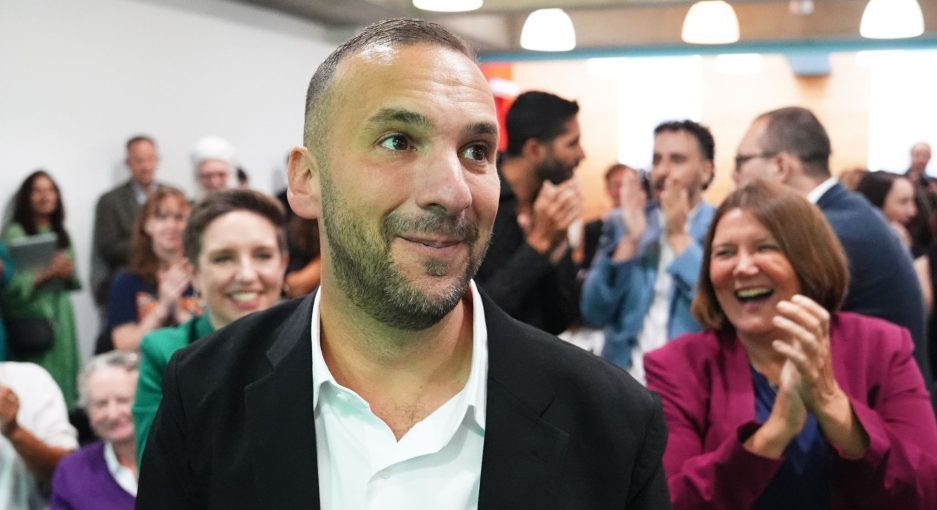
A chinwag with BB…

Go to the Pembrokeshire Music Show of 30 Nov (& go 90 minutes IN, if you want to cheat and go directly to me warbling).

Enjoyable, briefish chat with MC MC . (I think both of us would have liked to talk for longer but rock’n roll, eh?)

We do talk about a) my book, Power Chords and b) some of the political/philosophical backdrop, which I was pleased to hear that Malcolm/BB Skone was genuinely interested in and sympathetic towards. We both rate Clash/Buzzcocks et al and acknowledge the role that awareness and anger – much of it politically-charged – played in shaping punk and new wave as an energy and phenomenon. But maybe I’ll let our talking do the talking.

https://www.purewestradio.com/catch-up/

Palavers and publishing.

I promise you I’m more philosophical than angry about this but wow – the Capitalist Universe is a right old game, eh?

I have a book upcoming. I like it and it’s important to me. Ideally I’d have an agent, a publisher and people, all colluding towards sales and impact. I have none of those things and this (I swear!) is fine. I like the indie bubble I live in.

The whole experience of writing three self-published books has been pretty fabulous: in the three or four year rush, without hardly thinking about it, I let it re-direct my life in a way I’m completely and kinda casually-deeply happy about. (Writing’s taken precedence over earning a living. Been surviving on bugger all for three years. No issues). But there are buts.

Have loved the fact and the process of self-publishing, cos just like being on an Independent Record Label. Complete Control – to coin a phrase. But despite being an indie sort-of-a-guy, and in some ways relatively suss, you still get trapped.

No fan of Amazon and the rest – and not just because they rob more than £4 per book, leaving me with about £1.20-40, depending on sale price. So I have never wanted to sell primarily online, but as a nobody, inevitably, you do.

I can’t get my books into bookshops – not many of them. Impractical and uneconomic. Indie (and particularly quirky or leftie bookshops) should absolutely be my natural territory but they don’t know who I am and I can’t afford to go globetrotting. What I have to do is buy in to the package at Grosvenor House that sets me up in the retail behemoths systems. (Not just Amazon’s; about twenty of them, I think). The hope is that strong sales in the ‘pre-sales period’ may possibly trigger a sort of alarm-call that lets stores know that this book might be worth holding. So it miraculously appears in bookshops, biggish and small. We’re in that pre-sales period now.

My publisher warned me that the likes of Amazon ask for a one-month pre-sales period because (weirdly, in 2025?) it can take weeks for all the book data and links to printers (or something) to be fully functional… and it appears that this may be the case. Thinking back to the previous books, this tends not to be a smooth ride.

But because a few really wunnerful people supported Power Chords early-doors, it burst into the Top New Releases, Music charts on Amazon. (Most of these people I’ve never met, by the way, so imagine the level of gratitude, here). The book went to Number 10 in that hit parade, meaning almost nothing except (I confess) a little low-throttled excitement *and the distant prospect of strongish sales triggering that aforementioned algo-wotsits*. That is, a kind of actually low-impact impact which would mean a huge amount if it got my actual book into actual bookshops. That’s the hope, right? Try to use The System to game the system and ultimately Do The Right Thing. Smart fulfilment.

I/we can’t win entirely in this. On socials I’ve been pointing people to their fave indie bookshop to order *as well as* offering the link to Amazon &/or Waterstones, because of the potential importance of that chart in the former. Which is kinda twisted, I know. (And I don’t or can’t know, in any case, where or how exactly any algorithm or notification kicks in, to alert shops to Books Worth Stocking). So this is another Trumpian, deal-making universe where I/we are not holding any cards.

In some ways it gets worse. Power Chords was at 20-something then 10, soon after pre-sales opened on about November 1st. (Shoulda been Oct 24th but that’s another story). So good start: some excitement. Then there’s a hitch. Amazon and Waterstones have the book at ‘temporarily unavailable’ or similar, meaning you can’t actually order. Which of course means we go down those charts. I wait a few days, checking (I confess) regularly. Nothing: no change.

This morning – Sunday 16th November – the Amazon site is saying you can order Power Chords for something over £16… which is a bit alarming and concerning. I have no rights here (goddammit) but I don’t want my book to sell for any more than the £10.99 my publisher advised. Plus this is likely a mistake, right, more ‘getting the ducks in line’ stuff – a temporary cock-up. Whichever way it’s crap – unhelpfully so. It is, bottom-line, another obstacle to sales.

Update: as of Mon 18th Nov. Power Chords is still being advertised at £16.24 on Amazon – so the cock-up goes on. I have tried to make contact (in fact succeeded in making contact!) but got into one of those horrendous loops where they offer you bloc A to H, with none of those blocs being the one that really covers your issue. Then you try to approach any of them… and they point you to KDP Publishing, who then tell you your book – or this book – isn’t with them. So mindless, unhelpful circling. Same via twitter: you get pointed to the same place, which can’t help you.

It should be pret-ty straightforward, you’d hope, for a multinational with eight zillion employees to find you one who could either strike-out an error in pricing on one of their weblinks, or get the sales process – from which they benefit about 3 times more than I do (about £4 to my £1.40) – going smoothly. Power Chords has been on their system for a fortnight or so. I repeat that I had been warned that glitches do happen: but clear errors and painfully prolonged issues affecting their bottom line as well as mine clearly should not.

I haven’t checked elsewhere, other than Waterstones – who, to their credit, had the book live and buyable before Amazon did. Power Chords appears to be available through Waterstones website. I think.

Further update: 25th Nov 2025. One day *after* Publication Day. Again the hugely gratifying feeling of lurv flowing towards me – some of it from people I’ve never met. (This on various socials). After those genuinely painful contacts with Amazon, where I got relatively close to claiming compensation from them, having been slightly steered thattaway by someone on their staff*. (*Notes to universe. They raised the notion of compensation for the 10-12 days where Power Chords disappeared. Their Whatsapp Team sent through a form to apply; at which point I thought ‘know what? These clowns prob’ly should reimburse me for the hassle and the lost book-sales’. But the form looked a bit suspicious. Fearing an admittedly rather elaborate scam, I withdrew). Still don’t know the truth of that scene… because I swore to myself to waste no further energy on Amazon.

Eventually – I think on the eve of Publication Day, and after my publishers had pushed back on behalf of several of their authors, all experiencing systems failures – something clicked. We were back live and buyable.

Of course this is all linked to the pre-Christmas rush to get books to market. Zillions of us have been drawn towards that flame. I could claim that the two dates I built my ‘sales campaign’ around – my dad’s birthday, 24 Oct, then mine, 24 Nov – absolve me of the crime of capito-cynicism but whatever. Power Chords went out ‘before Christmas’. But Amazon, with their unlimited resources, should have a) been completely aware of any building avalanche and b) taken the necessary avoiding action. They didn’t. It was, for me, crap. Weirdly, as if some algorithmic apology was tripping out, two of my brothers received the copies that they’d ordered from Amazon on Publication Day, rather than the two or three days afterwards which had seemed likely (and acceptable). Go figure.

Hey. Can only apologise for the overdose of indulgence here. You may not believe it but lots of this really isn’t about me. 1. Am really not driven by money. 2. Entirely happy to be an obscure geezer writing obscurely. But 3. I do know that there are other people out there considering publishing or self-publishing routes. I hope that some of the above offers some ideas of some of the pitfalls and the pleasures – which do exist – within this particular sphere of the capitalist universe. It’s great. And it’s as shite as the rest of it. Good luck.

Universe Podcast. Power Chords book launch.

Ok it’s ‘a day for inside’. Wet; windy; medium-‘orrible. So I’ve tried to make use of it, by recording something that might stand as a book launch… because I think I’ve decided it’s too much hassle to actually host a real-life book launch. (Lovely for me, but time, travel and faffage for those who feel they should come).

In the tradition of DIY-Punkhood, it’s pretty much unrehearsed, with some quotes from various sections of the book, and typically ill-advised *thoughts arising*. Listening back, it feels less twinkly and mischievous than Power Chords itself; maybe because I fall into the trap of trying to explain stuff. And I don’t mention that there is a complimentary playlet and occasional guffaw-inducing interlude in there – as well as the psycho-political positioning.

Punk was wonderful and formative. It was a racket that spat upon banality and duplicity. It was edgy and exciting. I think (or at least hope) that Power Chords offers some sense of that. There’s a lot of love and some teen spirit in there.

Buy it at your favourite independent bookshop – they can order it.

Or here – https://www.amazon.co.uk/dp/183615433X/ref=sr_1_3_so_ABIS_BOOK?crid=XQZC0N5EVD4T&dib=eyJ2IjoiMSJ9.gH51mWifQBHtqeMT7ZgX68rJ5dQ8Z96LTmC1c1QDx7Q8XUUGy5krE17Zd-4bABzS.15ewrP19EN89rDjZkqoOTnfpCvCe4BLyx8tmS-oNWic&dib_tag=se&keywords=rick+walton+power+chords&qid=1761834207&s=books&sprefix=rick+walton+power+chords%2Cstripbooks%2C112&sr=1-3

Or here, maybe – https://www.waterstones.com/book/power-chords/rick-walton/9781836154334

Thankyou.

POWER CHORDS: an intro.

Read the covers? You want more blurb? It’s here…

This is arguably the third part – so three books – in Rick Walton’s #lolsobiography concerning life, sport, music. But ‘Power Chords’ will, can and does stand independent of ‘The Dots Will Not Be Joined’ and ‘Beautiful Games’.

The author has always wanted his work to be explainer-lite, but concedes that you newbies may need to know stuff. He is a writer and sports coach. He has over 600 blogs up on’t internet, via bowlingatvincent.com (on absolutely everything) and sportslaureate.co.uk, which covers mainly cricket, football and coaching. He has ECB Accreditation for attending cricket, as a ‘freelance bloggist’. There are awards on the shelf for contributions to sport. There is a genuinely unique voice in action – ‘authentic, wise and beautiful’.

                                                             *

Themes include the power of ideas and music; particularly when they pour in to teenage life. Identifying with or finding people that speak for you. But early life, too: so of course family and experiences at school, quality of adventure and support, quality of love and environment, mates and comrades. The growth, perhaps, of like-mindedness and the concomitant recognition of things to oppose.

                                                              *

If this sounds bit joyless then na. On the contrary. Your writer’s life is full of tremendous, uplifting, wonderful experience – of poetry. And gob-smacking people. It’s just that anger is an energy for him. The Enquiry in here is not so much to forensically reveal the source of some emotive and/or existential rage – this may after all be a profoundly unscientific business – as to dig out some old vinyl and enjoy. And maybe hope that today dynamic, engaged rock ‘n roll can do its thing all over again.

                                                             *

PROLOGUE.

Where to start, in terms of family life and culture? Or maybe specifically music? And how to know when awarenesses became so developed, or grief, shock or hormones took over so completely that the whole of my life became about defiance. Because I think maybe it did. And this feeds in to everything.

But maybe before the ideas-fest and the tribal allegiances kick-in we need to go eyeball to eyeball. And do that thing where we try to accommodate. I have strong opinions on some things which may have arisen from my love of music. (This book is about that process – or speculations about how mere choons can shape or contribute to a life). It feels extraordinary and kinda thrilling to me that anything so flimsy and unbodied could be so fabulous and enormous. I’m really hoping you have some personal sense or experience of that.

                                                               *

We live, it strikes me, in an extraordinary and dangerous moment. The West is arguably madder than it’s ever been, with the Trump/Musk coalition-thing a catastrophic threat to the intelligence, knowledge and goodness that underpins society itself. (It’s November 2024 as I write: we await the second Trump term but Brother Elon has sculpted the matrix into an angry monster). The truth has suffered an especially foul Special Op’[1] – Bannon’s infamous shitstorm. Those previously relatively harmless Influencers (think makeovers, think pranksters, posers and dancers) have morphed into combat-ready sub-nazis.

This is a challenge. It can drag us down and have us raging at (and waaay beyond) the deliberately-reduced politics we now suffer in the West.

                                                              *                                    

But hang on. In the face of Trumpism and Reform, alt-rightism and this galaxy of loss, what’s our civil/intellectual/physical/cultural reaction? Depends who we are. Are we leaders or passengers or artists or victims? Who do we look to, where do we go? Weirdly, it seems a scientific certainty that there will be a response, even in this turbulent evil. (Is that not how the universe works?) The response may even be a thing of glory and inspiration.

Wonderfully, we make our statements in a myriad of ways. As the mighty Slits did, we can ‘create’; kick up a fuss; make something challenging and radical and beautiful. We may need to do more, but this is part of the change – or at least one irrepressibly human, principal means to strike back. Let’s create. Let’s be anti-badness; anti-racist; anti- any declining status quo. Our pens are ‘snug as a gun’.[2] Our fingers are on the fretboard. This is part of life’s purpose.

                                                                *

I was recently given a class pic from Healing County Primary School which tugged heavily and made me realise how BIG those times and connections were. In my case they really were largely idyllic. Coz Stevie Blendell, Wayne Okopskyj, Mark Moss, Linda Dye and Helen Sitch and the rest were bloody wonderful. I could feel and smell and hear them, in that picture. Made me remember football and school sports on the playing-field; skating or ‘sliding’ on the playground in proper snow and ice; getting 8 out of 5 for something I wrote (about Guy Fawkes, I think). And even the dinners, which I loved. Stodgy, honest food that I’ve not entirely left behind. Maybe the meat was thin and the mash lukewarm after that queueing… but Eve’s pudding and custard! Or some kind of jam sponge! Bloo-dee Nora.

                                                                *

The barbershop contest was not at all what they’d expected. They love their singing but were inevitably “only there for the craic”, having no real idea they were to be joined by worryingly disciplined crews from the States and all over Europe. It was a disaster of sorts: the travel, to and from County Cork; the mismatch singing-wise; their mad, unserious approach. But now they’d landed at the Dru… and they really got it.

After brief deposition of bus detritus into their rooms, and maybe one or two relieving showers, the lads started to drift down to the bar. (This remains a fabulously evocative and restful kindofa place – or will be again, when the current re-furb takes it back to where it was for many years). They took a further inhalation of the bay and trundled back in to where yours truly was stationed, at the bar-front. The news that we had both Guinness and Murphy’s on tap was received quietly but warmly, as was the sight of more than one species of Blackbush and Jameson’s up amongst the spirits. It began.

                                                                 *

I worked part-time for John for more than two years. Doing everything that needed doing. Freeing him up to take those brilliant pictures. Very often I would go with him to the Royal Court, Hampstead Theatre or to the National to change films and generally assist. He would always shoot live rehearsals, usually the last one before opening, using two cameras. There wouldn’t be much kit – a monopod, sometimes, and a bag with cameras, lenses and films – so we travelled light, but I could make myself useful. Sometimes I would take back-up pictures.

                                                                  *

SIX – ROCK STARDOM-AVOID. (1).

We’ve all got reasons why we didn’t become a rock star – haven’t we? (Or Jesus is that just me?) Come on: the Things That Got in the Road. Lack of Ways In or Mates Wiv Contacts or that whole Distance From London malarkey. All the conspiratorial cobblers that stops a raging talent like yooo/like me, from raging publicly.

Sometimes this is fair enough: we’re actually crap. ‘Have rhythm’ but mediocre on the guitar. (There really are zillions of shit-hot guitar-players out there). Have words but maaybee they’re just not as good as you think they are? Have too much FIRE, quite possibly, which is theoretically ace in the wonder-years of the late seventies but even then narrowed your options down to the independent labels, bless ‘em. (Now, by the way, where is that fire? Idols, maybe, but where else?)

                                                                *

I saw The Fall in what was then a crappy hall in Duncombe Street Grimsby, when I was about eighteen. I knew the music, loved it. They made that beery, spidery, edgy, shambolic noise that was our poetry and the flag for our spunky republic.

Mark E Smith was a Northern Myth and a Northern Monster. And like us he was drunk. We loved him because his ramblings coursed with our spite. He seemed to be leading his own mad nation towards something.                   

                                                                *

Surely it’s true that for most of us the music we drape ourselves in is key to what we are and become? We come to reflect each other. I looked like a member of Joy Division or Bunnymen or Gang of Four – heavy coats, dark baggy clobber – because I felt like I was in those bands. It’s become a cliché but they did speak for me. Only Gang of Four from amongst those three had any obvious political stance: the other two just chimed with authentic, contemporary soul. They were more or less deep and dealt in something thrilling and real. We were kinda proud to wear their badges – literally and in terms of style.

                                                                  *

Punks identified anyone who sounded like The Bizz, or was complicit in its pitches as the enemy. This was of course almost everybody. If you swam complacently along with the major record labels, the machinery of production and the Gods of Commerce then you were traitorous filth: all of you. If you deliberately made your musical sound easy to access, you were shameless, vacuous scumbags. Plus energy. If your energy was that traditional thing aspiring to loveliness and sweet diversion then you were, despite your smashtastic success, a joke.

                                                                   *

The three chords and less than three minutes thing that punk was predicated upon is very pop. It’s also obviously anti-indulgence… and therefore may be supportive of smart choices. Knowing is everything: this includes knowing there is nothing wrong with ‘music to wash up to’. The two poles of what we might call engaged or protest songs and ephemera can absolutely subsist – and did. 1979 may have been the peak of the history of popular music – albums and singles – because of the energy and drive of punk and the sparkling wit of energized pop.

You may have noticed we’ve barely nodded as we flew past the idea of entertainment. This is because punk was obviously right to demand more. Tell us something about (y)our lives. Prove to us that you really care. Pass the integrity tests; show us you’re a good deserving human trying to do good. Do that thing through the new wave of music; either by thrashing out your protest or via sharp, knowing but unpretentious pop. *Add value* to our entertainment.

                                                                  *

Lydon was and is somewhere between the various caricatures of force of nature, clown and cultural icon. He was and is punk, for better and worse. For all his loudmouthery and those moments where we Guardian-reading liberals had wished he would ‘just stop!’ Lydon has produced material of staggering ambition and import. (So I for one largely forgive him). The Pistols singles are almost as sensational now as they were then. ‘Public Image’ the single is an extraordinary and well-executed re-birth. ‘Poptones’, ‘Careering’, ‘Flowers of Romance’, ‘Keep Banging the Door’ and ‘Rise’ are all giants.

When ‘Anarchy’ arrived, it’s not hyperbolic to describe it as the ringing of some division bell. It was a statement of defiance and newness. It was a challenge that battered into living-rooms and subverted lives. That song, that moment, despite the undeniable whiff of punk fashionista around it, was MASSIVE. It remains one of the Great Noises.

                                                               *

It was Strummer I loved. Sure he fell right into the imagery but his vocals launched so heartily at us and mostly his Good Man-in-the-Street politics rang true. His vocals on the 101-ers’ ‘Keys To Your Heart’ are a high point in pre-punk action. I believed in Joseph’s voice and his scattergun anti-capitalism. ‘Career Opportunities’ and ‘Working for the Clampdown’ are tremendous, compelling noises: more overtly political than Rotten, or somehow more specifically targeted than Lydon’s material ever appeared.

                                                               *

MARK E SMITH AND THE FALL.

Mark E Smith was scathing about everything so he might baulk (from beyond) at being offered this honour. Tough. He earned it, for being a one-off and for being edgier than a very edgy thing. He’d hate to be suffocated in cliché as some ‘punk-poet’… but of course that’s what he was. Dark. Driven. Chronically alcoholic and downright fascistic in his role as frontman. But unquestionably a kind of genius.

Because the music was so angular and so much the deliberate anti-dote to blandness and comfort, he was punk. Because he wrote about daft, working-class things, he was punk. The sound was a kind of colourful chaos – often more colourful and mutable than our conception for punk – but the anarchistic intent locked it into the vibe in a way that extended and re-powered the movement. Plus the fella looked like a punk – maybe, admittedly in the American, ‘hopeless layabout’ sense of the word.

                                                                 *

Foolish to remotely compare how things felt from Year A to F, but the parallels around race and wealth, between Thatcherite Ingerland and Trumpian North America are striking. Thatcher (for us) was an obvious bigot and likely white supremacist: see also Trump and Musk. In both eras there is an extraordinary sense of the rich getting richer – by design. That shamelessness, now so epitomized by Trump’s cohort of oligarchs and technocrats is both the exercise of increasingly authoritarian power and triumphalist cruelty. Meaning a particular kind of wickedness.

                                                                 *

Simone also covered the Billie Holliday classic ‘Strange Fruit’ and in ‘Backlash Blues’ and ‘I Wish I Knew What It Was To Be Free’ she railed brilliantly and with passion against the patent, rancid injustice of the time.

Can’t wait any longer. Who, in the time of Musk and Trump, will carry that torch? This feels like a moment not just for Angels of Protest but for massive, concerted resistance – yes, perhaps led by artists and musicians.

Plus some Desert Island Discs and a free, absurdist playlet.

All in ‘Power Chords’.


[1] Deliberate perversion of things we thought were fixed and factual. Facilitated by socials/moguls/what we might call the Extremist Establishment.

[2] Slits: ‘Typical Girls’, from ‘Cut’. Seamus Heaney: ‘Digging’.

Prologues.

(Because this is me, there is another prologue before this section).

Where to start, in terms of family life and culture? Or maybe specifically music? And how to know when awarenesses became so developed, or grief, shock or hormones took over so completely that the whole of my life became about defiance. Because I think maybe it did. And this feeds in to everything.

Defy the shock of people dying. Then before you know it defy the evil that was Thatcher. Wade in there. Defy the bigotry and prejudice criminally at large and *in some way* oppose the privilege. All this in a teen rage. Then live up to those who came before, whilst knowing they were different – maybe simpler, better – and that things don’t or can’t work like that. But let them still be your gods.

Don’t fer Christ’s sake out yourself as such – faaar too pretentious, far too self-righteous! – but absolutely be a protest singer. Be the inevitable mad mixture that you feel; of hard, deep thinker and honest force. Be immune to judgements from outside; be fearless and pour the good energy in. Time will or may come when you can be more accepting. For now, trust and work and be conscious. These things have value.

                                                                     *

The moment is everything: accident-of-birth catapulting me simultaneously into a hormone-fest and Anarchy in the UK meant this particular youth was inevitably a Child of That Time. Driven or pumped. Scarred, maybe. Furious, definitely; judgmental definitely. Carrying a load, probably.[1] Deeply lost but as deeply certain as most teens – yes? – that he would do things in enflamed opposition to the pitiful acquiescence that was Normal Life. So yeh, off-the-scale indulgent in some respects but also having a kind of rebellious integrity.

People died on us and I‘m not going to tell their stories here. There’s enough of that in the previous books. You just need to register the possibility that maybe everything Yours F Truly does is a kind of amorphous, inadequate, politicised homage to three great ‘ordinary’ blokes. This is not to say that I am a hugely party-political animal, or that I under-appreciate the Walton Women: but it rightly implies that I’m on a permanent slow-burn around how the world just ain’t good enough, in a way that those better men simply weren’t.

There’s generational stuff in play here, because a) life was simpler and b) in some senses it was less aware. Folks just didn’t know or couldn’t know the world, its peoples and its foibles in the way we can now. (Not that this makes us any more educated). Plus sentiment. I may gush, or goddammit not be able to see[2], or drown us in the kind of emotive slippage we’re all prone to. This is what love does: this is what age does.

I may never know if these old guys were just wiser, apparently swerving the day-to-day cataclysms that eat away at me/you/us, but however dubiously old-school it may sound, here’s my daft Braveheart moment: *raises fist*.

I am proud to be of them. Always, I will love, revere and follow them, or try to, for their invincible (yes) and endless (yes it was!) honesty and humility. They are recalled in the hope that we can all, in the modern idiom, stand on their elephantine shoulders.

                                                                     *

I guess the thing that stirs me the most is the urgent need to change the universe. And that really may be a direct result of punk and Margaret Thatcher.

Bit loathe to put dates into this baby but it may be inescapable. Absolutely not telling you freeloaders my birth date – not until we’re mates and you’ve proved you’re worth it – but suppose I can offer the rough figuration that I was a furious and pyrotechnically hormonal late-teen when the over-combed one began to preen through and over our lives. She, and Rotten’s voice, and Strummer’s heart, and Costello’s lyrics and my father’s death were the things that made me. They were contingent and co-forming energies that powered and power me towards trying, at the very least, to live a life that opposes.

This book, the third part (so far) in my #lolsobiography, is inevitably about that. But it’s also about sport, about influence, about how wonderful things are, even when darkness and dumbness and the twisted evils of money and privilege continue to pin us to the deck. My faith in art and music and sport never dims. My faith in the Three Great Mates we all have and need and my two sensational kids carries me through. 

                                                                       *

Life seems to have conspired towards poles of opinion, not just on social media but that might be the most obvious example. Too many of us make judgements that are ill thought-out or unforgiving. We’re bawling our truths at each other. We exercise (or exorcise?) a kind of manic certainty that draws us into conflict rather than conversation. Everything from the Twitters[3] to PMQs contributes to this.

Let me put on record my own weakness in this regard: I get angry and I judge. But in my heart I know that tolerance – and knowing that you may be wrong – are essential human virtues. We do have to judge; we do have to decide; we do need to get better but we also need to be civil. That’s not a recipe for capitulation.

*Takes further deep breath*. Look I’m as ready as the next bloke to launch into Grandstanding Mode. The Times and the Socials and everything about now make GM the engaged individual’s ‘natural’ response, do they not? Us punters are being teased towards some angry vortex all the time. Ah: cue some polar expeditionism.

We live, it strikes me, in an extraordinary and dangerous moment. The West is arguably madder than it’s ever been, with the Trump/Musk coalition-thing a catastrophic threat to the intelligence, knowledge and goodness that underpins society itself. (It’s November 2024 as I write: we await the second Trump term but Brother Elon has sculpted the matrix into an angry monster). The truth has suffered an especially foul Special Op’[4] – Bannon’s infamous shitstorm. Those previously relatively harmless Influencers (think makeovers, think pranksters, posers and dancers) have morphed into combat-ready sub-nazis.

This is a challenge. It can drag us down and have us raging at (and waaay beyond) the deliberately-reduced politics we now suffer in the West.

So don’t expect me to qualify everything – I may fall short! I know we’re well-advised to avoid cheap blame-games but I’m still gonna launch, here and there. Of course under-privileged and under-educated people have always been likely to ‘strike out’. Of course this general discontent has always been weaponized by people with hands on the levers. But there are lines we just don’t cross; there are things which are just plain wrong.

The Great Families and the oligarchs; the MAGA cult and the ‘gammon’; the liars and the cheats and the racists are bad folks.[5] Some more, some less. We who feel this may be entitled to tell them that, although this is likely to be inflammatory. ‘We see you’. But we also have to deal with them – by that, I mean debate, include, educate – however difficult or unlikely that may seem. And, perhaps before we inter-react, or rise to condemn, or commit the sin of prejudice ourselves, we have to go big and go public on the idea that they, these people, are as valuable as we are. They have our right to argue.

It may not get much tougher than to accept that the ‘racist morons’ or ‘easily-led’ on our streets or in our timelines are people we have to appreciate but… we do. Whilst opposing them.

Where lies progress in all this? On a political level I suppose we need to elect governments that will be a) strong enough morally to oppose prejudice and b) smart enough economically to improve the lot of the disaffected. Clearly, sadly, the momentum appears to be going the other way in certain key democracies.

This brings us back into the circle of action, or exasperation. There is a kind of backstop, a point of no further retreat for many of us. Prejudice and privilege are wrong. Whether entitled or powerless, ignorant or driven, player or played, they are wrong. We can and should choose to do better around those things – we surely have to? This implies all kinds of stuff but let’s just call it goodness. Most of us recognize it, even if we choose not to ‘walk in its path’. There are a million distractions, some gorgeous, some filthy. We need to be decent and fair and friendly; to find the invincibly moral core. That can be common; can define us.

But hang on. In the face of Trumpism and Reform, alt-rightism and this galaxy of loss, what’s our civil/intellectual/physical/cultural reaction? Depends who we are. Are we leaders or passengers or artists or victims? Who do we look to, where do we go? Weirdly, it seems a scientific certainty that there will be a response, even in this turbulent evil. (Is that not how the universe works?) The response may even be a thing of glory and inspiration.

Wonderfully, we make our statements in a myriad of ways. As the mighty Slits did, we can ‘create’; kick up a fuss; make something challenging and radical and beautiful. We may need to do more, but this is part of the change – or at least one irrepressibly human, principal means to strike back. Let’s create. Let’s be anti-badness; anti-racist; anti- any declining status quo. Our pens are ‘snug as a gun’.[6] Our fingers are on the fretboard. This is part of life’s purpose.


[1] Went to see some weirdo, many years later, after a heart episode. He looked at me and immediately asked why I was carrying the world’s troubles. ‘I’m seeing a yolk across your shoulders’.

[2] Yup. Definitely prone to welling-up.

[3] Yeh I know, now X. Pipe down!!

[4] Deliberate perversion of things we thought were fixed and factual. Facilitated by socials/moguls/what we might call the Extremist Establishment.

[5] Read on before you judge…

[6] Slits: ‘Typical Girls’, from ‘Cut’. Seamus Heaney: ‘Digging’.

If Not Now Then When?

The more I’ve thought about the particularly rich and what we might now call developmental periods of my life the more obvious it’s become that anger and conscience sparked via music have come to guide or define who I am.

Music can describe, reflect, light up or emphatically nobble us. (Confession: I’m crocked). Very often it does capture the times themselves – the times in which we grew. Of course relating said theory to punk or new wave may seem thin to those who weren’t there or those who just don’t get shifted by choons in the way some of us have been. But surely you get this? Surely you have your own tonal moments, or words etched over your heart? Songs that just carry you, whatever the era?

Welcome to the club. Whilst I will maintain that ’76-82 was massive, not just for my gang of mates but in terms of influencing zillions of lives, I am clear your own vibe is just as valid. Tell me all about it: maybe later?

We’re bound to hype-up the things around us when our hormones are hyper-active. Things are or were more highly-coloured when we’re young. That perspective is always gonna out-biff real perspective and I’m fine with that. ‘Our music’, the stuff we got off on or got furious to in our teens and early twenties, is always gonna be the best. For me this was punk and post-punk. Yes I can take a philosophic in-breath before conceding that it’s not the Only Time. But it felt that way. Maybe until now.

Clearly and for obvious reasons, everybody holds tight to the music of their teens. I get that. It’s just natural. It’s gonna feel special. But try to get a fix on 1976/7/8/9. It feels like the streets are on fire and sometimes they are. There are Thatcherian (was that ever even a word?) or what we might nowadays term Trumpian levels of divisiveness and even hatred in the political ether. There’s Jonny Rotten and Joe Strummer and Paul Weller… and that sound.

(In my humble view) the late Seventies is the greatest time in the history of popular music. For the energy and the intent, however flawed, or obscured by inadequate explication, however feebly understood by the pogoing masses. Something was really happening. Throw in being a tumultuously hormonal young fella with a powerful sense that things aren’t right or fair, plus shock and existential confusion over a family tragedy or two. Why wouldn’t you attach, pretty directly and permanently, to the soundtrack of these life-changing moments?    

But why was it so brilliant? I’m thinking because here in Blighty it kinda had to be.

The Punk Experience was all about immediacy, urgency, spittle; about kinds of revolution in the now, because of the now. In our case that meant Thatcher, injustice and anger. The North-South divide. Racism. Homophobia – later enshrined in the law in the infamous Section 28 – but a part of the Thatcherite vocab well before HIV struck in 1981. Shameless boom for some, bust for many. We can be entirely specific that Thatcherism was a signal factor in the emergence of a furious counter-culture. Trump and Musk are surely worse by every metric?

What does this mean, if anything? A) I find it fabulous, rich territory, this whole idea that powerful responses to circumstance, through art – i.e. music – can be such huge, formative participants in our lives. B) That implies (or makes un-deniable) the notion that both individuals and cultures – political, structural – can be changed by noises, by ideas. Throw in the demystification and opening-up that was essential to punk and we may have grounds for optimism that a Second Coming (for widespread, meaningful dynamic protest music) really may be a natural outcome, *here and now*.  

                                                               *                         

Chewing this over with a mate and he offers the thought that maybe Mozart was punk: he certainly set out to provoke The Toffs. My understanding is that the great man had a love-hate relationship with his audience and that the work, beautiful and godlike though it might be, was on occasion(s) specifically driven by conscience and by anger. He was also something of a rebel entrepreneur, hosting his own gigs to make those socio-political statements. (Malcolm McLaren, eat shit!) Point taken.

Spinning forwards, it seems obvious that popular music was intrinsic to the cause and the life of the Civil Rights campaigns of the US. (I recently watched some extraordinary footage of Nina Simone at her fierce, magnificent best. It was a revelation. More on this momentarily). Blues itself may be a resistance movement that dwarfs punk in scale and richness. Some would argue that the folk scene of the Sixties was as hearty and conscious as any period.

Zooming out geographically, of course there are spectacular and seminal indigenous protest songs from the Arab Spring and from Latin-American bands raging about murder, corruption or drugs, or the stuff that felt relevant and possibly *most obscene* to them. Go find them.

Anger is an energy. I found the ‘Rolling Stone 100 Best Protest Songs of All Time’, late-on in the writing of my next book. Found it interesting… and a challenge. Not that I’m entirely shifting from my advocacy for punk – no, sir. But a(n admittedly imperfect) ‘world perspective’, over a century of angry music? Well why wouldn’t that be a challenge?

Nina Simone’s ‘Mississippi Goddamn’ is in there at number 7. (But hang on. I bet you wanna know who tops it? Sam Cooke; ‘A Change Is Gonna Come, from ’64). Back to Nina.

She pronounced herself ‘skeptical’ of protest music out of concern that it can over-simplify and therefore reduce moments of reckoning and complexity. This was before the murder of four black children in the infamous Alabama church bombing and the assassination of activist Medgar Evers, both in 1963. I imagine she just got so mad she flew into the writing of one of the most poignant and potent songs of any time. ‘Mississippi Goddamn’ first appeared on a live album and guess what? It was banned for a time, in some southern states.

Simone also covered the Billie Holliday classic ‘Strange Fruit’ and in ‘Backlash Blues’ and ‘I Wish I Knew What It Was To Be Free’ she railed brilliantly and with passion against the patent, rancid injustice of the time.

Can’t wait any longer. Who now, in the time of Musk and Trump, will carry that torch? This feels like a moment not just for Angels of Protest but for massive, concerted resistance – yes, perhaps led by artists and musicians. The wildness and vileness of the whole MAGA Project makes the bigotry and divisiveness of Thatcherism feel almost petty. I don’t normally do perspective but despite piling up a lifetime of anger and revulsion around that woman and despite being a giant pond’s distance away the pall over America feels scarily more foul than late Seventies UK.

My book is about my life and the impact upon it of contemporary rackets. I depart to major on Nina Simone for several reasons. She was radical – she told Martin Luther-King she could not be non-violent. She had a real, sensational power and talked of having no choice but to respond to the evil of the time. Simone’s voice and piano are rare, rare things. And she has produced some of the greatest music that’s ever graced this planet.

                                                                *

In that ‘100 Best’ we find Woody Guthrie – more than once, from memory – but at no. 11 with ‘This Land Is Your Land’. We find a reminder that Tracy Chapman’s smooth-but-eloquent ‘Fast Cars’ is deliciously spiky. We remember (maybe with mixed feelings?) one of the superstar protests, in ‘Sun City, by Artists Against Apartheid. We get a nudge towards checking out Beyoncé at the Superbowl – 2016, she’s done more than one! – with her black sisters wearing deliberately provocative Black Power military-chic, performing ‘Freedom’ and thereby making a HUGE POLITICAL STATEMENT IN FRONT OF HALF THE WORLD.

Closer to (my) home there is one of the most upful protest songs ever committed to vinyl – Specials AKA ‘Free Nelson Mandela’ from 1984. I played it to a theatre group in the hotel bar I was running in West Wales. Resident and rehearsing at our place, they insisted on hearing it at the end of every working day, to fire them up whilst bashing out their own inspiring art.

Number 2 on that Rolling Stone chart is ‘Fight The Power’ from Public Enemy, a raw and in-your-face revisitation to the Isley Brothers’ record of 1975. Recorded for Spike Lee’s movie ‘Do The Right Thing’, it may owe its high position in that chart to the exposure around that, as well as its punk-rap brazenness and defiance. It’s noteworthy (and I take no issue with this *whatsoever*) that all five of the chart-toppers are by people of colour protesting injustice. Suggesting again how vital a force music can be in offering an outlet, a voice that can really register.

Bob Dylan was at no. 6 with ‘Masters of War’. Interestingly – or not – the descriptive blurb alongside makes a link between folk and punk; a reminder of that profound tradition for conscious stories which is so characteristic of folk music… and, yaknow, folk like us.

Remember Helen Reddy? Me too, just about. She may be offended by the label ‘Australian soft-rocker’ but consoled by the knowledge that her ‘I am Woman’ of 1971 became a feminist icon that bounced down the years. (It’s at 73 in the chart). It kinda bounced into my lap because – I’m pret-ty certain I have this right – the England and Wales Cricket Board used the 2013 Katy Perry song ‘Roar’, which uses Reddy’s refrain, to back some All Stars promo stuff I played in schools. (I was, some of you will know, a Community Cricket Coach for many years. Am now just a Pathway Cricket Coach). In this way, Reddy’s rally may still be roaring.

The Top 100 of anything is usually reductive garbage; we know this. I take significant umbrage with the fact that ‘Guns of Brixton’ – one of The Clash’s worst songs – is in the Rolling Stone collection, at no. 56. Cobblers. Especially when I’m seeing nothing of Elvis Costello! Not going to go scouring the whole thing again but not seeing ‘Ghost Town’ (but X-ray Spex are in there) and no ‘Eton Rifles’ but ‘Fascist Groove Thang’ gets the nod. Ah well; subjectivity, eh?

                                                               *

Punk-influenced music was and is massive in the lives of many of us. It was populist, in theory and in practice, in a good way. Perhaps most satisfyingly, the advent of Independent Record Labels, or more exactly their proliferation, based and inspired around new wave music, was central to making the movement – and that whole ethos around DIY – work.

Real People could make records. To some extent the capitalist universe was successfully bypassed. Yes the treadmill was still grinding and bands were still (diabolically in my view) talking about ‘cracking America’, but the Problem of Scale – i.e. specifically aiming to make records that would be played across American radio – was suddenly drenched in righteous spittle. Tiddly, ‘cottage-industry’ Independent Labels were pumping out real and relevant music, close to home. That was important. No: it was fucking maaarvellous.

Or’nary Herberts could get up and do stuff. Me; you; Fergal Sharkey; Mark E Smith. They could record it, too, and access to new technologies would only increase, thereby (theoretically at least) multiplying the opportunities. New and often more personal or political messages could be sent out from voices previously unheard. This was the Great Demystification. The offering. You no longer had to be ‘musical’, or ambitious, or on a contract with a major. You could go from your bedroom, thrashing three angry chords, to a local boozer or small independent venue. Fair enough, this must have led to some bad art. But it gave us the 101ers and The Jam.

Values were re-set; the power of honest, simple art was re-stated; truth stood in the doorway; everybody was welcomed in.                                                    

There were a million fakers, from Billy Idol to New Romantics down the line but something did change. The mighty and sensational music produced late seventies/early eighties – Joy Division/Echo and the Bunnymen/Talking Heads and the soon come Two Tone era -could not have happened without the spark, the release, the (yes!) moral judgment and the idealism of punk. To be credible, you had to write about something. Cut the frills and the solos. Tell us what fires you up… or at least stop seeking adoration. Tell us a meaningful story. Tell us something that matters. Maybe get angry with the government.

There is hope.

Intelligence and good faith. And decency and art – or artfulness. It can destroy evil. I believe it.

Braverman is like some icon of dumb, performative, calculated vileness. She *actually has* a brain, of course, but is so lost in poisonous ambition and that all-too-prevalent urge to penalise, to look to strike back by sticking it to The Other, that she allows herself to fall into obviously racist malice.

She’s probably coached there, by Tory shitholes – probably youngish; probably guys ‘following the ‘trends’ – who tell her that it will play well: it’s Route A for the populist. But let’s not excuse, to any degree, her responsibility and her profound immorality. She’s making choices: they stink.

(For her) to be so far from humanity and understanding must be bleak. Actively seeking the approval of the foaming gammon; courting it; stoking it. Dragging that corpse into the light. Weird and soullessly dark.

Question: is there anything lower than the deliberate, cynical exploitation of the cheapest tribal fears we can muster? Probably not. It’s all the tories have had, for years. I think even some of the divs who voted for Brexit realise that, finally. There’s just a sense that everybody knows, now, that the Conservatives aren’t just incompetent and self-serving, they’re corrupt to the core, with hatred and with greed. Even those with a low brain-cell count have ‘concerns around this’, in as much as they can process moral issues. They know, too, or sense summatz iz up.

So the tories are fucked. A series of appalling governments, with heartless and/or entitled ‘leaders’, not just physically and sociologically estranged from everyday needs but actively accumulating through the crises; busy embezzling, in effect; shameless as well as clueless. Single-message puppets for the cheapest of instincts – driven there by convenience and utter absence of goodness.

The result, a kind of vacuum – or worse, a noxious well. Into which the slimeballs and supremacists have been encouraged.

In time we will have to accommodate the Red Wallers and the Out There Racists; despite feeling that their stupidity was and is monstrous. That’s our challenge. A) To git darn off the high horse and b) to be accepting of their right to be wrong and even foul. We have to accept that many have both voted and acted out of fear and yes, ignorance – no choice, we have to make this work! – and that *even they* can and do make important contributions to family and social life. In short they have, in certain respects and areas of their lives, values and value. (We may think we know what’s right but we ain’t always poifect, eh? Move on; co-exist; make this better, in a civilised way).

Testing as this is, striking that balance between righteous and rightful action and tolerance (even) of excruciating prejudice has to be the way forward. Call it out but let the law do its job: and encourage or improve the legal process over time. All tough, all necessary.

Wonderful and revelatory as this is, it barely feeds in to my signature point: that the @MarshSongs contribution to the long and honourable line of intelligent protest is an example of the beautiful slaughter of political depravity. We need that. It restores us.

Beautifully specific and appropriate to the Moment (when Cruella B gets picked apart by glorious silence) and deliciously bang on the philosophical money, the Marsh Family undress this un-suss, unsuspecting populist clown in the same way that the silent protestors did. She gets it worse than she would in a tongue-lashing from an angry-but-righteous activist, or from someone like me, blasting away from a safe distance.

Bless those protestors and bless the Protest Singers. They keep use sane and alive.

It’s guitar / it’s guitar / it’s guitar.

Firstly, they’re just lovely things; the woodiness is often wonderfully attractive to behold and to feel. And the shapes, being both deliberately sexual forms and fitting so well against the body, are kinda lush. It’s easy to fall for, or just really enjoy the feel, never mind the sound of a guitar.

I’m neither a techie nor an anorak and I don’t have money to ‘collect’ or even consider buying guitars that catch my eye. In fact, I deliberately don’t go looking, mostly, so as not to waste energy or tempt fatal expenditure. I can’t and don’t buy axe magazines and only occasionally meander into music shops, although this is partly a function of geography: there ain’t many geetar stores in rural West Wales. I’m also probably in that strum-prone sector of humanity that recognises its limitations: so may not even play anything in a shop, cos That Bloke Over There looks tasty. Feeble-but-true, then; relative poverty and relative shyness are factors. I do love music shops – and probably especially, yaknow.

Guitars are great. I have three, one of which is my bro’s, on long-term loan. That one’s a Spanish/classical job, characteristically sourced from a charity shop. No maker’s name, (not that this would necessarily mean anything), and very plain-looking but sounds really good. Woody and full. I’m a rhythm guitar chord-merchant but sometimes get a decent flow going. A recent return to regular playing has also meant that the softer strings are well-received – lay-offs do mean that acoustics or electrics bite a little.

Historically I’ve been on my Ibanez acoustic but right now the classical feels and sounds encouraging, even if I’m banging out Cure, Radiohead or Talking Heads(!) (It may surprise none of you that I’m using a soft plectrum, mostly, whilst committing this sin against high culture). I can fake some simple flamenco – or could – but (or because) mostly I’m a strummer, not a picker. I’m working on improving the left hand fingering-thing – the riffs, the ‘choons’ – but a) have never wanted to learn to read music and b) thrashing or embellishing chords or just finding a groove is perfectly satisfying. Oh and c) I have a developing Dupruyten’s Contracture in my left little finger, which is definitely starting to impact on twiddles.

I bought my acoustic as an angry know-nothing teenager, in a music shop in Grimsby. It cost £90, a reasonable wedge in about 1978 and, luxury-of-luxuries, it came with a hard case – now lost. Mum bought the guitar because ‘Dad wanted you to have one’. (He had died, tragically, some months before, of a cardiac arrest, aged 44). So there’s unavoidably heavy sentiment around this baby, but I can set that aside to clinically report that this guitar is genuinely excellent; I completely fluked it, having had a fairly cursory play, and genuinely knowing nothing about either makes or quality. It felt like a real weapon, significantly better than all kinds of Fenders or Epiphones or Tanglewoods that I have test-driven, since. I fluked it: it’s beautiful, having that extra ring or energy or soul that top instruments have.

Hilaro-fact: I did get Bert Weedon’s ‘Play in a Day’ with the guitar, before trying to get hold of (or learn) the preferred punkystuff.

Am suddenly struck with a senior moment regarding whether I bought my electric *before* the Ibanez, or not. No: I think I was given a catalogue electric guitar first – Christmas; the one I took on a pushbike to France – then bought the acoustic.

Either way I was in the business of learning Jam/Clash/Pistols/Buzzcocks/A Certain Ratio, maybe. The phase of Bill Nelson worship had passed: this was indeed the Modern World. Even on the acoustic I was knocking out the spittle: maybe a lurch here or there into anthems or ‘great sound’ – ‘You Can’t Be Too Strong’ Graham Parker. The electric was a toy, mind, and that did need sorting.

Manchester was 120 miles or so away but I got it my head that I would surely find an axe that felt like me there, so I went. Solo: bus, I think. Had no clear picture of what £120 would get me (in about 1979) but as it still felt possible at that moment to launch the greatest band in the history of the universe – rivals to Weller/Bunnymen/Costello and even Pil[1] in terms of wildness and fearlessness and relevance and ambition – it would need to be right.

I didn’t know Manchester and I certainly didn’t have the dosh for taxis to flit smartly around the gaff. Long time ago but I think I only found two or three music shops of any interest. What I probably wanted (Telecaster? Gretsch?) was beyond reach. I should have shrugged my shoulders, blamed the capitalist pigs and gone home. But no. I bought a sunburst Antoria Les Paul copy. It’s alright: it looks kinda smart and the bloke from the Undertones had something similar – although no doubt a full-on Gibson. Despite buying a second-hand Vox AC30  – ver-ry Jam and ver-ry Edgy Postpunk Superwallop – I’ve hardly played the fekker for forty years.

The guitar is goodish. My mate Jay (who could actually play) borrowed it and ‘loved the sustain’. Flash git that he was, he’d bought a new Fender strat and, to be fair, had *very generously* done a two-week swap with me: he thought the Antoria was okay. It was. But it never felt like me, not even when it sounded outrageous – when the Vox was attacking the world order via my passable Joy Division riffs. It’s parked by my bed, as I write. I had it serviced. It can sound half-decent but somehow I’ve never quite liked it; even with new Super Slinkies or Ernie Ball’s. Not me – too Supergroupie or would-be-muso.

Now the more I think on this, the more seminal it becomes. In the sense that however mad the next sentence sounds, it could be true, or contain stuff that’s stacked with possibility/regret/weird, wild delusion. If I had found a fabulous, sexy, spirit-animal of a geetar that day, I wouldn’t be here. I would be dead – indie-famous and then dead. If The (Only) Lads hadn’t buggered off to university – or if, less likely, I had found a coupla soulbro’s or sisses who* really bought in*, I might have been at the heart of a punky, spunky, dark and edgy, upful and monstrously-spirited rock and roll band. I would have launched at it and let it consume me. I would have been ‘inspirational’ and a pain in the arse. The drugs and exhaustion would have killed me.

Instead I’m oldish and I’ve had a different ride. Longer. Better. Wunnerful kids and fulfilling work. Giant gaps – years! – where the music that was everything receded. Where I never lost the spirit of ‘Poptones’ or ‘Hit the North’ but different blessings were the ones.

I stopped playing the guitar and wow, the circle turned. I have time. Is this me time? Maybe. Where’s my money at? How long can I indulge this? Don’t know. Don’t know.

Whatever; I’ll grab a weapon and strum, and maybe find some words.


[1] Yeh, o-kaay, they may have come later.

We also did this.

Of the three of you who might read this blog, two may remember that the raison-d’etre of the mighty bowlingatvincent.com span round the sport/art axis, pret-ty much alternately. Meaning I *really did* try to write something sporty then arty.

This I think was more about gentle inclination than actual cunning planning – although I reckon I was conscious that no fekker on the planet was writing on M U then Frieda Kahlo. That minor dawning was about as close as I’ve ever gotten to Marketing , or Social Meedya Planning. Anyway – apologies – I’ve drifted from that aspiration.

I’m not in a position to promise any meaningful kind of comeback; just that I’m conscious of the drift and *would like* to address it to some extent. (In the (allegedly) Real World, I’m writing another book and pouring most of the creative energy into that… so don’t expect any progress on this for some months. However).

We all have faaaar tooo many WhatsApp groups, yes? I certainly do – and I almost hate it. Who are these people who feel they have to set up a separate group for every micro-section of every ‘team’ or department? (Answer; these people are YOU!) Bollocks. They are bollocks, most of them.

I have eight hundred but need two WhatsApp groups. Maybe three, including family. One for cricket and the other for keeping shit together; real shit, like heart and soul and meaning of everything. (Thankyou, lads). This WhatsApp is the greatest and funniest and richest and most life-enhancing WhatsApp group in the history of the universe. Like yours is, I hope.

One of the four individuals within this magbloodynificent posse sent a Spotify covers version-thang over. Most of it was instantly of us. Meaning it was surefire gorgetastic and appropriate: an easy win. Some of it, less so. I’m going to write about one of the tracks.

We all grew up in and through punk and the glorious aftermath. Joy Division, Bunnymen, Costello, Weller, Fall, Magazine, Clash, Cure, Gang of Four, Talking Heads. Later Pil, Specials and all that malarkey. One of us – *cheesy grin emoji* – still hasn’t grown out of the phase predicated on anger. But guess what? I’m writing about K D Lang.

It was a cover, yes? Guess which one?

Nope – or yeaaaah! – A Case of You: the Joni Mitchell song.

This is not my territory. I’m deeply (punkily?) suspicious of the world of melody, of beautiful projection – of choons. Realise this is utter cobblers, the immediate exclusion or de-legitimisation of everything Paul McCartney and Almost Everybody ever did… but still hold onto that ultrapunk notion that making cute, beautiful-sounding things led us to the wall-to-wall masturbatory shite that was the seventies super groups and most of commercial Pop Music.

Us Angry Bastards are still right to be anti-airhead, anti-vacancy, anti-conciliatory: it’s still not right, not enough, to be a music-maker who wants to be adored for their wizardry or musicality. Not when the world needs improving so much. But hey; I’ve gone off on one…

Torch songs are not my territory. Great, tuneful singing rarely moves me.

A Case of You is about Mitchell’s fine, fine songwriting… but mainly it’s about the singing. It’s next-level gorgeous. Lang can sing but here she is into the sublime, crossing and dipping her toes into the stream that is the piano.

Things ease more than they twinkle: the vocal is parallel then sliding or surging ahead. It’s rich and melancholic but (critically?) somehow ego-less. Lang and the sound crew produce a quiet triumph of technical excellence where the soulfulness is in no sense neutered by ‘performance skills’. (In fact the fekkers make it work, goddammit!) This is High Torch but still manages to be risky and human and genuinely poignant.

Try singing it. The spacing – and the range, obvs – are a challenge. Lang is masterful. It’s a dollop of perfection, the kind of thing you want aliens want to discover when they land next August and find we’ve self-incinerated. Because it’s about us. Lang’s singing is Peak Expression of our capacity to relate and to feel. It captures and vouches for us.

The more you listen the more you hear a very rare mix of control and luxuriant risk. It’s full of blood and wine and maybe damage. A Case of You is not, I think going to change the world but it passes the Punk’s Test for value. It’s a great, full human statement: a complex story we don’t need to unpick. I want those space-travellers to find it and nod in approval.

We humans were lousy but we also did this.