Universe Podcast. Power Chords book launch.

Ok it’s ‘a day for inside’. Wet; windy; medium-‘orrible. So I’ve tried to make use of it, by recording something that might stand as a book launch… because I think I’ve decided it’s too much hassle to actually host a real-life book launch. (Lovely for me, but time, travel and faffage for those who feel they should come).

In the tradition of DIY-Punkhood, it’s pretty much unrehearsed, with some quotes from various sections of the book, and typically ill-advised *thoughts arising*. Listening back, it feels less twinkly and mischievous than Power Chords itself; maybe because I fall into the trap of trying to explain stuff. And I don’t mention that there is a complimentary playlet and occasional guffaw-inducing interlude in there – as well as the psycho-political positioning.

Punk was wonderful and formative. It was a racket that spat upon banality and duplicity. It was edgy and exciting. I think (or at least hope) that Power Chords offers some sense of that. There’s a lot of love and some teen spirit in there.

Buy it at your favourite independent bookshop – they can order it.

Or here – https://www.amazon.co.uk/dp/183615433X/ref=sr_1_3_so_ABIS_BOOK?crid=XQZC0N5EVD4T&dib=eyJ2IjoiMSJ9.gH51mWifQBHtqeMT7ZgX68rJ5dQ8Z96LTmC1c1QDx7Q8XUUGy5krE17Zd-4bABzS.15ewrP19EN89rDjZkqoOTnfpCvCe4BLyx8tmS-oNWic&dib_tag=se&keywords=rick+walton+power+chords&qid=1761834207&s=books&sprefix=rick+walton+power+chords%2Cstripbooks%2C112&sr=1-3

Or here, maybe – https://www.waterstones.com/book/power-chords/rick-walton/9781836154334

Thankyou.

That’s why we love him.

I’m still plenty daft enough to not want to know what my birthday treat is. (Not that I get loads, to be honest). So when the ‘kids’ – my wunnerful offspring, aged 21 and 25 – tell me firstly to keep Weekend X free and then ‘get my ass to London’, I do, after a week of supporting my somewhat ailing mum, Up North. There’s nearly an accommodation trauma (none of us are quite in the position to book hotels) but in fact this works out fabulously: we can stay at one of my soul-bro’s, in Walthamstow. We arrive Friday.

We do stuff; lots of walking around both locally and in the city proper. Riverside, Spitalfields, coupla bars – all that. No hints dropped *at all* and none asked for… until I hear it’s a Sunday morning do.

Oh. So not the Cure or Bunnymen gig I had maybe posted highish on the list of possibles. Sunday morning? Outdoors, I wonder? But again don’t ask. I settle into just enjoying the friends-and-family thing, with maybe just the thought that Somerset House, for a wildish and medium-dangerous dollop of skating might be where we’re headed. (We went about 15 years ago and we’ve been skating in Spain (weirdly) and Finland (I think), so the kids know I’m mad for it). That would be fun – and kinda suitably silly for a juvenile delinquent like my good self.

But no. We’re on the tube and daughter reads out part of an incoming message. With details. Wow. I learn we’re off to the Van Gogh, at the National Gallery. Oof. That’s BIG.

Another great friend, ‘knowing I like me art’ has very kindly used her membership to get us in. 9.45, Sunday morning. We fill out Saturday with more yomping and gawping and then drop into the Do Not Adjust Your Set-ville that is ‘God’s Own Junkyard’, in a spectacularly unassuming mini-industrial estate in Walthamstow, for just a couple of gobstruck sherberts. (It’s wild; it’s neon; it’s a mad treat). Then we have to be up, early-doors.

Regular readers will know I am a clown… but I do like my art. I’m both dumb and serious over that. My general punkiness means that I can’t stand the pretence and the exclusivity that separates too much art from us Normal Guys ‘ n Gals, but I have been known to attend galleries and even read – like, choose to read – cosmically deep and dense stuff about art theory and history. I find it tough, but cleansing – yup – and inspiring.

I can’t help but be drawn to relatively modern art – say from 1870-odd forwards – and this may be because I’m suspicious of allegory and pomp, finding it easier to identify with things beyond or closer than that whole history-painting malarkey. And I should say that despite being conflicted in the modern, Guardian-reading way about the Industry that is Van Gogh, I have loved the boy Vinny for decades.

So wow. Being a resident of faaar West Wales, I may have been distantly aware of the ‘exhibition of the century’ up The Smoke. Maybe. But, being privileged in so many other respects, we pseudo-taffs let these things go easily enough. It’s that other world. We only go there rarely: until we’re there, walking to Walthamstow Central; then Victoria-lining(?) it to within a coupla stops and Bakerloo-ing it the rest. Blimey. Trafalgar Square… and not many pigeons! Ten minutes early so the daughter needs a coffee. Pret, just on the corner. Then meet J and son C and in.

I did cheat the night before and have a look. But skimmed, so as not to know which of the truly big-hitters were on show. Logged that it was called ‘Poets and Lovers’: not much more.

I’d forgotten what a building this was. Like a roman town, or an empire, or some appalling/wonderful stately home. Bloody enormous – but we’re in. Inevitably, we get a strong full-frontal at the gift shop as we spin off into the gallery. It’s quiet: not for long, but it’s quiet. The ceiling is eight miles high and the space is open; until your eyes begin to train in. Ok. There are just the three paintings, here in Room 1. Do I read the bumpf? Sometimes it’s good, sometimes it’s crap. This is good. I’m going to use it to cut to the quick.

‘The careful planning behind Van Gogh’s art extended to creating works in groups or series, and to thinking about how these might be displayed both at his home in Arles and for exhibition in Paris. By gathering a selection of these paintings – many of which are amongst his most famous and beloved creations – and showing them alongside his carefully developed works on paper, a less familiar Van Gogh emerges; an intellectual artist of lucid intention, deliberation and great ambition’.

The lover and the poet are both in Room 1; Lieutenant Millier and Eugene Boch respectively. Between them is ‘The Poet’s Garden’, all from Arles, 1888. I’m familiar with the two portraits, as many would be. Again the wall-verbals are helpful, pointing us at what may be the central revelation (or re-affirmation) around knowledge, planning, licence, intention. These are wonderful, expressive, thrillingly ambitious symbols. Do not underestimate this man – even in the loving of his work. We are already being pointed towards the idea that despite being bi-polar/’mad’/intermittently stricken, Van Gogh was a supremely intelligent man, making brilliant, outrageous choices.

‘Boch was ideal as he had a narrow face that reminded him of the thirteenth-century poet Dante. The deep blue sky (was) intended to express a man who dreams great dreams, was essential to the symbolism of the work’.

There is knowledge here: there are things by design. This is not a loony.

Room 2 contains 17 works on the theme of ‘The Garden: Poetic Interpretations’. These include several that most of us will not have seen. (One of the glories – yes, bugger it, I WILL use that word! – of this exhibition is that the mighty National, with its world-level clout, has gathered paintings and drawings that may never be seen together again. It’s BIG; it’s astonishing; it’s expansive in a way that’s supposed to be kinda thrilling – and it is). There are inks and chalks and graphites alongside the great, gripping, three-dimensional oils, here, depicting gardens in Arles, close to Yellow House and at the asylum at Saint-Remy. Some of the oils are staggeringly loaded. (One or two *really did* anticipate Jackson Pollock for me, in their lush execution). You will need to walk in and out, to feel that texture and then ‘take in the view’.

There is melancholy, both symbolized – for example by the ‘sawn-off tree – and real and felt, through both the rhythm and energy of the pieces and through our basket of knowledge. But again and again we may note what we might rather stiffly call the technical choices amongst and arguably under-pinning the undeniable and radical creativity.

Van Gogh, in a letter to Emile Bernard, describes the sawn-off pine as ‘a dark giant – like a proud man brought low’. The accompanying notes add that he ‘detailed how he combined composition, colour and technique to convey the anxiety felt by his fellow patients at the hospital’. Things are stylised or exaggerated or invented in order to serve the academic(?)/poetic(?)/artistic intention. This is intelligent work; during or adjacent to a period of powerful turmoil.

Room 3 is dripping wonderfully with icons. We are in the Yellow House, which has been conceived in order to host certain paintings in certain places. Sure the overall intention (and here lies much of the tragedy, yes?) was to welcome and impress Gauguin, Bernard or the other painters Vincent hoped to bring to the South. ‘Van Gogh’s Chair’, ‘Starry Night over the Rhone’ and ‘The Sower’ are side by side on the same wall. They are show-stopping, of course. All are moments: ‘Starry Night’ for its beautiful, rich depth (in so-o many senses) and ‘The Sower’ for its almost shocking design – part Japonais, part colour-field.

But it goes on. ‘The Yellow House’, ‘The Bedroom’ and *that* ‘Self-Portrait’. Staggering vibrancy, simplicity and earth-shifting heft. And probably driven, essentially, by that desire to furnish the gaff with homely and appropriate pictures! Box ticked.

Room 4 features ‘Montmajour: A Series’. Done in pen or quill or with chalk, on paper (or wove or buff paper, whatever they are), these mark the artist’s fascination for the locality. The moody higher ground and ruins of the abbey stirred something, perhaps with that rich vein of landscape and history and spirituality? Whatever, Van Gogh returned many times to make strikingly different works, some alluding to Zola, some obviously redolent of Japanese art – particularly woodblock printing. But is it just me, or there a sort of equanimity about what’s going on, (in this room), at this moment? (We are still in 1888).

With Room 5 we are back with the theme of ‘Decoration’. And therefore to the idea that Vincent planned – in particular in relation to the Yellow House – but also with regard to how his art should be displayed and seen in Paris. (So more tragedy at the margins). We see two ‘Sunflowers’ pictures flanking ‘La Berceuse’, as Van Gogh intended them to be shown. If we are not blown away enough by that, we can gawp with the specifically poignant wonder that perhaps this artist alone can trigger at paintings such as ‘Portrait of a Peasant’, ‘Oleanders’ or even ‘Still Life with Coffee Pot’, none of which are sad or traumatising per se, but all of which either sink or lift us to a place where a kind of impassioned humility seems in order. Such incredible beauty! The man’s a god.

We see the final chunk of our art – paintings 47-61 (and one pencil/brown ink) – in Room 6. Again there are big-hitters (‘The Arlesienne’ x 2 and a ‘Wheatfield, with Cypresses’) plus a pleasing or revelatory bundle of lesser-known works. (Happy to repeat that this is one of the joys of this National experience). We are reminded – and I may be one who needed this – that not everything was painted outdoors. Indeed the ‘retreat’ into the studio(s), for whatever reason, may well have facilitated bolder choices – in some cases more stylised ones. The notes speak off ‘calligraphic strokes’ and ‘imagined figures’. The artist is taking diabolical liberties, editing, inventing. Meaning supremely conscious choices.

I came away from this sensational exhibition feeling tired, privileged, happy. I also felt strongly that we should be nudging the Van Gogh-ometer yet further from the dominating talk of breakdown and lunacy. This event speaks, skilfully and deliberately, to his intelligence. He may be the most intelligent human (and artist) that ever lived. Maybe that’s why we love him?

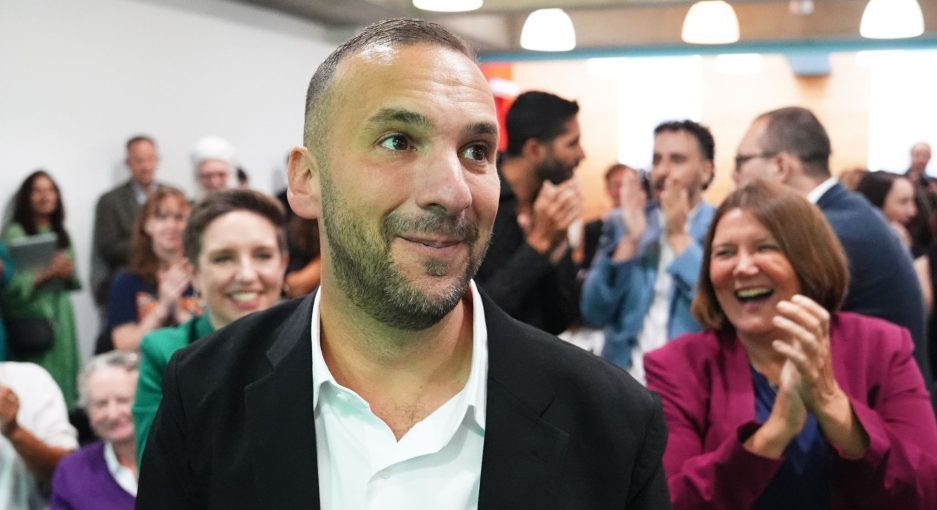
Karl Ove and me.

The boy Knaussgaard definitely dun gud.

Have battered my way through the first two volumes of ‘My Struggle’, where he shreds and re-builds most concepts of art, truth, the human condition and that which is sayable. The word ‘compelling’ appears on both sleeves: it’s a word that might sound bland. Not here. I read these bad boys in a couple of days flat; almost impossible not to.

‘A Death in the Family’ and ‘A Man in Love’ are MASSIVE LITERATURE in the (classic?) sense of having tremendous envisioning scope, and also in terms of being unequivocally serious art. The clues are in the names – most obviously in ‘My Struggle’, which is of course a deliberately epic-sounding moniker designed to bounce through the generations. This is art with ambition (as well as scary North European normalcy), aimed at the peak, at the heart, at the authentically high and thoughtful but delivered via the contemporary and the everyday. As I say, I’ve devoured both tomes.

Now like every other schmuck doodler, and despite just diving in and never over-thinking, I’ve latched onto coupla things. Notably the fearlessness and the voice.

Knaussgaard is relentless and ruthless around honesty. This is his voice and we are compelled to believe it, for the execution, for sure – for its brilliance – but also the amorphous power, the urgency across the text. Something in the vividness and energy of the storytelling (is that what it is?) completely captures us.

His often challenging but crystalline worldview(s) will out, if you will, because he commits utterly and directly: meaning the kind of autobiography that smacks you in the face because of its combination of insight and what we might call observational truth. The fella is, as Geir remarks, an ascetic. He makes a brutally real record of things but also, critically reveals the soul – in the landscape, of the people. This is some achievement.

I have read nothing about Knaussgaard, deliberately, so far. I imagine his saying of the unsayable, for example, around caesarian births and the general liberalisation/’feminisation’ of cultures and the contempt in which he holds the Swedish worthie-intelligentsia fashionista-crew draws a heavy dollop of flak.

Maybe it’s too blokey – reactionary, even? I’m watching this… but currently in the These Are Important Issues We Must Be Able to Talk About camp. Plus he is of course right about the smugness of some of us liberals. And Knaussgaard is *at least* as excoriatingly critical of himself as of anybody else. The books are alive with opinion but too wise, I think, to document arrogance or certainty. He is observing meticulously and with vigour so as to find truth: at whatever cost.

On pages 496/7 of ‘A Man in Love’ the (ahem) *wild, hard-drinking Norwegian* writes about writing itself.

(*Absolutely in as a wind-up!* Wonder if the magazine interviews he so detests have ever described him that way?!? Anyway, onwards)…

I had increasingly lost faith in literature. I read and thought this is something someone has made up.

… the nucleus of all this fiction, whether true or not, was verisimilitude and the distance it held to reality was constant. In other words it was the same.

Knaussgaard goes on to say that he hated this sameness with ‘every fibre of his being’, because it had ‘no value’. I take this to mean that he felt it an inadequacy, a distraction, a betrayal, because art should or can offer more than this. (And Knaussgaard is unmistakably a serious artist).

I couldn’t write like this, it wouldn’t work… Fictional writing has no value, documentary narrative has no value.

Value lies in ‘diaries and essays… (which) just consisted of a voice, the voice of your own personality, a life, a gaze you could meet’.

He is talking about the direct way into truth that autobiography can proffer.

Now I am not a great writer – unlike my Norwegian brother, here. And I really don’t overthink these things: I just do. However forgive me if I did feel just a teeny bit vindicated by this argument for honesty-through-voice.

By accident this is how I’ve practised my own prattling for aeons. For always. Falling back on personal experience – the things I know and care about – because that way I might find some truth. Because I would know it was honest.

That’s as close as I get or as deep as I get into thinking about what I can or should write. Bottom line, do I know it? Can I be true? If so, all else is superfluous. Number of readers, quality of reaction, fear of judgement, all an irrelevance. I can absolutely park that suspicion that I may be a nobody and a laughing-stock as long as the voice in there feels authentically like mine. I can have some hope that things on the page, feeling genuine, can resonate, can have value.

Might sound ridiculous. To hear me paralleling-along with a properly magnificent tome (or six). But I have no delusions of grandeur, here. Neither does Karl Ove, although he plainly does have Literary Ambition. It’s just gratifying (is that too much?) to find that we share the wee recognition that maybe there IS something good about writing what you really know… in your own voice.

Postscript: in a not unrelated burst of wild confidence, Yours F Truly has landed on the notion that my vicarious upgrade via the Knaussgaard voice-authentification-assessment means I am well within my rights to claim that the Dots Will Not Be Joined/Beautiful Games constitutes a new art form, which I am happy to christen lolsobiography. I trust no explanation is necessary? The third volume in the series (of however many) is underway.

You have been warned.

Films, eh?

It’s not the same – they’re really not the same. But I’m going there.

Apocalypse Now, in a cinema in downtown Grimsby, and The Quiet Girl, ‘at Haverfordwest Film Society, last night. The former immediately obvious as a giant; the latter a quiet insinuator. The scale, thunder and ego of the one and the timeless farmyard-backwater of the other. Brando and delirium and slaughter; grass and potatoes and family.

Both will haunt me, or have registered in a way that feels weirdly comparable. They were both palpably affecting.

In Grimbo all those decades ago we walked out shell-shocked in a deeply disturbed silence that defied the cut of conversation or analysis. The heft of the fucking thing left us gobsmacked – 100 people, maybe. That noise; that scope; that insane, thrilling annihilation with or by poetry! Not understood or received in the same way, of course: not to be snobbish but guessing only a handful of us had read Heart the Darkness but… nobody said or *could say* a word, as we traipsed out. Not us punkettes; not the Ordinary Locals. A) Out of multi-level deference to Coppola’s staggering achievement and b) because it felt necessary to slump against the nearest wall first… and – sheesh – recover.

1979, or possibly 80. But the two lads walking out together were as they say(?) changed by the event: how could we not be when it felt obvious we’d just seen the most powerful film ever made? It was like some public/communal de-flowering – and if that’s a dangerous image, who cares? This was a dangerous, wonderful, ruinous, life-changing moment which went beyond ‘the flicks’. However we might express it – with a shrug, with a nauseated heave – we all knew this was a truly rare affirmation of the power of art.

The Quiet Girl doesn’t look to compete with that – or not in the same key. But it does affect. As the bastard-of-a-father angrily stomped to either collect his wayward daughter or (we can only hope) give her up – yup, probably angrily – to the Other Couple, people around me were already raising hands to their faces. As the credits rolled and the lights prematurely rose, nearly everyone was tearful – and some were exposed ‘in bits’. Sobbing. So The Effect was not the same… but the validation, the triumph, the rubber-stamping of the capacity of words and pictures to move folks, to stir them up or down, was there.

Quiet Girl is traumatic despite being something of an ode to the pastoral. It’s all ‘unspoilt Ireland’, except for the unseen but undoubted abuse. It’s cows and hay and loveliness and that thing of handing over – ‘just for a bit, y’understand’ – a child who may be traumatised already and feels like one too many to cope with. Whilst the baby’s being born. ‘Sure y’understand?’

In case you’re wondering, if there is ever a fear that the universe doesn’t need another exposition of any sort on the mistreatment of children then that concern is emphatically and skilfully dumped, here – in fact it’s never raised! – by the compelling nature of the tale and the acting.

This Irish Story (in the Gaelic) looks and feels grippingly authentic, except perhaps for the brief scene where the girl’s potential saviours (Eibhlin and Sean) mistakenly allow her to be watched over briefly by a neighbour. (Have foolishly just read a review of the film, from the Guardian, to grab names/check spellings – forgive me if I don’t spend ages digging out the accents over some of the names – and it completely contradicts what I am about to say about the minor role of Una. Lols. But out with it). Sean, when the child (Cait) is rescued, swiftly and profusely apologises for the error, describing it as an example of his wife’s naive generosity. She even believed in Una. (This we can believe: Eibhlin is a genuinely gorgeous human).

Two things on this: Una is so witchlike the handing-over, even for a short time, didn’t seem plausible, even allowing for the plot-line development in the relationships. And also, for me, Una is poorly-executed. Neither convincing nor darkly funny. Something may be lost in the translation, but she seemed irritatingly out of kilter with the fabulous acting from Cait’s adopted ‘parents’ and from Cait herself. But this is a minor quibble, given my intention here is to thoroughly applaud the first-time direction of Colm Bairead and re-state that this is an outstanding, affecting film. So much so, I might even quote the Guardian, for my deferential, peacemaking final flourish:

It is a jewel’.

Sensationalists: people who might convince us.

I have covid, and maybe some of that ‘brain fog’ so this may be foolish on all kinds of levels. But I want to write something about modern art and I have just watched Saatchi, Hirst, Emin & co on the tellybox.

Let’s start with a wee bit of credit. BBCiplayer Arts is a treasure trove; one which I dip into regularly, especially when that What’s On, Bruv? moment drops. (There’s always something on the iplayer).

More rank positivity: it’s my opinion that the overwhelming majority of artists (yup, even contemporary ones) work with a huge amount of integrity and even honour. They ask the Big Questions for us and almost without exception their work is deeper, better and more multi-layered than we perceive. Broadly, we chronically undervalue what they do.

Public understanding of and respect for modern art is generally an embarrassment, reflective of the stupidity and bigotry of (for example) The Daily Mail – which unsurprisingly features in the 3-part series.

Morons at the Mail, poor or tokenistic arts education and profound levels of ignorance have engineered a situation where we are a) visually illiterate b) suspicious and small-minded and c) too bloody lazy to stand in front of an artwork and let it do its job – beguile us, transport us, challenge us. This, for what it’s worth, is my context; the belief that art matters and that artists carry that privilege of being our conscience with courage and often a deep, deep, incorruptible honesty.

I’m happy to out myself as some kind of enthusiast rather than a bona fide expert. I watch and read about art and even Theories of Art. ( I know, weird). So Sensationalists, a series about Young British Artists/that London scene, whilst not necessarily being top of the list, was always going to get a look.

I found it relatively disappointing. The subtitle ‘Bad Girls and Boys of British Art’ maybe didn’t do us any favours. It wasn’t entirely cheap and headlinetastic but the casual clumping-together of two very different social phenomena – punk and the dance/rave scene – was just one example of rather lazy inference. Those warehouse parties were all bout loved-up escapism. Punk spat at the politics of the universe and the depravity and (yes!) immorality of capitalism/the Music Bizz.

I’m not sure if any of the YBA were punks. There was subversion, yes, of the laughable Arts Establishment and there was lots of punky mischief. And of course that whole being on the lash thing smacks of ‘edginess’. But the utterly central role of Saatchi and (some of) the artists’ complicity in both the rather shameless hedonism and ultimate gentrification of parts of East Landun do ask questions. Whilst respecting that right and even imperative for artists to ask those Big Questions, might we ask why much of the YBA cannon is apolitical? (Cue the arguments for it being ‘bigger than politics’)…

Hirst is a fascinating man. Perverse, savvy, brilliant and possibly lost. I may need to look harder at the whole of his output because it’s ver-ry easy to conclude that his obsession with the business of art is a joke that only needed telling once. I really don’t want to traduce him so let’s put on the record the signature contribution – telling, shocking, reverberating, truly powerful works of art. (You know which ones). Installations which announced something new and did transform a feebly necrophiliac industry. But, in the absence of a killer interview or similar, and with the sense of potential wankerdom looming largeish- Groucho Club Laddism, endless wealth-gathering – what are we to make of him?

My default position remains. That shark/those cattle were profound.

Sensationalists is okaay and I recommend you watch. Understand we need Popular Arts Coverage but I wanted and think the seismic lurch into scary, conceptual art required some elite-level voices. (They don’t have to, obvs) but many wonderful artists talk or write spectacularly about art, or their work.

A recent doc on Munch and Emin utterly vindicated the latter as a Serious Artist. Her real, human messiness and her cheapish, temporary East End Squat-zone Posse mischief rightly got an airing in the series but, interestingly, pretty much the only Brilliant Mind on display in Sensationalists was Jake Chapman. (I know – FUCKFACEs!)

Emin can talk. Chapman can plainly talk. Given the poor understanding abroad for the leap into Art of Ideas, we needed more articulate people. People who might convince us.

Ted Lasso.

Two series in, so what do we think?

We think it’s pret-ty close to wonderful. We think it’s gobsmackingly surprising that something which we feared was gonna reek of America(na), of franchises, of that whole dumbing-down of the universe by checking in so constantly with the Gods Who Dance With Schmaltz turns out to be a rampaging, intelligent, bright and even poignant force for good. (Good telly; goodness in humanity).

We have fallen about, and blubbed. We’ve darn-near turned off – maybe when Ted’s made-for-American TV-isms have flown irritatingly over our heads again… but then been utterly compelled, both by the humour of the Overall Thing and by the brilliance of the sporting intel.

Say what?!? Sporting intel? Yes, even when – as always – the live sport can seem clunky and in danger of failing the myriad authenticity tests so immediately and rightly hoisted by pedantically maniacal fans like my good self. (We know footie. Don’t fuck wiv us*). YES, sporting intel, because whoever is writing/directing/playing/making this stuff does understand football (enough) and, remarkably, coaching, too.

*In fact the live sport here is waaay better than most; though admit the bar has been set appallingly low by almost every football film or series in history. Players can play, mostly, ‘live’ matches are 80% there and the changing-room vibe is decent, plus.*

Ted Lasso (the programme) makes a zillion jokes about Ted Lasso (the coach) not knowing the rules, the history, the zeitgeist in which football booms and busts and yaknow, breaks us. But – in case, friends, ya missed it – this is all knowingly done. The outstanding awareness and generosity and wisdom embedded in the Lasso Method – coaching as transformative, civilising mission, which *really does* look to empower players/individuals, through appreciation, prompting, enquiry, support – utterly squishes any idea that this Dumb American is some under-informed fraud. NO. Ted is a wonder-coach; that’s what this story is about. A bloke who, despite being absurdly out of place, re-defines the quality of that place… by being wonderful… and sophisticated… and deeply, inviolably human.

Everything is faith. That corny, hand-written sign above the door, that says BELIEVE. That ethos, where something we might need to dare to call brotherhood (and critically, authentic sisterhood) grows, becoming essential to the execution of strategies on the pitch and the veracity of the drama beyond it. If there is a tension around Ted’s flirting, or outright crazy street-meme-dancing with and through banalities-which-might-be-profundities and vice-versa, somehow it works. People love him and he bloody deserves it. We’re mercifully and pointedly not hearing anything about god, here, but the series is an ode to faith.

(Minor note. I’m a sports coach so do have some knowledge of how teams are selected, motivated, organised. It’s clear to me that Ted/the writers have a good understanding of where coaching is. Lasso’s relentless good-humour should not obscure the objective – which goes beyond any kind of ‘good guys can win’ schtick. Ted is enacting a very contemporary thread towards building ownership/decision-making/power within the player. The camaraderie and the community-of-souls thing is of course a necessary co-host to all this developing positivity. But the leadership smacks of informed, elite-level choices towards empowerment).

So Ted is a humble genius and a daft idol. Vulnerable, through family breakdown and trauma – separated, father a suicide – prone to anxiety attacks which we see, on camera, in a popular TV series. Further evidence that this world-franchise-monster is overwhelmingly a force for good in the universe. (Except that’s daft, right?)

This is a Big Television Event and it has resources. Unlike many hiked-up projects that might fall into that category it shares the quality and the stories around. Hard to find a character that isn’t well-drawn, generously developed, real enough to make us laugh or cry or root for them. (Can’t stand Awards Ceremonies so didn’t watch the Emmys but apparently it won a shedload. No wonder. Great casting, looks excellent in almost every scene, scripts top-level).

Coach Beard is brilliant – lugubrious and wise and kinda delusionally-in-lurv. He gets ‘his own episode’. Rebecca Welton is stunning and hilarious and extraordinarily multi-dimensional. Her relationship with Keeley Jones, who is willing herself rather magnificently towards Being Someone, whilst oozing with love for those around her, is knock-out and frankly, emosh. Lots of this is frankly emosh, whilst knowing exactly how close it tiptoes to that aforementioned schmaltz.

In short – because I really could go on, about Coach Nate, Mae in the pub, those daft three Greyhound supporters and Miss Fuckwitch and (Our New Hero) Sam Obisanya and (That New Pantomime Villain That I Ju-ust Think We Might Finish Up Loving) Jamie Tartt – you need to make an effort to see Ted Lasso. On Apple TV. It’s popular but grown up. There is sex – and especially via the softening but formerly hardened street-warrior Roy Kent – there is lots of fu-uck-ing language. So what? More importantly, this is a ludicrous but self-aware and ‘issues’-aware smash. A celebration. A reminder that cynicism – probably ours – is bad and that love stories can be good.

Fertile Neglect.

I have a memory which is tough to shake. It’s an earlyish one, probably from my late teens – a time when I was developing the political-philosophical anger that still rages. I was also in many senses finding a voice.

Simply cannot remember where or why or how I finished up listening to Dylan Thomas reading some of his poems… but I did. This was waaay pre-internet so could it have been radio? Who knows. I had found the man’s work prior to this event (and loved it) but never heard him read or speak. I was – and I know these two words don’t fit together – I was relatively shocked.

To a spiky youff from Grimsby he sounded like a posh English public schoolboy. Inflated. Pompous. Weird. But not Welsh. So un-believable.

A similar thing happened the first time I heard Kyffin Williams speak – only more so. Another toff, another fake Welshman; another medium-shocking disappointment.

Of course this is prejudicial nonsense… but it is also true. To this English-born now long, long-term resident of Wales, conscious of his own fraudulence, it hurt a little that class, that privilege had intruded so jarringly into *even this* – the sacred world of art and of the heart.

And yet Thomas (in particular) and Williams remain profound icons: in the writer’s case partly because he plainly was in some senses a big-hearted radical – at least in terms of style – and, frankly, his background wasn’t that posh. He just performed like that; believing, I imagine, that the booming suited the pomp and circumstance and mischief around the great themes of his work. But it was weird, hearing him, back then. It was a blow to my punky idealism and to the notion that hopefully, despite Thatcher *and everything* the Home Counties/Great Families domination of the universe might be vulnerable to our Northern, fraternal surge.

I still hope that what we might call The Creative Spirit can come from anywhere and be recognised: that Ordinary Folk, as well as those with time and privilege, can turn out art that is visible and moves and reflects us. However, the times again may be conspiring against this.

The author David N Thomas will probably never read this: if he does, I hope he takes the trouble to get beyond the title and the sense (that may rise in him) of liberties being taken at his expense. They are not. His book Fatal Neglect, which cuts away the sleazy distractions and outright porkies around Dylan Thomas’s death, is gripping, bold and mildly revelatory. I am bastardising his title to hint a little at the unsavoury richness he uncovers.

I say mildly revelatory because, let’s face it, many of us knew that the ultimately frail but often monstrous, boozed-up genius who gifted us Under Milk Wood had been ill-served by his inadequate compadres and the criminally arrogant doctor who oversaw his death in New York. We just didn’t have the evidence. David N proves we were denied it.

Dylan remains the co-author of his own rather grisly end – naturally – having been a drinker and a slob who mixed with or was surrounded by drinkers, drug-takers, neurotics, hypochondriacs, the privileged and the indulgent. He was in bad shape before the bronchopneumonia (obvious but undiagnosed by Feltenstein, the doctor who took charge) tipped him towards coma and death. There were *factors* – used erroneously as fact by that same doctor – which seemed to suit the romantic view of a soul destined to self-destruct: chiefly alcohol and that lack of restraint and self-care. Feltenstein was myopic enough and cheap enough to build his flimsy diagnosis and his fatally shabby treatment entirely around this most readily-available construct; something that went on to symbolise and/or haunt the extinguished poet for fifty years and more. Dylan Thomas became the extravagant drunk who killed himself with booze.

The book unravels that convenience and in doing so exposes the various inadequacies of Brinnin – the agent – and Reitell – the lover, nurse and editor. The wider group that I may with ironic klaxons a-hooting choose to call American Friends are also skilfully, damningly implicated. Fatal Neglect is about shallowness, selfishness and self-interest as much as it is a comprehensive gathering and disassembling of medical fact and half-truth.

These shitty people get skewered, for their ‘lack of anchorage’ and whilst contriving their cover-up.

Brinnin, the agent, arguably more than anyone. He failed utterly on his duty of care towards a plainly unhealthy man. He worked him, even when Thomas was visibly ill or barely able to speak, to fund his own, appallingly glitzy lifestyle. (To be fair, the Welshman had a penchant for robbing or de-frauding the chancers, suckers and sponsors around him but his Canadian-born American agent was different level). Annual European tours, first class travel, cruises: all on other people’s money. He proved to be similarly profligate in respect of his responsibilities towards scheduling: D N Thomas reveals the extent to which Brinnin needed Dylan to graft and set him to it.

Liz Reitell shares some of the same disconnect from common decencies. She thinks she is Everything, as though Caitlin doesn’t exist or have rights and she, too, drives the dangerously exhausted writer on, carelessly or callously. She shares a good deal of responsibility for the years of edited truth, too; notably overseeing the travesty that was Brinnin’s book about those last days. Reitell is a talent, a shrew, a liar… but going through this, who isn’t?

I like that a sharp wee tome about medical minutiae becomes a scrupulously fair but fierce judgement upon people who barely need to care. Because they have stuff covered. Life, money, travel, expectation. Even the honourable medical men who were horrified at what Feltenstein did closed ranks to protect the hospital and staff who capitulated to the invading, overpowering Doc.

Everything is both material and context. For me Fatal Neglect has travelled well, crossing almost seventy years of myth and mischief around the relatively public demise of one of the great figures of modern literature. (If I have sounded belligerent towards Dylan Thomas that too, has been a fraction of the whole. The opening to Under Milk Wood still strikes me as one of the great, sustained moments in musical prose. The man was flawed, oh yes but by god he was something special).

Which is way it feels satisfying, feels right, that we now know he did not simply drink himself to death. Indeed he should not and would not have died, back in ’53, had he received prompt and professional medical attention. He had pneumonia before he was admitted to hospital. He was given shots of the wrong stuff. Nobody dare tell the fella Feltenstein – who had no authority – that this wasn’t just about the hooch. ‘Friends’ mostly failed him, too – as did those who came to tell the story. Some were duped, some criminally covered-up. Class, money, appearances, disappearances. Editing. Protection.

Fatal Neglect made me feel angry, in a good way. It shines a light into both the petty, alcohol-fuelled drama-queendom of Dylan and Caitlin and the uglier, truly privileged ease of some of the Thomas Groupies. In doing this, it may have found another moment; when more chancers, toffs and tossers – Johnsons and Goves and Hancocks? – are serving up incompetence and worse, safe in the knowledge that they can wallow. Because some folks still don’t really need to care.

‘On Bear Ridge’: Sherman Theatre. A view.

Did that thing again where you try not to learn or know anything about the event, beforehand; with some success. Wanting to look – really look – and listen without too much intelligence or baggage, or prejudice.

Wasn’t sure, for example if the ‘Bear Ridge’ of the title was in Wyoming or the Black Mountains or Beacons of Wales. Wasn’t sure  if this might be a one-man jobber, in fact, having just heard, yaknow,  ‘Rhys Ifans’.

Have been absent from the Sherman for too long, so interested in the vibe, the thrum around the foyer and the feel of the place. In truth both the foyer/bar/lounge-upon-laptop space and the auditorium are pret-ty ordinary, eh? (No offence). They function, rather than lift the soul. But hey – deep breath, glass of water, focus… and in.

Into an atmospheric world. Snowy, non-specific somehow, despite the occasional name and the constant flow of memory. Bleak uplands; rocks that shadow and maybe fore-shadow; a homestead almost abandoned.

Ifans is lying in the snow, stirring then into something stirring. Words. Sure there is some drama here and a brooding, evocative set but this (we soon learn) is utterly about words performed.

John Daniels and his wife Non and their home, farm, shop: their source. Rich with their own history but poverty-stricken, isolated or struck down by unspecified change. A murderous, bi-polar world, with wintry-but-noble John and Non beset by a creeping, catastrophic now.

We hear planes, we hear tell of the City by the Sea. We learn that old ways and the Old Language are being throttled by something new and hostile.

Indeed there ‘really is’ a war going on: witness the arrival of a Captain, complete with great-coat and gun and his own, enervating torment. A Captain who nearly wastes the Slaughterman, emerging from the cellar.

All sounding bit ‘stagey’, bit ‘symbolic?’ Fear not. The cast of four are strong – Ifans and Rakie Ayola particularly so – and the lyricism and wit and and angularity of the piece places it substantially beyond the ordinary, the predictably-familiar. This is absolutely about the spirit of something but Ed Thomas conjures plenty of real life: convincingly so via his *Kollwitzian (and therefore universal?) couple.

John Daniels is that daft Welsh butcher from up on the hill, with the lived-in beard and shoulders bearing against tragedy and loss – of son, of memory, of tongue. He is that… but he is more. Nonnie, his steadfast wife is with him, always (and therefore always against the grain of the times); stoic on the one-hand, strong-willed and hearty on the other.

In truth I found the Captain a tad less convincing: not sure if this was through less crystalline writing or by dint of the performance on the night. (Something about the mix of threat, near-affability, body-language, direction, maybe, that didn’t ring entirely true? Maybe I need to see again.)

Ironically but hardly accidentally, the apprentice/slaughterman (listening to “White Riot, if I am not mistaken, when emerging from the butcher’s cellar?) was a full participant in the weaving of stories rather than the cleaving of meat or ‘action’. He pours tea and/but he too, has poetry. Local, individual-but-communal richnesses are suggested: the central ‘act’ (the brutal overwhelming of Twm) is described.

‘On Bear Ridge’ felt like a significant piece of theatre – some stood to applaud.

It is poignant love song and it is protest song. The piece bears witness to the betrayals, insidious and unseen and to the malevolent ‘othering’ all around us. These humble, magnificent characters are invested in The Biggest of Things – seeking out poetry and meaning both in their language and in material life. Tragically, change, history, progress and/or cruel inertia is burying them.

Thomas’s first play for fifteen years reiterates his conviction that a) our words must be sung, from the ridge-top to the City by the Sea and b) that traditional theatre – that is theatre predicated on words not tricks, pyrotechnics or that which would be original – defies and endures.

(I say this having been conflicted about whether drama this word-centric conciliates too much, is too dry, too easy, too necrophiliac, even?)

But no – and this may be another of the play’s triumphs – Ifans and Ayola make dynamic once more the notion that in live performance phrases carved with care, well-acted, can transport, can question, can impact upon us. The writer’s contribution is made.


*As in Käthe Kollwitz, the great socialist artist. (Do not John and Non have something of the Beautiful Beleaguered Peasant about them? In a wonderful way?!?

Playing to the Gallery (the book!) – Grayson Perry.

As I write that mixture of shock, anger and frankly depressive disquiet prevails. In an extraordinary week for world affairs – I’m thinking Paris and Nigeria here – my own daft orbit has swung wildly between healthy titillation and Appalled of Pembs.

Before the irreligious scumbags from Boko Haram and (who knows? Al Qhaeda?) did their work in Africa and North West Europe, I’d been enjoying that simple pleasure of reading something upful. Despite being conflicted about that book’s place or relevance in a) my head and b) the Universe right now, I intend to go on abard it anyway. Because whilst this book is not remotely about the means by which we oppose radical Islam, it does contain truths about making meaning which I believe powerfully relevant – always – and maybe particularly when homo sapiens lurches back towards the swamp.

Please listen while I say this: there are rich and beautiful things (that I am happy to call invincible) which can represent us humans with a kind of defiant grace. We need these things – let’s use these things.

The book is Grayson Perry – Playing to the Gallery.

MAKING MEANING.
Grayson Perry is a funny old bloke. Maybe that’s not an appropriate start – not for a kosher look at yer average book on Art Theory. Except that this book, unsurprisingly, is like him, Grayson, an engaging mixture of colourful parries and friendly fends around what’s real or profound or material in life and in contemporary art. It’s an antidote to cynicism, full of good-natured one-liners aimed at the various intellectual stratospheres we space-hop through together. It’s therefore not (al-ley-luyah!) any of the following; arid, dull or impenetrably dense. In fact there’s a kind of juvenile (and I think I do mean that in a good way) zeal running through; playful, yes, but defiant about the integrity of most contemporary artists and the nobility of that calling.

So the essence of ‘Playing to the Gallery’ is lightly campaigning, de-mystifying, educational veering-to-populist rather than cerebral. The cover spiel makes plain that this baby is certainly not
sucking up to an Academic Elite.

No. It ain’t. ‘Playing to the Gallery’ is anti-pomp and anti cobblers. It’s full of friendly exclamation marks (marked down, I know, by the intelligentsia) and arguments deflowered where possible of their museum-speak to welcome in – indeed to really encourage in – the or’nary human.

Some facts. This book is lifted from or sculpted out of the Reith Lectures that Perry gave in 2013. If you listen to the first of them on the BBC Radio Four website then once you’ve have cringed your way through Sue Lawley’s prolonged itemisation of his clobber, you will be immediately immersed in a whole lot of love for the man. There are cheers and gales of laughter. He rips it up as well as reveals, or proffers insights. It’s a hoot.

The book isn’t a word-for-word re-run of those gorgeously garrulous lectures but that’s absolutely where it’s centred. Containing chapters named for the four performances at the lectern, ideas fleshed out a little or trimmed of the live banter. The book could be either a souvenir for those who loved the lectures or a touchstone (perhaps) independently.

Perry immediately (in a prelude called How much?!) de-Ivory Towers the scene by relating the epiphanic tale of how The Archers revealed to him the profound integration of contemporary art into general life. But, typically, this is the springboard for a declaration of faith –
If there’s one message I want you to take away it’s that anybody can enjoy art and anybody can have a life in the arts – even me! For even I – an Essex transvestite potter, have been let in by the art world mafia.

Sure, he’s saying, the art world may seem to want to exclude us normal folks, to sieve us out via the intimidating glamour or bewildering language or obscure purpose of its protagonists but it’s possible – and indeed necessary and nourishing – to get the fuck in there(!)

Democracy Has Bad Taste concerns that thorny-delicious debate over judgements on quality –
what are the criteria… and who tells us it’s good?

I suspect elite level academics may disagree but it is my contention that Perry is no mug. He appreciates well here, the conditioning and the self-consciousness of the novice viewer and the uppity, sometimes excluding brilliance of the Art Circle.

(Nowadays) To judge a work on its aesthetic merit is to buy into some discredited, fusty, hierarchy tainted with sexism, racism, colonialism and class privilege. It’s loaded, this idea of beauty, because where does our idea of beauty come from?

We are thus rallied towards rather profound questions on validity and – dare we say it? – truth.

In Beating the Bounds, Marcel’s Duchamp’s position at the very birthplace of much of our angst is considered. The magnificent subversion-of-all-things that was Duchamp’s urinal – his declaration that anything was art that an artist chose to be so – is revisited repeatedly to ask questions about where modern(ist?) notions of legitimacy have come to us from… and where they have travelled. Ultimately, Perry’s wonderfully circular story of how Duchamp’s urinal was effectively lost (and its significance almost wasted) before a potter was commissioned to re-make one from grainy photographs is one of the highlights of the book.

In this second chapter our quirky pal Grayson cracks the whip – and I do mean that – so we have a bitoffalarf as we are bundled round the problems or undiscovered joys of the parish. Perry offers further ways in to the arguments around where art is at… and how we might recognise it.

Refreshingly, there are few conclusions anywhere in this mini-tome; the artist does suggest, however – in Nice Rebellion, Welcome In! (Chapter Three) – that

I don’t believe there is an avant-garde anymore…
He goes on

But if we are at the final state of art then I’d like to end on a positive note and quote the philosopher of art Arthur C Danto. He said ‘If the age of manifestos had a political parallel in ethnic cleansing, then in the age of pluralism we have a model of tolerant multi-culturalism.’

Whoa. The Age of Pluralism – multi-culturalism. I can see in the art world this may be or this may seem how things are moving. Wow.

This may be an appropriate moment for me to close the book and gaze wistfully into the middle distance. Then say something unwisely woolly and positive. So, being positive, I will.

I believe in Grayson Perry, the Essex trannie/good bloke/artist. I rate his work more now than before – because I am understanding better. I have always shared his conviction – expressed in these lectures – that we the audience might have to put a little work into appreciating art. That there is value in that effort, in part because what is revealed includes the life-affirming notion that most artists are genuine, committed people looking to share meanings with us and, who knows maybe offer leadership, sustenance or hope in a mad, mad world.

I for one hold up my fist, my torch, my pencil for that aspiration against the horrors of un-love, of intolerance and extreme bigotry.